Tuesday, September 12, 2017

An Indy evening in August with Edgar Winter, Alice Cooper and Deep Purple.


In a recent interview with Mojo magazine, esteemed songwriter and musician Jimmy Webb recalled the way Otis Redding flat stole the show at the Monterey Pop Festival in 1967.

Webb explained that Redding had been a professional musician virtually his entire life, whereas so many of the other acts were flower-power dilettantes unfamiliar with stagecraft and the necessary dynamic of performance art.

Otis knew what worked, and he delivered. The others learned, or perished as working musicians.

Edgar Winter, Vincent Furnier (a.k.a. Alice Cooper) and the members of Deep Purple (even current virtuoso guitarist Steve Morse, then all of 13 years old) all were playing and performing in some capacity in 1967.

A half-century later, we had the pleasure of seeing them play at the open air Klipsch Center, formerly Deer Creek, located north of Indianapolis. Rest assured: they have learned.

This reviewer in California might as well have been writing about the show we saw in Indiana on August 30, although Deep Purple omitted "The Surprising" from its Indy set, and played only "Time for Bedlam" from the band's inFinite album, released earlier this year.

Deep Purple, Alice Cooper, Edgar Winter Group electrify Greek Theatre crowd, by Robert Kinsler (Orange County Register)

Three distinct brands of classic rock were on display Sunday night at the Greek Theatre in Los Angeles. American blues rocker Edgar Winter, shock rocker Alice Cooper and British heavy metal pioneers Deep Purple all came to the venue armed with their biggest hits delivered via crowd-pleasing, fast-moving sets.

Deep Purple has been the tour's headliner, in the midst of what the group acknowledges probably is its final jaunt. Three-fifths of Purple's classic lineup (Ian Gillen, Roger Glover and Ian Paice) remains in place, and summer's set list is built to please the legacy/heritage rock crowd, which makes even more sense in a venue where the "craft" beers cost $16.

Instrumentally, Deep Purple retains the swagger necessary to give solid readings to hit songs like "Highway Star" and "Smoke on the Water," even if lead singer Gillen's voice is diminished, and sole founding member Paice's drumming can be a tad sluggish at times.

As a fan of 45 years, I have a minor complaint to register.

The current aggregation of Deep Purple has been together since 2003, producing four excellent albums of original material, the last two of which are simply outstanding.

I'd gladly pay double an already high price to hear this lineup play an entire set derived solely from their time as a unit. Admittedly, I'd be the only person in the Klipsch Center, but it would be a great seat, indeed.

The late Johnny Winter was a renowned, spellbinding blues guitarist. His younger brother Edgar is a dazzling multi-instrumentalist, switching from keyboards to saxophone to drums, and capable of playing jazz, funk, blues and straightforward rock and roll.

Winters' opening set compressed all of these considerable talents into a mere five songs lasting 45 minutes, which isn't enough. The most recent of these songs was released around 1972.

That's the rock/show biz, which brings me to Alice Cooper.

He has (and has not) been doing the same stage show since the first time I saw him in 1976. The guillotines, blow-up dolls, macabre embellishments and shtick is unchanged; significantly, Alice's music always has evolved. He might remain a teenager lyrically, but instrumentally, his cast of younger musicians shred, staying nicely up to date in terms of backing metal.

I've long maintained that Alice Cooper is the last vaudevillian standing. Know that I didn't coin the comparison; Groucho did.

"When guys like Groucho Marx would come to the show, he always called me, he says, 'You're the last hope for vaudeville.' And he would bring Jack Benny and George Burns and Mae West. And people like that would come to the show, because it was vaudeville to them. They said, 'Ah, remember 1923? The Great Floyd used to do that! Remember? Of course, he would have doves come out of his sleeves when he —' And this was nothing new to these guys. They would, you know, Groucho would come to the show and he'd see it, and he'd go, 'Ah, rawr rawr rawr.' You know, he'd insult everybody there. 'Excuse me, I got to go insult the maitre d'.' You know, that kind of thing. We were best of friends, Groucho and I were. But they saw it as vaudeville, and actually that's what it is. It's rock 'n' roll vaudeville."

In June we saw U2 at Papa John's Stadium in Louisville. I never thought the time would come for me to say this, and yet here it is: My monstrous outdoor venue concert-going career may be over. Both shows were fun, and I have no regrets ... but those $16 beers.

Ugh.

Monday, September 11, 2017

Here's a trick Irv and the trucking magnates missed.


The article goes on to say that in terms of Parisian voting districts, the mayor's most strident critics probably live outside the central arrondissements -- where her support is highest.

Paris's Car Debate Gets Personal, by Feargus O'Sullivan (City Lab)

Pro-car protestors publish Mayor Anne Hidalgo’s direct telephone number. But that doesn’t mean she’s prepared to listen.

If you’re sick of Paris’s traffic jams, go ahead and tell the mayor directly. That’s the gist of a motorists’ campaign launched Monday, which shared Mayor Anne Hidalgo’s direct phone number in a bid to encourage protestors to jam it.

Working under the hashtag #disleaAnne (“#tellAnne” in English), the motorist pressure group “40 Million Drivers” plans to do to City Hall’s switchboards what they say the administration has done to the roads: clog them up. Their goal is to ensure the mayor can no longer ignore their calls, and, more generally, force her to the negotiating table over the future of Paris’s streets.

The spat—and the distinctly personal assault on one figure—is a sign of how heated the city’s debate around cars has become. The invective has unquestionably come from both sides. Striking an anything-but-conciliatory note, last week Hidalgo suggested that some of her detractors were “big machos,” while others came from the “fachosphere”—the sphere of the extreme right.

So why all the hubbub? In recent years, Paris has adopted some of the most systematically anti-car policies of any major world city, with a pro-bike, pro-pedestrian ethos that has so far has only been surpassed by smaller cities like Copenhagen. Older cars have been banned from the roads during weekdays, part of an ongoing plan to remove more polluting vehicles from the city. The lower quays of the Seine, until recently one of the busiest east-west routes across the city, have been pedestrianized, while the Rue de Rivoli, the next major east-west axis to the river’s north, is due to have its car lanes reduced as well.

Car space is being slashed in many major squares, while car-free days have been introduced annually as a form of publicity campaign for a future without automobiles. The overall, frankly declared goal: to reach a point where the city is essentially car-free—a potentially reachable goal in a country which plans to ban gas-fueled cars by 2040.

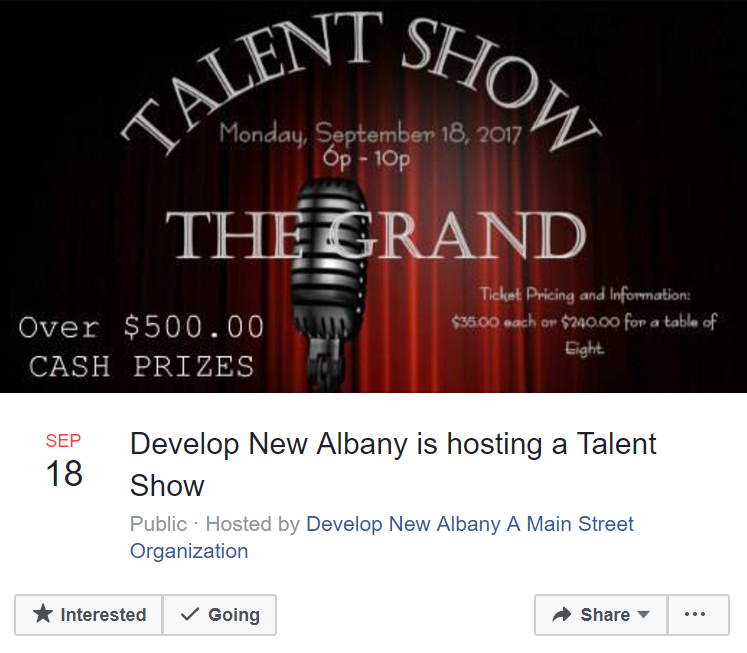
SATIRE ALERT: DNA's Minstrelsy Walk is September 18.


Yes, the talent show is real. Unfortunately, the Confidentials will be in Belgium at the time.

As they say, the show must go on.


The Minstrelsy Walk is not real. It's satire. But these folks have a dicey history, you know -- and I just couldn't help it.

That's because I have a history, too.

I'm troubled and distressed. Maybe it's time to forsake Bill.

At the risk of belaboring the point ...


ON THE AVENUES: On a wig and a prayer, or where's the infidel gardening column?


... I find it enduringly odd that the News and Tribune promotes multi-culturalism in its editorials, and yet runs only Christian advocacy columns like this on -- and sometimes others like it.

Media bias?

MAY: Troubled by violence, by Tom May (Flailburger)

About a year ago, several outbreaks of violence occurred one right after the other. On July 5, 2016, Alton Sterling was shot several times at close range while being held on the ground by two Baton Rouge police officers. The incident was recorded on a bystander’s cell phone. Twenty-four hours later, Philando Castile was shot and killed by officer Jeronimo Yanez in a Saint Paul suburb after being pulled over. On the final day of the trinity of terror, Micah Johnson ambushed and fired upon a group of police officers in Dallas, killing five and injuring nine other officers and two civilians. Johnson later said he was angered by the recent police shootings.

Dallas pastor and best-selling author, Tony Evans, posted words on his blog the next day that were reprinted with permission by The Washington Post and several other papers. His thoughts have been seared on my mind since. “Unless the Church steps forward collectively to fulfill its God-given role of influencing the conscience of our culture, our country will keep spiraling downward into the depths of fear and hate.”

There is an intriguing verse of Scripture in the Old Testament book of 2 Chronicles. The nation of Israel, God’s people, had wandered from their faith. Their religious leaders failed to teach people sound doctrine, watering down the truth so as not to offend anyone. Their government authorities no longer held the Law as the standard for behavior. “In those days it was not safe to travel about, for all the inhabitants of the lands were in great turmoil. One nation was being crushed by another and one city by another because God was troubling them with every kind of distress” (2 Chronicles 15:5-6 NIV). The passage concludes that if you forsake God, He will forsake you.

Have we become a troubled, distressed society? ...

... Tom May is a freelance writer who provides content for newspapers, magazines and websites. He is an adjunct instructor in the Communications Department at Indiana University Southeast. He has held paid and volunteer ministry positions at several churches in the tri-state area. Reach him at tgmay001@gmail.com.

Spring Street stage block: "It's like buying a new car and then putting it in the garage and driving a rental to work."


Regular reader J asks:

By chance, did anyone notice that Friday on Spring Street the city closed the single eastbound lane for a stage? I want to say we have a nice big stage somewhere already -- it's yellow?

Yes, sir. That'd be the Bicentennial Concert Series blocking a traffic lane, and the Riverfront Amphitheater three blocks away, perched by the Ohio.

For me, the question is two-part.

Why are we closing the two-way street we (JUST) made, and during Friday evening rush hour?

Why are we paying for this stage when we have a larger stage with an area that can facilitate more people?

Also, I seem to remember we renovated the amphitheater fairly recently. It's like buying a new car and then putting it in the garage and driving a rental to work.

The first question only now arose. The second one has been unanswered for almost six years.

"The vernacular of pornography is now embedded in our culture. Even if you’re not consuming pornography, you’re consuming its logic."

It's neither an apology nor a boast. The simple fact is I watch almost no television apart from documentaries, most of which are viewed on-line.

I haven't seen a minute of any series mentioned in this article, and probably won't watch The Deuce, either.

Rather, I read and write, and typically the way it works for me is that I read a piece about a television show, as below, and find myself intrigued by the subject matter.

Then I go out and find a book to read more about it. It's just a better use of time this way. Different strokes, and all, but "a ready-made critique of market capitalism" is precisely the sort of exercise I cherish -- so long as it isn't necessary to spend time watching it.

David Simon: ‘If you’re not consuming porn, you’re still consuming its logic’, by David Smith (The Guardian)

Alongside longtime collaborator George Pelecanos, The Wire’s creator talks about their new TV drama, The Deuce, which examines porn’s impact on US society

 ... (David) Simon is animated by the perpetual struggle between capital and labour and believes that, after the ravages of Ronald Reagan, Margaret Thatcher and globalisation, and the anti-establishment anger that produced Donald Trump and Brexit, the argument for unions and collective bargaining is as vital as ever. Which brought him to The Deuce, his ambitious new HBO series charting the rise of the porn industry in 1970s New York.

“What I stumbled into seemed to be a ready-made critique of market capitalism, and what happens when labour has no collective voice, and that seemed to be apt for this moment because I think a lot of the lessons of the 20th century are going to have to be learned all over again thanks to Reagan and Thatcher and all the neoliberal and libertarian argument that has come after,” says Simon, 57, unfailingly intense as he leans forward on a sofa.

Sunday, September 10, 2017

Is it the world's shortest bike lane? Or stealth sharrows?


On Market Street between 10th and 11th.

Don't forget: this Tuesday, New Albany's emerging 2-pocalypse comes to Market Street.

Colin Kaepernick and the NFL, a league "more comfortable with concussions than someone having a conscience.”


From just about the only sportswriter in America who really matters ...

"Dave Zirin is sports editor of the Nation and author of eight books on the politics of sports. He is working with Seattle Seahawk Michael Bennett on Bennett’s autobiography."

 ... on the NFL's latest public relations nightmare.

When it comes to conscience, specifics and circumstances may vary, although non-conformists of many sorts in this purportedly "free" country can easily imagine themselves wearing Kaepernick's cleats.

As an atheist, permit me to inform you that it happens all the time. In my reckoning, any time it's the occasion for all of us to perform the same rote act (pray publicly, declare allegiance to the flag) all at once, then it's time to consider dissenting.

For a very long time, I've always stood for the national anthem and pledge of allegiance in honor of my father, a World War II veteran of the Marines. However, I've refused to recite the pledge of allegiance aloud, because the words "under God" simply have no place in it and should be removed.

Now Colin Kaepernick has me rethinking this position, primarily because he's right.

Maybe I need to dissent a little harder from this point forward.

Op-Ed The NFL wants you to think Colin Kaepernick isn't being sidelined by politics. The NFL is wrong — again, by Dave Zirin (Los Angeles Times)

 ... As Green Bay Packers star quarterback Aaron Rodgers said last week, it is “ignorant” to think that Kaepernick is unemployed because of his play.

“I think he should be on a roster right now,” Rodgers told ESPN’s Mina Kimes. “I think because of his protests, he’s not.” Rodgers is not alone.

The rash of anonymously sourced articles trashing Kaepernick’s play came just days after several thousand people rallied in front of Goodell’s NFL headquarters on Park Avenue in New York City: a demonstration that loudly called out a league dependent on the physical punishment of black bodies, a league that — in the words of the Rev. Jamal Bryant — is “more comfortable with concussions than someone having a conscience.”

The NFL seems to believe that shutting out Kaepernick will be like a crack of the whip across the backs of its players, stamping out dissent, keeping everyone in line. But the opposite has been the case. During the preseason, and in the wake of events in Charlottesville, Va., more and more players stepped forward to sit, take a knee or raise a fist during the anthem, and they are not shy about telling the world why. Unlike last season, white players also have involved themselves in these protests ...

Beer and coffee: "Write drunk, edit sober" — Ernest Hemingway.

Photo credit.

It's an old article, but a timeless one; thanks to J for the link. This is why pubs should have espresso machines.

"Beer for the idea, coffee for the execution" could be the title of my autobiography, although Biscuit's famous "What I Remember" still applies.

Drink Beer for Big Ideas, Coffee to Get Them Done, by Mikael Cho (Lifehacker)

A Creative Prescription: The Optimal Way to Drink Coffee and Beer

Both coffee and beer (in moderation) have shown to be helpful when you’re working on certain types of tasks; however, you shouldn’t drink either when you need to do detail-oriented or analytical projects like your finances. The increase in adrenaline from caffeine and the inhibition of your working memory from alcohol will make you more prone to make mistakes.

Beer For the Idea

The best time to have a beer (or two) would be when you’re searching for an initial idea. Because alcohol helps decrease your working memory (making you feel relaxed and less worried about what’s going on around you), you’ll have more brain power dedicated to making deeper connections.

Neuroscientists have studied the “eureka moment” and found that in order to produce moments of insight, you need to feel relaxed so that front brain thinking (obvious connections) can move to the back of the brain (where unique, lateral connections are made) and activate the anterior superior temporal gyrus, a small spot above your right ear responsible for moments of insight:

Researchers found that about five seconds before you have a "eureka moment" there is a large increase in alpha waves that activates the anterior superior temporal gyrus. These alpha waves are associated with relaxation—which explains why you often get ideas while you’re on a walk, in the shower, or on the toilet.

Alcohol is a substance that relaxes you, so it produces a similar effect on alpha waves and helping us reach creative insights. Coffee doesn’t necessarily help you access more creative parts of your brain like a couple pints of beer.

Coffee For the Execution

If you’ve already got an idea or an outline of where you want to go with your project, a cup of coffee would do wonders compared to having a beer to execute on your idea. The general consensus across caffeine studies is that it can increase quality and performance if the task you are doing seems easy and doesn’t require too much abstract thinking. In other words, after you have an initial idea or a plan laid out, a cup of coffee can help you execute and follow through on your concept faster without compromising quality.

New evidence reveals that New Albany area sign and banner makers contributed heavily to the two-way street lobby.

West you see it.


East you don't.

Adam polishes Jeffrey's personality cult, and yet Dickey's Floyd County Democratic Party still hasn't embraced Gahan's public housing putsch.


Adam Dickey's a chairman on fire.

Recently at the Facebook page of the Floyd County Democratic Party, he's touted the party's local savior Jeff Gahan on four occasions (displayed like dainty meat counter offal below).

And yet Adam keeps forgetting to openly praise his Dear Leader's public housing putsch package.

ON THE AVENUES: Using Deaf Gahan’s dullest razor, we race straight to the bottom of his hurried NAHA putsch launch.

The party's in favor, right? I mean, not a single elected Democrat has openly questioned the land grab, and surely this is a policy deriving from the chairman's iron grip?

If local Democrats can't honestly address Jeff Gahan's public housing putsch, how can they "resist" Trump?

With so many local Democratic "leaders" self-identifying as geniuses, we must conclude that their current consumptive hypocrisy is a choice, not an accident.

It's #OurNA, all right: "New Albany attempting to purge itself of the poor" ... so, are local Democrats finally catching on to the Gahan shell game?

Shouldn't Adam and his party apparatus just step up and be honest ... for once?

I'd gently remind them of the prevailing dissonance, but unfortunately, Adam still bans me from social media dialogue. Apparently he's no more interested in free speech than forthright public disclosures of socio-economic engineering.

Consequently, it's our job not to forget.

#TheResistance20152019


Saturday, September 09, 2017

Marohn: "The most successful places are full of congestion."


Not Wyoming.

Minnesota.


DEALING WITH CONGESTION
, by Charles Marohn (Strong Towns)

 ... Most of Senator Murphy's conversation dealt with the chronic issue of congestion. Notice I did not call congestion a problem. It's clearly not. Within our places -- on our streets -- congestion is an indicator of success. As Yogi Berra reportedly said:

"Nobody goes there any more because it is too busy."

Indeed. The most successful places are full of congestion.

Between our places -- on our roads -- congestion signals many things but, for me anyway, it primarily indicates America's cultural -- and the engineering profession's technical -- misunderstanding of the systems we have built.

Consider the hierarchical road network. It's so commonplace today that we rarely stop to question it. Small, local streets empty into collector streets. Those collectors empty into arterials. The arterials empty into major arterials which eventually end up pouring into our highway systems. Small to big; it's the way things are done.

Stop a moment to examine a watershed. There you have ditches that flow into small creeks. Those creeks flow into larger brooks and streams. In turn these flow into larger rivers and, ultimately, these systems come together to form some of the world's major waterways.

We all intuitively understand that, when we experience rain or snow melt on the edges of a watershed, there is a compounding effect that occurs. We've become fairly competent at realizing that, by the time all this rain comes together, it very often produces a flood.

We've so grasped this concept that we've taken steps to address the problem at the source. We don't allow people to fill their wetlands. We require developers to retain their runoff on site. We build retention systems to hold back runoff and feed stormwater into the natural systems more slowly so flooding does not occur. We take these steps and others at the source to mitigate the cumulative, negative impacts of stormwater runoff. Namely: flooding.

Instead of a river network, examine a similar system of roadways during a typical commute. Here we have rain of a different sort: the automobiles that emanate forth from the development we induce, subsidize and cheer for out on the periphery of our cities.

Why are we so shocked when this produces a flood?

WE. CREATE. THE. FLOOD ...

BOOKS: "Hank Williams was a tortured poet who died before most Americans today were born, but he’ll outlive us all."

My friend Jerry encouraged me to read this book, and while country music tends not to be a priority, I took his advice.

Hank: The Short Life and Long Country Road of Hank Williams, by Mark Ribowsky

Good decision.

It's a testament to something in American pop culture -- exactly what isn't clear -- that an ill-fated performer who died seven years before I was born nonetheless has remained a constant presence throughout my life, whole decades later.

Perhaps proximity to the original heartland of country music is a factor, or the career of Hank Williams, Jr.; at any rate, for Hank's relatively limited output of songs, his enduring influence is incredible, indeed.

He's never really gone away.

In terms of self-destruction, the parallel example who springs to mind is Bix Beiderbecke of jazz fame.

Like Hank, he was dead before the age of 30. They both were preternaturally gifted musicians, alcoholics, and examples of icons capable of being known by their first names alone.

The book is very good. All this lies outside my customary comfort zone. Maybe that's a good thing.


The brief, wondrous life of Hank Williams
, by David Kirby (Washington Post)

The soldier must have thought he was dreaming. There he was, driving down a pitch-black road outside Shreveport, La., in the early hours of Oct. 18, 1952, when he saw a figure in a hat, boots and white suit. It was Hank Williams, out of gas and hitchhiking to the nearest filling station. Williams was at the height of his fame, but at that moment, he was like any other chump who forgot to check the gauge before heading out into the darkness. He had also just gotten married; he and his latest woke up a justice of the peace who performed the ceremony at 1 a.m., even though the bride’s previous marriage wouldn’t be dissolved until 10 days later. And Williams was less than three months away from his death by heart attack in the darkness, on another country road, in another car. He was 29 years old.

Except musically, almost every choice he made was wrong, as Mark Ribowsky shows in “Hank,” a compassionate yet clear-eyed study of the iconic country star ...

Ten more songs for 2017, through August.

In no particular order. There'll be more, I'm sure.


As 2017 has pertained to the sort of music Roger likes, it's been a better year than expected.

Uniformed mailboxes: On second thought, "hubris" hasn't ever been one of Shane's excellent new words.


Last evening we welcomed the US Postal Service into the ranks of #TheResistance20152019.


BREAKING: US Postal Service joins #TheResistance20152019, draws line in sand at the McDonald Lane roundabout.


Tonight's satire is presented by ... hubris. But I still think she means "uniform," not uniformed.

Oddly, never before has "hubris" been the topic of the weekly vocabulary column, which is dedicated to the distant memory of the city corporate attorney's integrity.

So, let's have a look at hubris.

In its modern usage, hubris denotes overconfident pride combined with arrogance. Hubris is often associated with a lack of humility. Sometimes a person's hubris is also associated with ignorance. The accusation of hubris often implies that suffering or punishment will follow, similar to the occasional pairing of hubris and nemesis in Greek mythology. The proverb "pride goeth (goes) before destruction, a haughty spirit before a fall" (from the biblical Book of Proverbs, 16:18) is thought to sum up the modern use of hubris. Hubris is also referred to as "pride that blinds" because it often causes a committer of hubris to act in foolish ways that belie common sense. In other words, the modern definition may be thought of as, "that pride that goes just before the fall."

Go to Wikipedia for the rest of the story, and make no mistake: Mayor Jeff M. Gahan is the master of hubristic self-presentation.

Friday, September 08, 2017

The end of the beginning: "Blame the road design, not the phone."


When one's only strong impression about street design is that it should facilitate his or her rapid passage through populated urban areas, certain nuances are bound to be missed -- "steamrolled" might be a better way of putting it.

Here in New Albany, two-way streets are being put into service this month without the ballyhooed "enhanced" crosswalks being finished. The first such crosswalk was installed earlier this year at Main at W. 1st following a period of years during which City hall insisted it couldn't be done.


ASK THE BORED: Tucson's first rainbow crosswalk -- and we get stuck with dozens of lousy anchors enabled by municipal cowardice.


CM David Barksdale added that in his experience, the flashing lights not only fail to make an impression on drivers far too busy checking their iPhones, but also taper off too quickly once daring walkers have waded into the street.

Allow me to add that if solar-activated yellow flashing lights do not convince drivers to yield to pedestrians, soon-to-be ubiquitous sharrow symbols painted on streets do not convince drivers to share space with bicyclists.

Except that Main Street really hasn't been calmed in terms of design, has it?

With everything being done to encourage humans to pass on foot from the south side to the north side, and vice versa, Main Street remains a high-speed wasteland of automobile-centric design all the way from the sewage treatment plant to the beginning of the beautification area on Mansion Row.

The enhanced crosswalk at W. 1st is pleasant enough, but until street design on both sides supports its use -- and assuming drivers give a damn -- it's a very small pleasantry, indeed.

Just remember: The current realization of two-way streets and improved street design is not the end of a necessary adjustment to New Albany's auto-centric streets.

It's just the end of the beginning. Note that yet another media source blames the car for the accident .. not the driver.

BLAME THE ROAD DESIGN, NOT THE PHONE, by Rachel Quednau (Strong Towns)

In one of many recent news stories on "distracted walking," WPVI-TV Philadelphia reports that a "girl chatting on FaceTime [was] struck and critically injured by [a] car in Abington." As Lloyd Alter, writing for TreeHugger, summarizes it:

There was a serious crash recently near Philadelphia; a fourteen year old girl was crossing a street in a crosswalk, in a school zone, with signs posted on posts and tent signs all over the place saying that pedestrians have right of way. There are no trees, no obstructions, no reason whatsoever that the driver couldn't see that there was a pedestrian.

And yet, unsurprisingly, the WPVI-TV article focuses almost solely on the fact that the now-critically injured girl was on her iPhone when she was hit and implies that she is to blame for her injuries. In the 27-sentence article, there are only two mentions of the driver who struck this high schooler—one to explain that the driver stopped the car after the crash and the other mentioning that "no charges have been filed at this time."

In the article, we read about how bystanders dutifully called 911, how first responders rushed the girl to the hospital, and even how school counselors "have been made available to her peers." However, nowhere do we read that local officials are reassessing the design of the road on which this crash occurred to prevent future crashes from happening ...

BREAKING: US Postal Service joins #TheResistance20152019, draws line in sand at the McDonald Lane roundabout.


Tonight's satire is presented by ... hubris.

But I still think she means "uniform," not uniformed.

Neighbors upset USPS will only deliver to one side of newly reconstructed street, by Katie Bauer (WAVE)

Residents on McDonald Lane in New Albany are upset because the post office will only deliver mail to one side of the street.

The nearly $6 million McDonald Lane project added numerous safety improvements, including uniformed mailboxes on both sides of streets.

Right now, only half of the mailboxes are being used because the United States Postal Service will only deliver to one side of the McDonald Lane ...

 ... The United States Postal Service said the delivery route on McDonald Lane has been in place for more than 40 years. A spokesperson said the route is an “established line of travel,” which is the most efficient and safest way with respect to the rest of the delivery route. USPS said this has been explained at a previous city meeting.

One fine afternoon at the army surplus store.

A collector friend in Europe had a request, so earlier today there was an exceedingly rare occurrence in metro Louisville.

I went shopping at an army surplus store.

The man on duty, who I took to be the owner, was helping a customer. Technical jargon aside, they seemed to be talking about flamethrowers.

Their conversation turned to current events. I wasn't paying much attention until the customer said, "Well, they'll have to get past us, won't they?"

"The liberal assholes will say it's Trump's fault."

"Did you hear that actress talking about the hurricanes?"

"You mean the bitch from Louisville?"

"Yeah, she said they were punishment for electing Trump."

"I get so tired of the redistributive socialist media pushing those people down out throats."

"They'll find out soon enough."

At this juncture, your eyebrow surely is arched: really, this guy used the word redistributive aloud?

Yes, he really did.

It occurred to me that as an older Caucasian male with a fairly short haircut and clad in a white t-shirt, I was undercover for all intents and purposes, looking (though not thinking) just like them.

They felt no need to censor their chat with me standing nearby, although maybe thoughts like these aren't out of the ordinary coming after a conversation about flamethrowers. They might still be there, having moved on to tactical nuclear weapons.

Still, it's just as ridiculous to blame natural disasters on this or any other president as it is to suggest an unknowable God is punishing us for gay marriage, or any other such rubbish.

Before I had much of a chance to introduce climate change as a topic or further contemplate my status as a sub-human liberal, albeit one camouflaged suitably and unthreateningly pale, the owner came up, smiling.

"What can I do for you?"

After I showed him my checklist, we transacted business. It almost felt normal.

I wonder if he knew?

Our City Council Thursday: Budgets, littering, furnishing and futility -- thank Jeeebus for bourbon.


“Useless laws weaken necessary laws.”
-- Montesquieu

At last evening's surreal and occasionally disjointed city council meeting, we learned that Mayor Jeff Gahan has in fact signed the beefed-up anti-littering ordinance passed by the body earlier this summer.

On Thursday night, CM Bob Caesar was to have introduced a corollary revision of ordinances pertaining to littering, this time focusing on the alley dumping and tree-cutting waste that some believe to be a province of Eco-Tech's garbage collection contract, and others the street department's daily job.

Caesar didn't attend, but the ordinance was introduced and approved on 1st and 2nd readings, now to go back into committee at the stated request of the city's single highest paid employee, corporate attorney Shane Gibson, who dominated the proceedings in the continued absence of the mayor.

My uninformed guess is that Gahan's annoyance with the previous littering ordinance as being a presumed "victory" for the GOP's councilman Al Knable was mollified by further (and in this instance proper) back channel discussion, with the result being the "balancing" ordinance of Caesar's, allowing everyone to -- dare we suggest it -- cooperate in crafting a useful and far more importantly enforceable clean-up measure.

We've been conditioned to eschew hope, although perhaps this time will be different. Of course, absolutely none of it addresses underlying socio-economic conditions that always preface the perceptions and practice of "littering," but action on this front would be far too much to hope for.

The city's 2018 budget and salary proposals were approved on 1st and 2nd readings with little discussion apart from independent (read: thoroughly isolated) councilman Scott Blair's insistence that a $500K line item for furnishings in a new city hall, as yet still on the adaptive reuse drawing board, was reason enough to amend the budget by stipulating that Gahan's plans for the governmental transfer to the Reisz building must come before council for review.

CM Dan Coffey, apparently satisfied that his recent assaults on Knable's littering ordinance had been sufficient to repay the mayor for a "historic preservation" facade grant awarded to his favored Knights of Columbus, unexpectedly joined Blair in supporting the amendment.

With Caesar absent and the council's GOP bloc once again failing to coalesce as a unit, the amendment was defeated by a 4-4 vote (ties don't count, folks).

Interestingly, Republican council member David Barksdale sided with City Hall in this vote, indicating that historic preservation is a more pressing concern to him than public vetting of expenditures.

Straight up: The Reisz-Turned-City Hall transaction is a decent enough idea, but still murky enough to merit scrutiny. It includes two other "historic preservation" building improvements, embracing both Coffey's KoC payback and the luring of the Indiana Landmarks office to New Albany.

In addition, there is an obvious element of crony corporate welfare, in that the Schmitt family finally will be paid reasonable money for a building they've plainly neglected for too long.

Vacating the current City County Building also is a middle finger to the GOP-dominated county; Gahan will be praised for his progressive commitment to adaptive reuse, while the other arm of government remains stuck in a homely, outdated structure that in a parallel universe might have been Stasi headquarters in an East German provincial city.

Consequently, Blair was absolutely correct in pressing the amendment point, because last evening's budget vote might well have been the last chance for council to wield a seeming technicality of future furnishings in order to reclaim a semblance of control over mayoral planning and spending prerogatives currently being almost entirely exercised without the legislative branch's participation.

Barksdale apparently was more interested in historic preservation sans qualifiers, and that's hardly a surprise, but shouldn't council have some say in this, too?

As we approach the end of Gahan Year Six, the council's power balance remains Democratic, though just barely. The mayor has shown no compunction in bedding down with Coffey, the politically promiscuous former Democrat turned conservative culture warrior, and a steady stream of well-placed, cash-stuffed envelopes to the Wizard of Westside have provided the fifth vote when necessary, as well as periodic theatrical obstructions and consistent comic relief.

Monetization or principle? We already know which of these Gahan will choose, every single time.

Meanwhile, an ever more dismal Caesar carries the mayor's jockstrap for the presumed Democrats, hoping that someday he might be king, and the other three Democrats usually line up behind him without question.

Blair has tried his best to be a watchdog; however, as an independent he has no natural allies and just isn't very good at making them. Knable and Barksdale are omnipresent and responsive, while David Aebersold flails ineffectually.

Well, at least there wasn't a non-binding Dreamer resolution. CM Greg Phipps mentioned DACA while refraining from the gesture; he also upheld the veracity of the two-way street reversion.

It's going to be a very long two years in what for all intents and purposes is a one-party mediocracy. After these many long years of beer, it may at last be time to delve into hard liquor, and put the hammer down -- or smash something with it.

DACA and Congress: "The repeated failure to pass bills has left America with immigration laws that are unenforceable."

Here is a dispassionate and rational editorial stance on DACA and the Dreamers, but will Congress act rationally?


What a wretched place we've become.

Donald Trump is right: Congress should pass DACA (The Economist)

The repeated failure to pass bills has left America with immigration laws that are unenforceable

IF YOU could design people in a laboratory to be an adornment to America they would look like the recipients of DACA. Deferred Action for Childhood Arrivals, an executive action issued in 2012 by Barack Obama to protect most of those who were brought to the country as children from deportation, covers about 800,000 people. They are a high-achieving lot. More than 90% of those now aged over 25 are employed; they create businesses at twice the rate of the public as a whole; many have spouses and children who are citizens. They are American in every sense bar the bureaucratic one.

Correcting that ought to be about as hard politically as declaring a new public holiday ...

 ... But the choice on DACA is not between the rule of law and rule by presidential edict. It is between two different types of legal failure—executive actions that are possibly unconstitutional and a set of immigration laws that are definitely impossible to enforce.

The solution ...

 ... is for Congress to write DACA, or something like it, into law. Yet the long-running saga over DACA and its recipients, whose average age is now 25, has been another sign that Congress’s default setting is to inaction. Mr Obama issued his executive action after years of waiting for Congress to write legislation. Congressmen ducked the decision, leading the president to take it unilaterally, on questionable authority.

A sensible conclusion.

Better if the lawmakers who spent years denouncing Mr Obama for grabbing power from Congress now choose to exercise that power themselves. The alternative is an act of economic and moral self-harm, in which Congress would further undermine both itself and the standing of the law.

Thursday, September 07, 2017

Antifa and capitalism: "Hate is not an isolated occurrence, detached from the rest of society, but very much a symptom of a system built on exploitation."


This one's going to go down nicely at the Friday night fish fry.

The Anti-Capitalist Politics of Antifa, by Stephanie Basile (CounterPunch)

As antifa has burst into the mainstream in recent weeks, suddenly the efficacy of confronting Nazis in the streets is being debated on the national stage. Antifa is not one particular group, but a term used to describe anti-fascists committed to stamping out fascism before it can rise to power. The debate around antifa tends to stay narrowly focused on the use of physical self-defense in public spaces. What’s received less attention is the anti-capitalist politics of antifa, and how some anti-fascists and are putting these politics into practice through workplace organizing.

Two workplace examples are given.

Phoenix, Tiffany, and Kenny all identify as anti-capitalists and anti-fascists. They see combating fascism, racism, sexism, and capitalism as inextricably linked. “They’re inseparable, they are the pillars of white supremacy,” says Phoenix. “They can’t exist without each other.” Tiffany frames the connection between capitalism and other forms of oppression as being rooted in our material reality. “When I think about the connections between capital and white supremacy, I think- who owns what, and how did they come to own it? Slaves were working the land, producing cotton, or tobacco, or sugar. Where did that money go, and what does that mean?” For Tiffany, using concrete material conditions of workers’ lives as a starting point is the easiest way of making connections between systems of capitalism and white supremacy.

In his new book Antifa: The Anti-Fascist Handbook, Mark Bray places current antifa struggles within a larger political ideology that is explicitly anti-capitalist. He notes that antifa has historically brought together broad segments of the left, including anarchists, communists, and socialists. “Many anti-fascists will argue that you can’t really be an anti-fascist without being an anti-capitalist, because they argue that capitalism breeds the conditions for fascism,” says Bray.

While anti-fascists have differing opinions about how fascism takes roots and grows, “what they agree on is that you can’t take fascism as a blemish on capitalist society, but instead as a key part of it.”

The compelling argument builds from these, which are excerpts only, so go and read the damn article -- and enjoy your "osters."

In letter to newspaper, downtown shop owner disagrees with a parking policy that doesn't exist.


The letter's author appeared in these pages in the spring of 2015, when her shop was blocked without warning by the farmers market.

Mulberry House Antiques and "an encroaching Farmers Market."

Then, she had a solid point about non-communication. Now, she does again, although I'm not sure she realizes it.

Certainly Betty knows that the two-hour parking signs to which she refers were replacements for previous signs that read precisely the same -- and which have not been enforced for six or seven years, since some time during the reign of King England III.

The current "improvements" aren't the cause of the problem, if any.

Rather, it's non-communication once again, and the inability or unwillingness of downtown stakeholders to study and address parking the future of parking.

When dysfunction is the issue, enhanced function is the best solution. It would require lots more communication than presently is occurring, which is the best reason to doubt it will happen.

But a boy can dream.


Timed street parking ill-advised


I have a shop in downtown New Albany. Today I had a customer ask me a very good question: "How does making all the streets two-way help businesses?"

I told her I guess since more people will be stuck in traffic jams on Spring Street they will decide they may as well stop and shop or go to a local restaurant. Oh, wait, they can't park for over two hours, according to new signs, which should be plenty long enough if you can grab some fast food while running through the streets looking in the shop windows.

Apparently the "Powers that be" want to make New Albany look like a big city, but most of our customers are from the big cities who want to enjoy the leisure of eating, shopping, walking and even parking without worrying about tickets or being towed.

This policy also shows a total lack of concern for those people who work in shops and restaurants that have no parking lots (which is most of the small businesses) and already have parking problems made worse by these "improvements."

— Betty Rinker, New Albany

ON THE AVENUES with THE BEER BEAT: We are dispirited in the post-factual beer world.

ON THE AVENUES with THE BEER BEAT: We are dispirited in the post-factual beer world.

A weekly column by Roger A. Baylor.

Recently it occurred to me that "resistance" means something very different in my obtuse interior world.

Currently I'm involved with a gradually expanding effort to get back into the beer business, but first, there'll be a vacation lull at NAC.

For ON THE AVENUES today, next Thursday and September 21st, I'm combining the column with THE BEER BEAT and running essays previously published at Potable Curmudgeon (today's appeared on July 11, 2016).

My gut feeling about the avant garde in beer keeps coming out spelled o-l-d s-c-h-o-o-l, and the thought of occupying a comfortably educational niche amid the lessons of the not-so-distant past appeals to me. If you have no idea what I'm talking about, then remember to read the next three ON THE AVENUES columns.

I'll be somewhere else, drinking beer.

---

ON THE AVENUES with THE BEER BEAT: We are dispirited in the post-factual beer world.

If I’m to judge from the electronic bushel baskets filled to overflowing with social media-borne exclamation marks, the biggest news in Indiana “craft” beer last week was the arrival in Hoosierland of brews from Maui Brewing Company, courtesy of Cavalier Distributing, Inc.

Cursory due diligence reveals that Maui still brews in Hawaii and ships to the mainland, damn the expense. Good for them. This authenticity is commendable, given that I can still remember my befuddlement back in 2006 after being served relatively inexpensive Kona at an eatery in Orlando, yielding shortly to raging annoyance when I learned that it was contract-brewed at Widmer, or maybe Redhook – same thing.

Damned insufferable Craft Beer Alliance. How is it Hawaiian if it isn’t even brewed in Hawaii?

(curmudgeonly grumbling sounds and periodic gnashing of teeth)

Of course, conventional beer geek wisdom has long since overruled me. Sierra Nevada can be brewed in North Carolina, and Stone in Berlin, Germany. Appellations of origin mean almost nothing as “craft” beer crawls steadily forward, toward becoming exactly the same problem a revolution previously was required to rectify.

Note that I don’t exclude overruling myself, having purchased Sierra’s Nooner Pilsner on more than one occasion. In a time when beer appreciation is many miles wide and a scant millimeter deep, who am I to rant and rain on these multi-locational parades of profitability?

Besides, most of the beers I typically drink are locally produced in the metro Louisville area at comfortably small breweries.

I’ve got this localism fetish going for me, if little else.

---

Anyway, let’s go back to Maui Brewing’s triumphant arrival into Indiana. It strikes me that I’ve seen dozens, maybe hundreds of similar press releases over the past five years, and on behalf of NABC, I’ve written my fair share of them.

“Finally, your chance to wrap your greedy Rate Advocate-stained fingers around (fill in blank), now coming to (fill in blank) for the very first time.”

I always omitted the exclamation marks, as there are plenty of them floating in the wort-laced ether, sadly homeless. They need loving shelter -- or to be mercilessly slaughtered.

What I’m wondering is how many of these latest, greatest beers remain in circulation two or three years after their arrival. Surely there is an attrition rate, because as endless as those rows of wholesaler SKUs seem already, they’d be even more voluminous if new breweries kept piling on, one atop the other, without a withdrawal now and then.

My suspicion is that when you get past the top tier of biggest sellers at a wholesaler, about as many breweries depart as arrive, which suggests that there’s an informational market niche in need of filling, namely the exit announcement.

“Finally, your chance to say goodbye to (fill in blank), now leaving (fill in second blank) following a period of brave hopefulness and bold optimism, only to be crowded off store shelves by AB-InBev’s pay-to-play mockrobrews – and 145 new “craft” brewery arrivals.”

By the way, any bottles of NABC's Elsa Von Horizon you might happen to see are to be regarded as collector’s items for label art, only.

---

Recently while perusing social media, all the while imagining that it would be a better use of my time to be clubbed senseless with a slab of semi-frozen whale blubber, I noticed a blurb from a local eatery with a better-than-average bar program.

“Cheap” beer coming, it trumpeted.

It made me think of all those times I’ve seen breathless announcements for “cheap wine” -- except there haven't been any of those, ever. Half-price bottles, perhaps, but never the word “cheap.”

Come to think of it, contemporary cocktail-driven bar programs seldom advertise on the basis of “cheap” whiskey, do they?

Verily, it’s forever top shelf and upscale with wine and spirits, but when it comes to beer, the dumbing-down always lies waiting, just around the corner.

Noting that my observations here are confined primarily to restaurants, and I’m not speaking of specialty beer bars and any other establishment which is eligible for an exception because it evinces signs of willful design … so, disclaimers aside, why does good beer still get treated like bad beer used to?

A possible answer is the weird recurring cultural habit of otherwise intelligent food and drink people to excitedly exonerate the utilitarian adaptability of rank mass-market swill.

“Well, you know, there’s a time and place for Miller High Life.”

No there isn’t – not if you’re actually beer literate.

Ah, yes; literacy. Hence, the other possible answer: There is far less beer knowledge lurking behind the typical metro area bar than one might imagine.

As BJCP judge Gomer Pyle once said, “Surprise, surprise, surprise.”

Too many draft selections and bottle lists are the result of what happens when beer “education” is derived from rote readings of Thrillist at 3 a.m. while drinking purely wretched Pabst Blue Ribbon and pretending it’s for a purpose.

The only purpose I can see is not being driven to do better.

Pray tell, where the hell are all the Cicerones? Weren’t they supposed to be the beer sommeliers of the future, and the faces of a fresh, factual approach, brimming with stylistic nuggets, and both ready and able to transform beer programs into principled bastions mirroring the typical edgy eatery’s wine and bourbon lists?

The cicerones may be out there somewhere, but I’m wondering if they have any active input into many beer selections I see in metro Louisville. It makes no sense to me that restaurants eager to differentiate themselves in terms of cuisine during these hyper-competitive times seem utterly unable to sort through the beers available to them and to come up with something more distinctive that six IPAs, two wheats, a sour and Coors Banquet.

Silly me.

I thought the revolution was about enabling bar management to eschew passive interpretation of customer demand, the bias of wholesaler reps and the skewing effect of brain-dead swag.

I thought the revolution was about pro-actively creating and nurturing customer demand by offering well-chosen “craft” beers intended to enhance and showcase the talents of the kitchen.

To my way of thinking, it takes only a few “craft” beer fans to justify the more thoughtful approach, and to return the favor with word-of-mouth – still the most cost-efficient means of advertising, and very nearly better than selfies.

In the end, I suppose none of this is possible without a better knowledge base than currently exists, and the knowledge base isn’t likely to improve unless owner and upper management decide it’s a priority. It’s a shame, because lots of wonderful opportunities are being missed.

Then again, maybe I'm completely full of spent grain, in which case this column space is yours, to make the case in rebuttal.

---

Recent columns:

August 31: ON THE AVENUES: On a wig and a prayer, or where's the infidel gardening column?

August 26: ON THE AVENUES SATURDAY SPECIAL: One-ways on the way out, because with downtown at a crossroads, they simply had to be exterminated.

August 24: ON THE AVENUES: PourGate (the Great Beer Pour War of 2013) and Dr. Tom's prescription: "Kneel and Kiss My Ring, You Degraded Alcoholic."

August 17: ON THE AVENUES: Love in the time of choleric Coffey, though it's nice of Deaf Gahan to support the K of C's political agenda.

Council Thursday: Heads up, tree contractors, because Bob Caesar wants to enforce your asses.


Tonight's power poll winner already is obvious. It's the city attorney, charged with enforcement of a whole new and upwardly revised set of fines for not properly disposing of tree limbs, litter, trash and unsold Bicentennial books.

First, at 6:45 p.m. there'll be a public hearing where you can comment on budget items of which you're entirely unaware -- as is Dan Coffey, who skipped two budget hearings as well as the most recent council meeting.


Tonight's agenda is next.


We're not even sure Deaf Gahan signed the last littering ordinance update, seeing as though it smelled a bit too Republican for the anosmatic-in-chief, but this one should pass muster far more readily given Caesar's dual position as lickspittle polisher and unofficial mayor-in-waiting.


All right, tree contractors -- who forgot to make the campaign donations?

"We must now rebuild America’s middle class by turning service jobs work into higher-paid, family-supporting work."


Which topic does one overhear being discussed with greater fervor, the weather or the quality of "service" recently experienced at a restaurant or retail business?

Some Southern Indiana restaurants struggle to find workers in saturated market, by Danielle Grady (Hanson Goes to Yahweh)

Other employers combat issue with high wages, opportunities

SOUTHERN INDIANA — May was the last time Cheryl Koetter had to fire someone.

The employee was abusing drugs and a liability around Cricket’s Cafe’s meat slicer. It wasn't the first incident of its kind at the Sellersburg restaurant, but not because of the drugs. Koetter's employees are often quitting unexpectedly or being fired. She's also struggling to find workers to hire.

“I’m okay right now, but I’ve been short-staffed for years,” she said grimly.

Koetter primarily blames the issue on the local workforce being unwilling to, well, work. But as the unemployment rate in Clark and Floyd counties decreases and more and more restaurants open, many, but not all, service industry employers are dealing with a smaller pool of hires.

I posted a link to the preceding on the Facebook page of the New Albany Restaurant and Bar Association, and these two comments stood out.

"They don't want to work?". Maybe they're tired of their morale being mitigated by low pay and a customer always right attitude that ensures employee dissatisfaction.

The answer to her problem is to pay more. Talent goes where the money is.

Did you know that "service workers" overall make up 45% of the nation's workforce?

Here's a view of what must happen next. Spoiler alert: it has to do with money.

The Service Class Deserves Better, by Richard Florida (CityLab)

Our nation’s future depends on our ability to provide the largest segment of our labor force with stable, family-supporting work.

More than 65 million Americans toil in precarious, low-wage service class jobs, preparing and serving us our food, assisting us in stores, supporting our office and professional work, and taking care of our kids and aging parents. The service class is the largest class of Americans by far, making up about 45% of the entire workforce. In terms of the jobs they do and the economic functions they serve, in many ways, its members represent the 21st century analog of the old blue-collar working class. And just like we upgraded those once dirty, dangerous, and low-paid manufacturing jobs during the postwar years, we must now rebuild America’s middle class by turning service jobs work into higher-paid, family-supporting work.

A new report released today by me and my Martin Prosperity Institute colleagues, Karen King and Charlotta Mellander, entitled Building 65 Million Good Jobs, outlines the size and scope of America’s service class, and describes how we can begin to upgrade their jobs.

Wednesday, September 06, 2017

In cases of complicity in crimes against humanity, it may be time to "walk on."


Awkward, indeed.

The new U2 single is out, and an album will follow in December, but it comes at a time when one of Bono's most highly visible causes is morphing snake eyes.

From May 31 , 2012.

Bono will present Myanmar opposition leader Aung San Suu Kyi with Amnesty International's highest honor next month in Dublin, the Associated Press reports. Suu Kyi, who is heading out on her first international tour in 24 years, will visit Ireland on June 18th, a day after collecting her Nobel Peace Prize in Oslo, Norway. She was previously awarded the Nobel Prize in 1991 and Amnesty International's Ambassador of Conscience award in 2009, but could not accept either in person because she was under house arrest for 15 years.

Suu Kyi was elected to Parliament in Myanmar last month. She took office on May 2nd and began an international tour on Tuesday, beginning with a stop in Thailand. Suu Kyi won the 1990 election in Myanmar, also known as Burma, but the nation's military refused to hand over power and detained her until November of 2010.

The song "Walk On" was written about Suu Kyi and performed hundreds of times in her honor.

As rock bands set on changing the world go, U2 has actually followed through and done some tangible good for important humanitarian causes. That doesn’t negate the fact that, for many, its sermonizing on the mount can be a turnoff. I felt that during one of the last times I saw the band in concert, where the sight of 50,000 upper-middle-class concertgoers pumping their fists in solidarity for detained Burmese politician Aung San Suu Kyi left me wondering how many of these people had heard her name before Bono said it—or would remember it on the drive home.

Now her name is back in the news.

Take away Aung San Suu Kyi’s Nobel peace prize. She no longer deserves it, by George Monbiot (The Guardian)

Once she was an inspiration. Now, silent on the plight of the Rohingya in Myanmar, she is complicit in crimes against humanity

Few of us expect much from political leaders: to do otherwise is to invite despair. But to Aung San Suu Kyi we entrusted our hopes. To mention her name was to invoke patience and resilience in the face of suffering, courage and determination in the unyielding struggle for freedom. She was an inspiration to us all.

Friends of mine devoted their working lives to the campaign for her release from the many years of detention imposed by the military dictatorship of Myanmar, and for the restoration of democracy. We celebrated when she was awarded the Nobel peace prize in 1991; when she was finally released from house arrest in 2010; and when she won the general election in 2015.

None of this is forgotten. Nor are the many cruelties she suffered, including isolation, physical attacks and the junta’s curtailment of her family life. But it is hard to think of any recent political leader by whom such high hopes have been so cruelly betrayed.

By any standards, the treatment of the Rohingya people, a Muslim minority in Myanmar, is repugnant. By the standards Aung San Suu Kyi came to symbolise, it is grotesque. They have been described by the UN as “the world’s most persecuted minority”, a status that has not changed since she took office.

The Convention on the Prevention and Punishment of Genocide describes five acts, any one of which, when “committed with intent to destroy, in whole or in part, a national, ethnical, racial or religious group”, amounts to genocide. With the obvious and often explicit purpose of destroying this group, four of them have been practised more or less continuously by Myanmar’s armed forces since Aung San Suu Kyi became de facto political leader.

I recognise that the armed forces retain great power in Myanmar, and that Aung San Suu Kyi does not exercise effective control over them. I recognise that the scope of her actions is limited. But, as well as a number of practical and legal measures that she could use directly to restrain these atrocities, she possesses one power in abundance: the power to speak out. Rather than deploying it, her response amounts to a mixture of silence, the denial of well-documented evidence, and the obstruction of humanitarian aid.

I doubt she has read the UN human rights report on the treatment of the Rohingyas, released in February. The crimes it revealed were horrific.

It documents the mass rape of women and girls, some of whom died as a result of the sexual injuries they suffered. It shows how children and adults had their throats slit in front of their families.

It reports the summary executions of teachers, elders and community leaders; helicopter gunships randomly spraying villages with gunfire; people shut in their homes and burnt alive; a woman in labour beaten by soldiers, her baby stamped to death as it was born.

It details the deliberate destruction of crops and the burning of villages to drive entire populations out of their homes; people trying to flee gunned down in their boats ...

The author has made a decision.

This week, to my own astonishment, I found myself signing a petition for the revocation of her Nobel peace prize. I believe the Nobel committee should retain responsibility for the prizes it awards, and withdraw them if its laureates later violate the principles for which they were recognised. There are two cases in which this appears to be appropriate. One is Barack Obama, who, bafflingly, was given the prize before he was tested in office. His programme of drone strikes, which slaughtered large numbers of civilians, should disqualify him from this honour. The other is Aung San Suu Kyi.

Please sign this petition. Why? Because we now contemplate an extraordinary situation: a Nobel peace laureate complicit in crimes against humanity.

I make these observations as an observer from afar, and an unapologetic fan of Bono and his band. I'm painfully aware of First World problems of the sheltered and well-fed, like me, as opposed to problems in other places, which involved Real World death and destruction.

And yet, if the Nobel Prize were to be revoked, what about the song?

Earth to Gahan: Street trees increase home prices, shade trees reduce household energy use, and these effects can be measured and expressed in dollars.


Following up on Saturday's post ...

Pusillanimous prioritization? Nickels and dimes later, it remains that we need HUNDREDS of trees planted yearly, not a few dozen.

There it is, in a nutshell. The city needs hundreds of trees planted, not a few dozen, and confronted with this fact, the city council president can think of nothing more relevant to suggest than a bake sale.

Presumably we can hold this nickel-and dime event in July amid the urban heat island. Or, we might fund the Tree Board to succeed -- and if city officials ever stepped outside their air conditioned cars and walked a few blocks, they might grasp the need.

... our friend W found two informative links. First, what it costs to plant trees.

Tree Planting Costs

Tree planting is a special task that can add to property value and increase curb appeal of the property, and may also serve to better separate your property from neighbors.


Average cost of a 4’ - 6’ tree, planted (about $ 106 each)

Then, how to determine what these trees are worth in cold, hard cash value.

Calculating the Green in Green: What's an Urban Tree Worth?

For urban dwellers, trees soften a city’s hard edges and surfaces, shade homes and streets, enhance neighborhood beauty, filter the air, mitigate storm runoff, and absorb carbon dioxide. Trees may even reduce crime and improve human health. However, these benefits have not been well quantified, making it difficult for urban planners and property owners to weigh their costs and benefits or assess tree cover against competing land uses.

New research from the Pacific Northwest (PNW) Research Station demonstrates that street trees increase home prices in Portland, Oregon, that shade trees reduce household energy use in Sacramento, California, and that these effects can be measured and expressed in dollars.

A study led by economist Geoffrey Donovan, research forester with the PNW Research Station, determined that trees planted on the south and west sides of Sacramento houses reduced summertime electricity bills by an average of $25.16. In a second study in Portland, Donovan’s team found that street trees growing in front of or near a house added an average $8,870 to its sale price and reduced its time on the market by nearly 2 days. These economic benefits spilled over to neighboring properties: a neighborhood tree growing along the public right¬of-way added an average of $12,828 to the combined value of all the houses within 100 feet.

GREEN MOUSE SAYS: Dine Company + 302 Pearl Street buildout = ?


The Green Mouse was staggering eastbound on Market earlier this afternoon after a yummy meal of Aladdin and Cuban rum, and spotted this Dine Company truck's crew working inside the as yet unfinished suite at 302 Pearl Street.

Dine Company | Restaurant Equipment and Supplies | Louisville, KY

Dine Company is the source for all your foodservice & restaurant equipment, furniture, restaurant supplies, and commercial kitchen design.

Other portions of the building have been up and working for a while.

RENOVATION UPDATE: You know, that building where Walgreen's and SS Kresge used to be (302 Pearl Street).

We're going to crawl out on a limb here and suggest that when the Dine Company is tricking out your floor space (in this case, Matt Chalfant's), it's probably leading to a new eatery, not an insurance office. We've heard lots of rumors, ranging from tacos to tequila.

If you'd like to contribute to them, the Green Mouse is listening.