

That's half a human tall. Is it time to mow the sidewalk yet?

Re-greening: can Louisville plant its way out of a heat emergency? by Josh Wood (The Guardian)
The Kentucky city is the fastest-warming urban heat island in the US – and as its temperature has risen, its tree cover has plummeted
There are parts of Louisville, Kentucky, that are enveloped in green, where towering trees arc over broad avenues and walkers, joggers and bikers enjoy beautiful parks designed by Frederick Law Olmsted, the man who drew up plans for Manhattan’s Central Park.
Even on the hottest days of summer, these neighbourhoods feel comparatively refreshing next to the more sun-baked quarters of the city, where shade is often an unavailable commodity on the street.
Cities are their own climates, often hotter than their surroundings due to the way surfaces like asphalt trap heat even as cars and buildings exude it. When a city is markedly warmer than surrounding rural areas, it is called an urban heat island – and Louisville ranks among the worst heat islands in the US, according to a 2014 study, with an average temperature difference of 2.7C (4.8F). Worse still, a 2012 study by Georgia Tech’s Urban Climate Lab found that Louisville was the fastest-warming urban heat island in the nation.
Part of the reason for Louisville’s temperature extremes is geography. But a lot of it comes down to trees ...

More Trees, Happier People, by Margaret Renkl (New York Times)
When cities grow, green space dies. Replanting it has been shown to lift the human spirit.
NASHVILLE — The scene in a tiny pocket park outside Plaza Mariachi here on Nolensville Pike last Wednesday was like a tableau from a Norman Rockwell painting, 21st-century style. Surrounded by signs advertising the Hispanic Family Foundation, Dubai Jewelry, the Dominican Barber Shop and restaurants offering Peruvian, Chinese, Mediterranean and Indian food — as well as a Game Stop franchise and H&R Block — was a small sign that read, “Today: Free trees.”
The arrow on the sign pointed to a pop-up canopy where the Nashville Tree Foundation was hosting its fourth tree giveaway of October. A family standing under the canopy was posing for a photo with the sapling they had just adopted. Carolyn Sorenson, executive director of the foundation, was taking the picture: “Say ‘trees’!” she said.
The tree giveaway at Plaza Mariachi happened to fall on the very day that Nashville’s mayor, David Briley, announced a campaign to restore and enlarge the city’s tree canopy. The effort, called “Root Nashville,” will be overseen by the city and the Cumberland River Compact, an environmental nonprofit, and funded through a combination of public, corporate, foundation and private dollars. Together with several municipal departments and other nonprofit organizations, the initiative aims to plant 500,000 trees in Davidson County by 2050 ...


Three red ribbons have been wrapped around three trees in front of St.Mary’s school on Elm Street. I’ll bet you a dollar against a dozen doughnuts that Councilman Barksdale and Mayor Gahan have them slated for imminent amputation. And our City Forester is ready to comply.
Sad sad sad. One looks at least 40 - 50 years old.
Did you read the horrible paragraph on the back of the “Stormwater News”? The “Message from Mayor Jeff Gahan” is a piece of steaming dog shit.


 |
| Just one Gahan campaign donation from 2015. |
 |
| 2016 Democratic visionaries. |
Shelby Place median in New Albany to get facelift, by Chris Morris (Stenographers of the World Unite)
The New Albany Board of Public Works & Safety approved a proposal from T.A. Ginkins Company LLC Tuesday to improve the median landscape and lighting on Shelby.
The plan, which is for $39,447, calls for the removal of existing trees and shrubs which already has taken place and to install new landscaping. The proposal is for new trees, shrubs, soil and brick chips, which was submitted to the city by Grantline Garden Center last July. New lighting and posts will also be added to the median which separates both lanes of the street.
A brick/stone entrance wall facing Vincennes Street, engraved with Shelby Place, also will be installed.
"This will make it 100 percent better. The neighbors are behind the project," City Controller Linda Moeller told the board after reading the proposal.
Terry Ginkins said the planting of the new landscaping, which will be done by Grantline Garden Center, is weather related. He said the entrance will also include an historic designation marker.
"It's going to be a nice little project," Ginkins said. "I think it will look good, but it's right across from New Albany High School so it should look good. A lot of people visit the school."


How Should We Pay for Street Trees? by Teresa Mathew (CityLab)
A new report argues that the urban canopy should be considered—and funded—as a part of a city’s public health infrastructure.
Trees have proved to aid mental health, decrease obesity and other health risks, and just generally make people happier. But they are often thought of as a luxury rather than a vital component of healthcare or urban infrastructure. In a new report, The Nature Conservancy, a conservation-focused nonprofit, argues that trees are an important public health asset and should be funded as such.
“Just like the public health sector has gotten used to thinking about walkable cities as something they need to care about, we’re advocating that they need to think about nature and parks as part of that quest,” says Robert McDonald, a lead scientist at The Nature Conservancy and co-author of the report.
McDonald hopes that cities will start to integrate urban forestry into their other health, wellness, and environmental initiatives. Despite the benefits, there are multiple reasons why tree planting falls by the wayside. For one, it’s a process that often requires the coordination of multiple agencies—not just forestry, but other departments like transportation and water. “We’ve set up our cities so there’s one agency to manage trees and parks, and they don’t have a health mandate. Other agencies do care about health, but don’t have a mandate to plant trees,” McDonald explains. Cities often do not see the link between residents’ health and the presence of trees.


Pusillanimous prioritization? Nickels and dimes later, it remains that we need HUNDREDS of trees planted yearly, not a few dozen.
There it is, in a nutshell. The city needs hundreds of trees planted, not a few dozen, and confronted with this fact, the city council president can think of nothing more relevant to suggest than a bake sale.
Presumably we can hold this nickel-and dime event in July amid the urban heat island. Or, we might fund the Tree Board to succeed -- and if city officials ever stepped outside their air conditioned cars and walked a few blocks, they might grasp the need.
Tree Planting Costs
Tree planting is a special task that can add to property value and increase curb appeal of the property, and may also serve to better separate your property from neighbors.
Average cost of a 4’ - 6’ tree, planted (about $ 106 each)
Calculating the Green in Green: What's an Urban Tree Worth?
For urban dwellers, trees soften a city’s hard edges and surfaces, shade homes and streets, enhance neighborhood beauty, filter the air, mitigate storm runoff, and absorb carbon dioxide. Trees may even reduce crime and improve human health. However, these benefits have not been well quantified, making it difficult for urban planners and property owners to weigh their costs and benefits or assess tree cover against competing land uses.
New research from the Pacific Northwest (PNW) Research Station demonstrates that street trees increase home prices in Portland, Oregon, that shade trees reduce household energy use in Sacramento, California, and that these effects can be measured and expressed in dollars.
A study led by economist Geoffrey Donovan, research forester with the PNW Research Station, determined that trees planted on the south and west sides of Sacramento houses reduced summertime electricity bills by an average of $25.16. In a second study in Portland, Donovan’s team found that street trees growing in front of or near a house added an average $8,870 to its sale price and reduced its time on the market by nearly 2 days. These economic benefits spilled over to neighboring properties: a neighborhood tree growing along the public right¬of-way added an average of $12,828 to the combined value of all the houses within 100 feet.
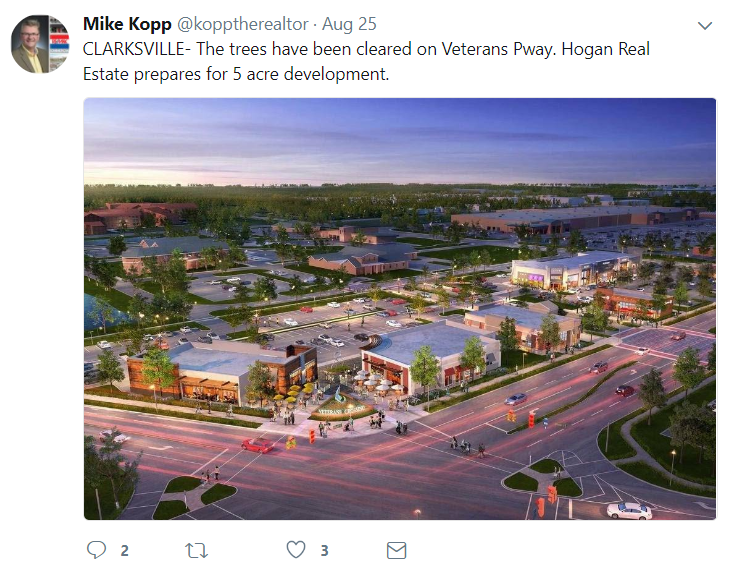
Need more green space, not less
Have you driven by the Clarksville Municipal Center property facing Veterans Parkway? It is sad to see the destruction of all the lawnscape and trees. We need to have more green space, not less. It is an unobstructed view of blight by our elected politicians in selling public domain land paid for by the taxpayers. Our politicians seem to chase the “almighty dollar.”
I have several questions. Did they have the right to sell the property? Why wasn’t the public better informed of this sale? Should we start to worry about other lands, Lapping Park, the golf courses, the area around the swimming pool? All of these properties supposedly belong to “all of us.”
What kind of absolute power have we given these politicians? I will express my displeasure with this event next time at the ballot box.
— Roger Cross, Clarksville
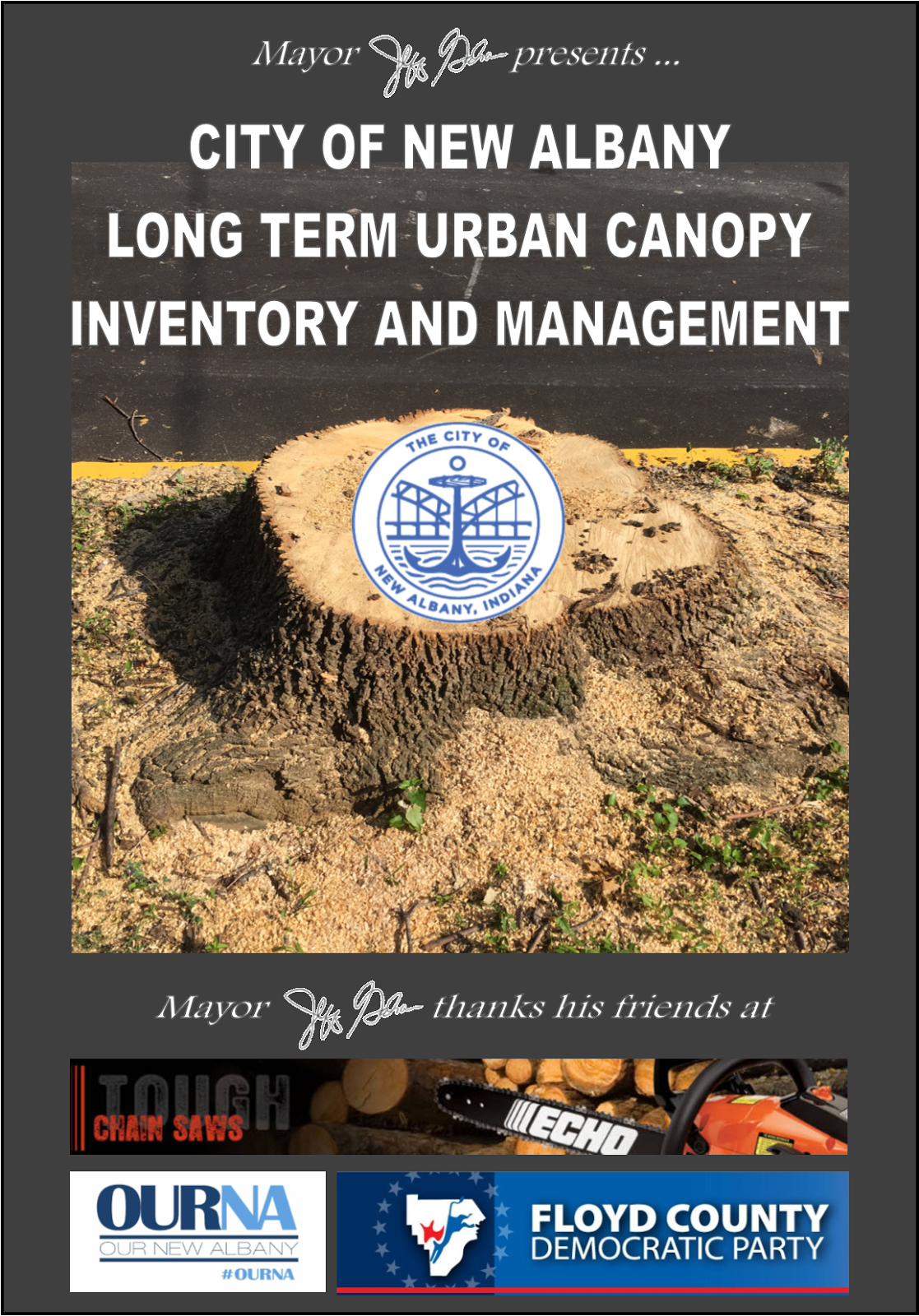
Team Gahan has clear-cut virtually the entire city, so it's the perfect time to begin pretending the junta cares about trees.
Surely not since the founding Scribners set out to clear land for the civic forerunner of present-day New Gahania have so many trees fallen as during the reign of Jeffrey I.
He insists more trees have been planted than cut, though the documentary evidence of such remains hidden safely within the labyrinthine bowels of Lawyer Gibson's Information Protection Program.
Witness the information I asked of the Tree Board in April of 2016. Sixteen months later it presumably reposes on a shelf in Gibson's bookless study, gathering dust, right there next to the remaining Bicentennial coffee table tomes that Bob Caesar insists were sold out to an eager public at $50 a pop, later to be handed out like lollipops at ribbon cuttings even as Caesar and associates denies the existence of any records pertaining to the Bicentennial Commission's activities.



Team Gahan has clear-cut virtually the entire city, so it's the perfect time to begin pretending the junta cares about trees.
Surely not since the founding Scribners set out to clear land for the civic forerunner of present-day New Gahania have so many trees fallen as during the reign of Jeffrey I.
He insists more trees have been planted than cut, though the documentary evidence of such remains hidden safely within the labyrinthic bowels of Lawyer Gibson's Information Protection Program.


