Showing posts with label Shane's Excellent New Words. Show all posts

Saturday, September 19, 2020

SHANE'S EXCELLENT NEW WORDS: A guide to conspiracy theory slang.

Here's one that we can add to Nawbany's lexicon.

Pyro·demo·redevelopment: the coincidence wherein buildings standing in the way or redevelopment plans magically catch on fire and are bulldozed. 

I'm not saying I believe we have a plan to torch buildings so redevelopment, and the (redacted)-to-play can be hastened.

Only that there are certain coincidences, that's all. It's probably nothing, right?

From plandemic to breadcrumbs: conspiracy-theory slang (1843 Magazine by The Economist)

Those who think the world is full of intrigue and plots often have their own language
There’s nothing new about looking for answers. At a time when religion is on the retreat in many countries, people often look to alternative theories of life and the universe, particularly in periods of uncertainty. As coronavirus has spread, so have conspiracy theories: protesters gather to denounce masks, vaccines and 5g networks; social-media feeds teem with histrionic videos about murky cabals and worst of all, it has reached your family WhatsApp group. But if you’re going to argue with a conspiracy theorist, you’d better speak their language. If someone tells you to “follow the breadcrumbs”, resist the urge. When you hear someone disparaging “sheeple”, stand proudly as a member of the flock. After all, it’s much harder to refute lies if you’re ignorant too.

Wednesday, June 17, 2020

SHANE'S EXCELLENT NEW WORDS: Is a blog the same as a newspaper?


The NA Confidential blog (that's short for "weblog") turned 15 years of age on October 22, 2019.

Did you know that NAC never once has been used to line a birdcage or drain the grease from fish and chips? That's because it's an internet blog, not a newspaper.

But what's the difference between an internet blog and an online newspaper?

Bizarrely, all these years later it's a question still not widely grasped. Scott Clavenna, CEO of Greentech Media, Inc., answered this query at the Quora website on April 20, 2011.

A blog can be anything - the voice of one writer or many, who is not strictly held to any codes of professional journalism, but could certainly be as good and reliable as one. An online newspaper typically assumes the writers adhere to journalistic standards - double-sourcing critical assertions in an article, allowing people or companies an opportunity to respond to assertions, adhering to a code of ethics in reporting, such as the Society of Professional Journalists's code. A blog may voluntarily adhere to all of the above, but typically calling a publication a newspaper implies they are focused on "news" and therefore should assume the standards of reporting.

Of course, historically newspapers were printed on paper and priced with the objective of making a profit. Most still are, although this business model is evolving in ways both good and bad.

Tell me more: "Bail Out Journalists. Let Newspaper Chains Die."


Since October 22, 2004, the NA Confidential blog has enjoyed only one source of investment: my time, precious or otherwise.

For fifteen and a half years, NAC has been forever pro bono and resolutely profit-free.

Not a single advertisement has been sold, ever. Not one.

Given the sea of booze I've had to consume in order to document the perpetually underachieving history of New Albany -- the Open Air Museum of Ignorance, Superstition and Backwardness -- you might say I've actually lost a great deal of money over the years blogging.

Oh, and something else: the outside world has resisted every effort to transform NA Confidential into an anthology of good writing with multiple contributors, which was one of my goals at the outset.

I suppose there are numerous reasons for this, including the ludicrous inefficiency of the free Blogger platform, my disinterest in spending money on something that's free, the writing and reading habits of the vicinity, and the tendency since the late Noughts for people to post everything long or short on social media.

Since 2004, there have been almost 15,000 posts here, and all but a few hundred of them -- probably somewhere around 5% of the total -- have been authored by me. The offer remains open, as it always has: Join me in writing for zero remuneration, see the world and be threatened with reprisals by City Hall.

None of this should be mistaken for the concession that as a blogger, I'm any less skilled in terms of writing as (for example) a guest columnist for a local chain newspaper.

Been there, done that (2009 - 2011). I had to relinquish my column to run for office in the primary. I was told I'd get it back if I lost, which I did -- then I didn't.

Rather, the overall point is simply this: blogs and newspapers are apples and oranges, and do not viable comparisons make. Let's ask this word column's legal bagel namesake for a closing point of view.

Q. Shane, are blogs and newspapers the same?

A: Ha ha. When's the last time we purchased thousands of dollars in advertising from a stupid blog?

Previously:

Hanson's Folly: There remains a complete absence of diversity among regular News and Tribune columnists.

Wednesday, May 27, 2020

SHANE'S EXCELLENT NEW WORDS (Encore Edition): Hapax. Nonce. Googlewhack.


(originally published on October 25, 2017)

Back in 2007, a blogger for the Oxford University Press greeted the release of a new edition of the Shorter Oxford English Dictionary, which omitted many "archaic" words from prior to the year 1700.

One-Hit Wonders: From Hapax to Googlewhacks, by Ben Zimmer (OUP)

 ... Some of those pre-1700 contributions wouldn’t otherwise make the cut, since they never worked their way into general usage. In fact, some words aren’t attested anywhere else in the voluminous quotation files of the OED or in Oxford’s two-billion-word corpus of contemporary English. In lexicographical circles, this type of literary one-off is called a nonce word — or, using a Greek expression that’s much more fun to say, a hapax legomenon.

Zimmer considered the then-pursuit of Googlewhacking.

Nowadays it’s much harder to find a uniquely occurring example of a word, since we have enormous online corpora at our fingertips thanks to Google and other search engines. And of course, as soon as you find an online hapax, it’s no longer a hapax as soon as you discuss it online! It’s a bit easier to find a combination of two words that appear only once on a webpage indexed by Google. This type of singular collocation has been dubbed a Googlewhack, and the hunt for them is known as Googlewhacking. It was much simpler to find Googlewhacks back in 2002 when the pastime was developed, but now most of the queries no longer yield unique search results. (I won’t mention any successful ones here lest I spoil their whackability.)

One gets the impression that with the passage of time -- and with humans having too much time on their hands -- Googlewhacking lost steam. Google the word Googlewhacking, and you'll see what I mean in terms of chronological results. At least one comedian/performer has adapted; this piece is from 2013.

Comedy gold – Dave Gorman's Googlewhack Adventure, by Bruce Dessau (The Guardian)

The self-mocking anecdotalist pinballs around the planet on an absurd, 91,000-mile trek fuelled only by goodhearted positivity

... In Googlewhack Adventure, he darts around the world meeting people whose websites are googlewhacks – meaning they are the only sites that ping up when two random words are searched for, ie "termagant holbein" or "rarebit nutter". The bearded anecdotalist is a cross between Phileas Fogg and Luke Rhinehart's Dice Man as he pinballs around the planet, meeting creationists in California and vintage car enthusiasts in Wales, constantly approaching strangers ("I'm sure my mum told me not to do that sort of thing"). Remarkable coincidences and surprising connections help him on his way: "It's like I've summoned the Googlewhack genie."

Consequently, it appears the Golden Oldies in this digression are the hapax and the nonce -- to be consumed with a Pilsner, or perhaps a nice, solid Ordinary Bitter.

How Do You Decode a Hapax? (Also, What’s a Hapax?), by Maya Nandakumar (Atlas Obscura)

It’s a word that only appears once in a work, author’s oeuvre, or an entire language’s written record.

 ... A linguistic phenomenon similar to hapaxes is the nonce word. Authors can, in effect, produce hapaxes by creating words. Shakespeare is famous for his frequent usage of such terms. In the Taming of the Shrew, a play about matrimony and courtship, the main character Katherina, describes herself as being “bedazzled” by the sun. This word was coined by the bard for this scene, but has now received commercial fame courtesy of a rhinestoning device.

Wednesday, May 13, 2020

SHANE'S EXCELLENT NEW WORDS (ENCORE EDITION): The amazing versatility of the word "piss" (PG-13).

I’ve been digging the opportunity to wear a COVID mask in public, while conceding that as a white guy, I can do it without being howitzered by those other white guys who take their bazookas with them to the bathroom to ... that's right, take a piss.

Not only is it socially responsible to wear a mask in times of pandemic, but it’s also a fun and enriching opportunity to take the metaphorical piss out of the know-nothings.

Wait, what was that?

Our lawyerly Shane’s not fluent in Commonwealth-speak?

No problem, big guy. Here at NA Confidential, we’re all about broadening perspectives and enhancing knowledge. Here’s the excellent definition, as first published here on May 9, 2018.


There's one missing from Mojo's list of British phrases: taking the piss.

Taking the piss is a Commonwealth term meaning to take liberties at the expense of others, or to be joking, or to be unreasonable. It is a shortening of the idiom taking the piss out of, which is an expression meaning to mock, tease, joke, ridicule, or scoff.[1] It is not to be confused with "taking a piss", which refers to the act of urinating. Taking the Mickey (Mickey Bliss, Cockney rhyming slang), taking the Mick or taking the Michael is another term for making fun of someone. These terms are most widely used in the United KingdomIrelandSouth AfricaNew Zealand and Australia.


It's probably a measure of testimony to the vitality of the English language that "piss" is so versatile.

Do You Confuse this Word in British or American English? (30 Uses of the Word PISS), by Chad (Real Life Global)

This is not only one of the most COLORFUL words in the English language, it can also be very USEFUL. But, be careful, because the difference between BRITISH and AMERICAN English can also make it confusing!

Apart from the literal meaning of PISS (to urinate), it can be used to talk about ANGER, INTOXICATION, JOKING, and a huge variety of other imporant uses and collocations. Even if you´re not going to use it, it's a good idea to know how others use it.

In honor of the Triple Crown, let's pause to recall that yes, a racehorse pees like a racehorse.

horse_pee_like_a_racehorse.html">Does a Racehorse Pee Like a Racehorse?, by David Sessions (Slate)

The third leg of horse racing's Triple Crown takes place on Saturday, with the running of the Belmont Stakes. Around 60,000 fans will be watching in Elmont, N.Y., as they put down beer and the track's signature cocktails. Needless to say, they'll probably be peeing as much as the racehorses. Wait, how much does a racehorse pee?

A lot.

As for the etymology ... think "pissoir," a public urinal in France.

online.com/word/piss">piss (v.)

late 13c., from Old French pissier "urinate" (12c.), from Vulgar Latin *pissiare, of imitative origin. To piss away (money, etc.) is from 1948. Related: Pissed; pissing. Pissing while (1550s) once meant "a short time."

City Hall was taking the piss when it omitted the pissoir from the farmers market. We were pissed, but now they park a portable pissoir there, and we have a place to piss, because after all, daytime on Saturday is the ideal slot to get pissed. Know what I mean?

Wednesday, May 06, 2020

SHANE'S EXCELLENT NEW WORDS: The PLANdemic is hokum, doofus.


Here's the best current definition of the word "hokum."


It's so obvious that even the namesake of this column understands it. The etymology is somewhat mysterious, not unlike the reasoning of pandemic conspiracy nutjobs.

hokum (n.)
1917, theater slang, "melodramatic, exaggerated acting," probably formed on model of bunkum (see bunk (n.2)), and perhaps also influenced by or based on hocus-pocus.

And, a standard definition:

hokum [ hoh-kuh m ]

noun

out-and-out nonsense; bunkum.

elements of low comedy introduced into a play, novel, etc., for the laughs they may bring.

sentimental matter of an elementary or stereotyped kind introduced into a play or the like.

false or irrelevant material introduced into a speech, essay, etc., in order to arouse interest, excitement, or amusement.

Wednesday, April 22, 2020

SHANE'S EXCELLENT NEW WORDS: Lockdown language learning (hazardous foreigner edition).


It is a matter of considerable disappointment that I’ve never learned to speak a foreign language, at least outside of Restaurant Menu German, Ask for a Beer in Russian and Really Simple Numbers Spanish.

Accordingly, it annoys me when a writer inserts a foreign language phrase into the narrative without translation, especially when it’s French. Stray Latin words creeping into our vernacular (“Et tu, Brute?”) are one thing, but interrupting the account of a soccer match to quote Montesquieu strikes me as both pretentious and unnecessary.

At any rate, it's good to know a language other than our own, and maybe this is something I can finally get to conquering in the coming months.

How to learn a language in the lockdown at The Economist

It is a quintessentially social skill—but easier than ever to develop at home

Living in lockdown has led many people to undertake some self-improvement. Alongside baking or cramped fitness regimes, some have chosen intellectual projects—such as picking up or mastering a foreign language. This interactive skill might not seem to be one that is best honed alone. But learning a language in isolation is much easier than it used to be.

One summer many years ago, as he spent many hours driving alone to work, your columnist learned French with the help of an ancient course developed to train American diplomats. Not only were its text basic and cassettes low-tech; it was also low-concept. Exercises seemed to have much more repetition than was necessary: Mon frère va bien. Mon père va bien. Mon fils va bien. Mon ami va bien,murmured the tape, with pauses for repetition. (My brother is doing well. My father is doing well…)

There was method in this drudgery. The skeleton of the sentence was drummed in, with just one word changing: Mon X va bien. Next, another variable was altered. A new list of six sentences cited feminine nouns instead: Ma Z va bien. With little instruction, the variation between feminine and masculine was pounded home. It was slow, not much fun—and incredibly effective. (Many of these old courses are now free online at www.fsi-language-courses.net.) ...

Wednesday, April 08, 2020

SHANE'S EXCELLENT NEW WORDS: The German word Fernweh, or "farsickness."


Homesickness for a place I've never been?

The concept is discussed in the article linked below. The answer in my own personal instance begins with the city of Trieste, to which I'm powerfully drawn -- but I've been there, so it cannot qualify.

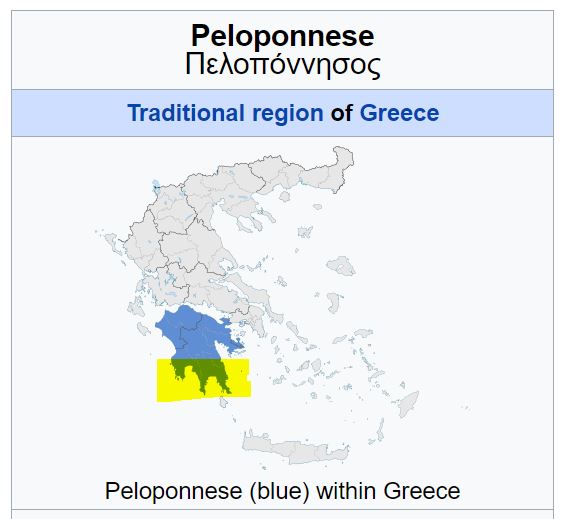
Consequently, it's the southern Peloponnese in Greece.


The photos preceding are from the vicinity of the Mani peninsula. In 1985 I came close, relatively speaking, having traveled briefly in the northern Peloponnese by the Gulf of Corinth, from Patras to Athens, and then to Nafplio before returning to Patras for the boat back to Italy.

Even then I felt an attraction to the wilder, elemental areas to the south, but a combination of inexperience and a wider travel agenda caused me to put it off "until next time." Unfortunately there hasn't been a next time, at least yet.

Two previous links: 

ON THE AVENUES: From Baltic to Mediterranean, the diary of an unrepentant New Albanian Europhile.

More about Patrick Leigh Fermor, travel writing and a lost European world.


And now ... Fernweh. Farsickness is the opposite of homesickness, and can also imply wanderlust. I plead guilty to these various charges.

Many of You Are Homesick—For a Place You’ve Never Been, by Eric Grundhauser (Atlas Obscura)

We asked which places gave you “fernweh,” and you gave us poetry!

A couple weeks back, we asked Atlas Obscura readers to tell us about the places that make them feel a sense of fernweh, a German word that literally translates as “farsickness.” Put another way, it’s the concept of feeling homesick for a place you’ve never been or could never go. The responses are in, and they are beautiful.

By far the destinations that our readers said invoke that strange sense of foreign homesickness more than any other are the misty green landscapes of Scotland and Ireland, with an overwhelming number of responses invoking those two regions. Icelandic and English locales were also popular places that you miss without having been there. Still others wrote in to tell us about their feeling of connection with fictional places such as The Shire and Narnia.

But the common thread among nearly all the responses is a sense of poetry. Your responses speak of places both real and imagined, in lush, often evocative verse that paints a vivid picture of your own personal fernweh. Since we received hundreds of responses to our question, we couldn’t share them all, but a selection of our favorites can be found below ...

Wednesday, April 01, 2020

SHANE'S EXCELLENT NEW WORDS: Supergrass!


Supergrass was a ferocious, witty, joyous band generally associated with the 1990s-era "Britpop" rock-with-actual-instruments phenomenon, but in fact orbiting somewhere on the fringe.

Rock? Pop? Alternative? How about cool as fuck, and leave it at that?

The video is a documentary released in conjunction with an early 2000s compilation; it stops short of the group's final two albums. There was to have been a 2020 reunion tour, and perhaps the February portion went through before the planet shut down.

Supergrass tell us about their reunion and 2020 tour: “We’re going to bring joy into a slightly disturbed world” -- NME

Supergrass: "We're always been about manic energy" -- The Guardian

So, where does Shane enter into it? Supergrass doesn't fit the buttoned-down Gahanist culture of corruption.

Having been a Supergrass fan since 1999 or thereabouts, it never dawned on me even once to learn what "supergrass" means, if anything.

When (Gaz) Coombes began working at the local Harvester he befriended co-worker Mick Quinn. The two realised they had common music interests and Coombes invited Quinn to come and jam with himself and (Danny) Goffey. In February 1993 they formed Theodore Supergrass, "for about two months" Quinn explains, "then we realized that Theodore was a bit rubbish so we took that off."

Goffey claims that the name was his idea and says; "Although the others will dispute it, it was me. We were Theodore Supergrass and the idea was the band would be a little black character, and we wouldn't ever have to do interviews. We'd get the questions in advance, script the answers and then animate Theodore Supergrass answering them. But it cost too much money."

In British English, "supergrass" is an informant.

supergrass
noun
US /ˈsuː.pɚ.ɡræs/ UK /ˈsuː.pə.ɡrɑːs/

a person, especially a criminal, who gives the police a lot of information about the activities of criminals, especially serious ones

Compare: fink, sneak, snitch, stool pigeon, telltale, tattletale

Gaz gets the coda.

“It was being in the studio that broke us. For me it was almost like post-traumatic stress – why would you want to revisit a place where one feels it was at its worst? Supergrass has always been about manic energy. The essence of playing live is where it really works.”

Glastonbury, 2004:


Wednesday, March 25, 2020

SHANE'S EXCELLENT NEW WORDS: Marshal your TP stash just in case martial law is imposed.


We're informed by The Economist that while overall literacy never seems to improve, people actually seek a dictionary during trying times.

Merriam-Webster, one of the best-known names in American dictionary-making, has for years tweeted about spikes in look-ups for words during major public events. This time of pandemic is no different. The most obvious spikes are for terms like coronavirus itself—up by 1,100,000% (see chart).

But other terms allow the data-watcher to see the crisis develop: people began searching increasingly for epidemic in mid-January, and pandemic in early February. Terms related to prevention have seen a jump as well: quarantine and self-isolation in mid-March, for example. (Side note to etymological sticklers: if you are the type to insist that to “decimate” means to destroy roughly a tenth of something, your quarantine must last 40 days.)

As governments began to act, people sought to understand what was going to be done: draconian, lockdown and triage began surging in February. Martial law, too, but for a specific reason: an American senator, Marco Rubio, tweeted a solecistic reference to “marshall law” on March 16th, leading to the spike in lookups.

Let's unpack the last sentence in the preceding. First, I found a good definition for "Marco Rubio" at Mother Jones.


Here is Rubio's infamous "marshall law" tweet.


The Economist refers to Rubio's usage as "solecistic," which is an adjective derived from the noun "solecism."

so·​le·​cism | \ ˈsä-lə-ˌsi-zəm , ˈsō- \

Definition of solecism

1: an ungrammatical combination of words in a sentence
also : a minor blunder in speech

2: something deviating from the proper, normal, or accepted order

3: a breach of etiquette or decorum

Even if we knew what Rubio meant, and wouldn't have given it a second thought had we heard him say the words aloud because they sound alike, it's "martial" law, not "marshall."

Merriam-Webster provides clarification. Seeing as the word "martial" is an adjective pertaining to war and the military, "martial law" is the state of law applied, enforced and maintained by the military.

Conversely, when used as a noun a marshal (or marshall as accepted alternative spelling) is an official, leader or chief -- as in the fire marshal. It also can indicate action; to marshal one's forces is to lead, arrange or prepare them.

"Martial" is of Latin origin, while "marshal" comes to the English language from old-school Germanic, via France. To Rubio's credit, he speaks Spanish; it would help us all to be bilingual, even allowing for imperfections in the composition and execution of tweets.

Wednesday, March 18, 2020

SHANE'S EXCELLENT NEW WORDS: Normalcy or normality? I've made up my mind.


There's damage out there some place
You got to step aside
Where are you going that decision is made
That's how it started
Too hot and dirty inside
Contain your feelings when there's nowhere to go


After years and years of dithering, I've chosen normality over normalcy. English speakers have come to use these words interchangeably, and that's fine, but damn it, each of needs to make a choice NOW.

Normality gets my vote, and I'm sticking with it.

Whether you prefer normality or normalcy, one thing's for certain: we won't be having any of it for a very long time to come. Our favorite Doctor Councilman Al Knable explains the social aspect of normalcy/normality in a time of COVID-19 in this excellent op-ed piece contributed to the local chain newspaper.

KNABLE COLUMN: The road back to normalcy

There is an old yarn that tells of a weary traveler who, in the days before GPS and navigation apps, found himself far from home, hopelessly lost in the country. Indeed he was “off the map.”

Minutes passed as hours. Miles rolled beneath him, carrying him no closer to home, the gas gauge approaching “empty.” Desperate for assistance, the lost soul finally came across a seedy gas station, which to him appeared like an oasis in the desert.

Honking his horn with joy, a sleepy gas jockey at length appeared. The driver, overcome with relief exclaimed, “Fill ‘er up! And can you please tell me how to get back to the highway?”

The attendant puzzled a long moment, carefully studied the map and then answered sheepishly, “Mister, I’m afraid you can’t get there from here.”

This is our predicament. We are the traveler, the highway for lack of a better word is “normalcy” and we are off the map with no one who can tell us exactly how to handle this coronavirus outbreak.

People are afraid — more so even than after 9/11. No doubt some of this anxiety comes from facing an enemy even more unseen and insidious than Al-Qaeda. The uncertainty of just how bad things might get, our loss of freedom of movement add fuel to our concerns. There is perhaps so much information emanating from so many sources without rest that no one entity is deemed as the authority. Thus information mingles with misinformation breeding rumor and fear.

So how do we return to normalcy?

As for my personal decision to opt for normality, there's a good explanation here.

Normality and Normalcy, by Maeve Maddox (Daily Writing Tips)

Both nouns derive from the adjective normal.

normal: conforming to a standard; usual, typical, or expected.

The adverb is normally.

According to some speakers, normalcy is an abominable neologism to be avoided at all costs. This attitude is illustrated by this comment praising a writer for preferring normality over normalcy:

A Nobel in Literature to you for writing “return to normality” instead of the ugly neologism “normalcy,” first popularized by Warren G. Harding.

Actually, according to the OED, this particular “neologism” was around as early as 1857, nearly half a century before Harding used it in his campaign in 1920 when he promised “a return to normalcy.”

(snip)

Normalcy is not interchangeable with normality in some contexts. For example, in comparing an untypical condition to a typical condition, one would want to pair abnormality with normality and not normalcy. Although the form “abnormalcy” is showing up on the web and even in some dictionaries, it’s not in the OED, and it is not standard in American speech.

Bottom line: Normalcy is well established and acceptable in standard American speech, although it is not interchangeable with normality in some contexts. Normality, on the other hand, suits every context in which the sense “the state or condition of being normal” is intended.

Wednesday, March 11, 2020

SHANE'S EXCELLENT NEW WORDS: We're utterly gobsmacked at an unexpected Extol absence.


Leafing through the latest edition of Extol Magazine, we're gobsmacked to see that the City of New Albany no longer is listed among the advertisers, and the usual full page advertisement from the Gahan4Life people is missing.

Understanding that New Albany's ruling elites typically don't stoop to converse with NA Confidential, the Green Mouse still feels compelled to ask:

Could it be that someone at the top of our muddled civic heap finally grasps the potential ethical murk of the magazine's co-owner and advertising sales head Jason Applegate simultaneously serving as city councilman? 

Note the word "potential," and recall the reasons why elected officials with potential conflicts of interest should recuse themselves or abstain from voting in certain circumstances ... even in abjectly corrupt Trumpian and Gahanan times.

If this is the case, and the whole thing isn't a coincidence, then good for them. We should strive for ethical excellence, not construct luxury dog parks atop it.

But what of the word "gobsmacked"? 

After all, the purpose of this column about words is to explore the meaning of those that typically elude the comprehension of local ruling elites. The Macmillan Dictionary Blog provides an answer.

---

Word of the Day: gobsmacked

Definition: extremely surprised

Origin and usage: Written evidence for the adjective gobsmacked dates as far back as the 1930s, although it has a much longer history as spoken slang. The term is a compound of the words ‘gob’ and ‘smack’. The Late Middle English word ‘gob’ derives from the Old French word ‘gobe’, meaning ‘mouthful’ or ‘lump’, and the word ‘smack’, comes from the Middle Dutch word ‘smacken’.

Examples: The word gobsmacked is a slang term that is generally defined as experiencing a feeling of intense surprise, such as the kind of shock you would feel if you were suddenly hit in the face. The action of clapping a hand to your mouth as a reaction to a surprising event is a less violent interpretation of the word gobsmacked. Generally, gobsmacked refers to something so shocking that it leaves you utterly speechless.

Although there are only written examples of the word gobsmacked from the last eighty years or so, it is highly likely that the word was used in spoken language before that time. The word comes from the borderlands between northern England and southern Scotland. It was later popularized by television dramas which were set in those areas, such as Boys from the Blackstuff and Coronation Street. These programs grew to attract sizeable mainstream followings, introducing the word gobsmacked into the wider world where it was then picked up by newspapers and other media.

Wednesday, March 04, 2020

SHANE'S EXCELLENT NEW WORDS: Make water closets, not clocks. Or something redevelopmental.


I may be the only one who would stitch together public toilets, mayoral megalomania and water clocks, but after all, someone's got to do it ... and it took 30 minutes on the nose.

A water clock or clepsydra (Greek κλεψύδρα from κλέπτειν kleptein, 'to steal'; ὕδωρ hydor, 'water') is any timepiece by which time is measured by the regulated flow of liquid into (inflow type) or out from (outflow type) a vessel, and where the amount is then measured.

Water clocks are one of the oldest time-measuring instruments. They were invented in ancient Athens, Greece. The bowl-shaped outflow is the simplest form of a water clock and is known to have existed in Babylon, and in Egypt, and Persia around the 16th century BC. Other regions of the world, including India and China, also have early evidence of water clocks, but the earliest dates are less certain. Some authors, however, claim that water clocks appeared in China as early as 4000 BC.

Wednesday, February 26, 2020

SHANE'S EXCELLENT NEW WORDS: Elephant in the room? Make mine pink -- or was that punk?


One might be even more of an elephant in the room by wearing a gorilla suit.

The expression "elephant in the room" (usually "the elephant in the room") or "the elephant in the living room" is a metaphorical idiom in English for an important or enormous topic, problem, or risk that is obvious or that everyone knows about but no one mentions or wants to discuss because it makes at least some of them uncomfortable or is personally, socially, or politically embarrassing, controversial, inflammatory, or dangerous.

It is based on the idea/thought that something as conspicuous as an elephant can appear to be overlooked in codified social interactions and that the sociology/psychology of repression also operates on the macro scale. Various languages across the world have words that describe similar concepts.

Here's an excellent compendium about other ways we use the word "elephant."

The elephant in the language, by Grant Barrett

Today I want to talk about elephants.

One of the joys of my work as a dictionary editor is finding arbitrary but interesting connections among words, such as those colloquial expressions in English that have to do with elephants.

Wednesday, February 19, 2020

SHANE'S EXCELLENT NEW WORDS: Gobermouch Mumblecrust and Smellfungus -- among other legal firms.


Google "old English insults" and you'll come up with numerous lists like this one. For British insults belonging to contemporary times, go here.

42 Old English Insults, by Paul Anthony Jones (Mental Floss)

Besides being the greatest writer in the history of the English language, William Shakespeare was the master of the pithy put-down. So the nervous servant who tells Macbeth his castle is under attack is dismissed as a “cream-faced loon.” Oswald in King Lear isn’t just a useless idiot, he’s a “whoreson zed,” an “unnecessary letter.” Lear’s ungrateful daughter Goneril is “a plague-sore,” an “embossed carbuncle in my corrupted blood.” And when Falstaff doubts something Mistress Quickly has said in Henry IV: Part 1, he claims, “there’s no more faith in thee than in a stewed prune.” (And there’s a good chance he didn’t intend “stewed prune” to mean dried fruit.) But you don’t have to rely just on Shakespeare to spice up your vocabulary. Next time someone winds you up or you need to win an argument in fine style, why not try dropping one of these old-fashioned insults into your conversation?

Here are just a few.

2. BEDSWERVER
An adulterer. Another of Shakespeare’s inventions that became popular in Victorian slang.

6. DALCOP
Cop is an old word for the head, making a dalcop (literally a “dull-head”) a particularly stupid person. You can also be a harecop, or a “hare-brained” person.

11. FOPDOODLE
An insignificant or foolish man.

13. FUSTILARIAN
Another of Shakespeare’s best put-downs, coined in Henry IV, Part 2: "Away, you scullion! You rampallion! You fustilarian! I'll tickle your catastrophe," Falstaff exclaims. If not just a variation of fustylugs, he likely meant it to mean someone who stubbornly wastes time on worthless things.

20. LOITER-SACK
This is a 17th century term for a slacker. An idling, lazy good-for-nothing. Literally, someone who seems to spend all day in bed.

30. SKELPIE-LIMMER
A badly-behaved child. Coined by the Scottish poet Robert Burns from the old Scots word skelpie, meaning “misbehaving” or “deserving punishment.”

40. WHIFFLE-WHAFFLE
An indecisive, time-wasting ditherer.

Wednesday, February 12, 2020

SHANE'S EXCELLENT NEW WORDS: Gorilla, guerrilla and other curious attributes of urban narcissism.


A fine 1973 single by Hawkwind, with Lemmy on rhythm bass. Meanwhile the words gorilla and guerrilla have quite different meanings, but have been known to serve as a litmus test for self-indulgence.

Choose Your Words: gorilla/guerrilla

You might see a gorilla in a zoo, but a guerrilla (sometimes spelled with one "r"), is someone who belongs to a group of independent fighters. If you remember your high school Spanish, you'll know the difference.

A gorilla is a type of large African ape. Sure they fight, but that's not why they're called gorillas. When they show up in the news, they're usually just monkeying around.

A guerrilla, on the other hand, is a fighter who's a part of a rebellious group that's battling a government or other authority, and likes to raid and ambush. The word has picked up a casual meaning of describing anything that's meant to take you by surprise.

So how will knowing your high school Spanish help you keep them straight? Guerrilla comes from the Spanish word for a war made up of skirmishes. That guerilla is related to guerra for (you guessed it), war. If you remember that guerra is war and guerrilla is little war, you'll remember that in English, independent fighters are guerrillas, no matter how hairy they are.

It's been only a year (March 11, 2019) since NAC's celebration of National Gorilla Suit Day, but what the hell.

---

Here's Don Martin's classic National Gorilla Suit Day, soon to be a DNA fundraiser.


One Fine Day in Front of Jimmy's Music -- with apologies to the late, great Don Martin.


I missed National Gorilla Suit Day this year. Actually I've missed it every year for decades because when you're 6' 4" and 250 lbs, it's hard to find such a costume of any sort.

Just now, after picking myself up off the floor after dissolving in the deferred laughter of 40+ years, Diana accuses me of regressing to childhood. Maybe, but a resistance leader needs a good clean laugh, especially in New Gahania.

As all gorilla suit aficionados know, National Gorilla Suit Day is the invention of the late Don Martin, once known at "MAD's Maddest Artist;" the holiday featured prominently in his 1963 paperback collection, "Don Martin Bounces Back" in which he told the tale of the aforementioned Mr. Bestertester's opposition to the festivities and the carnage that is visited upon him as a result. The story features people in gorilla suits, gorillas in people suits, gorillas in gorilla suits, and some of each in various other disguises, in a 56-page extravaganza full of Martin's trademark absurd violence and giggle-inducing sound effects.

I may have spoken too soon.

Wednesday, February 05, 2020

SHANE'S EXCELLENT NEW WORDS: Is it discreet, or discrete ... circumspect or distinct?


There are numerous examples in English of confusing word pairs, sounding similar but with different meanings.

Examples:

lose and loose
affect and effect
further and farther

Also, discreet and discrete. I always have to pause than think before using these words.

Discreet means on the down low, under the radar, careful, but discrete means individual or detached. They come from the same ultimate source, the Latin discrētus, for separated or distinct, but discreet has taken its own advice and quietly gone its separate way.

Today discreet is to be politely private about something and to be aware of consequences if everyone finds out what you're doing. Be discreet when you eat the lollipop your mom gave you but not your sister, so you don't have to listen to a tantrum. Wealthy people often try to be discreet with their money, because they don't want everyone to know they're rich. When you're trying to be cool, and keep something quiet, you're being discreet:

A source said: "Wayne attracts a lot of attention and the millionaires attracted to the area like to be more discreet." (The Sun)

Sound Level: Quiet, with widely spaced tables allowing for discreet conversations. (Business Week)

Discrete remains closer to its roots, meaning individual, detached, separated:

It is far better to think of these as isolated, unpredictable, discrete events. (Salon)

Quantum theory is usually thought of as discrete; after all, that's what the word "quantum" connotes. (Scientific American)

So last year, when earthquakes were recorded in small, discrete clusters in north central Arkansas, researchers perked up. (New York Times)

Although discreet and discrete have separate (or discrete) meanings, they are often confused. Remember that the "ee's" in discreet hide together in the middle of the word, but the "t" in discrete separates them.

Wednesday, January 29, 2020

The return of SHANE'S EXCELLENT NEW WORDS: Sycophants and other brown-nosing spaniels.

Following is an encore presentation of the SHANE'S EXCELLENT NEW WORDS column from June 8, 2016.

The idea for a column about words and ideas dates to late 2015, when city attorney Shane Gibson took to social media to mockingly disparage the subversive notion of a healthy vocabulary, and to pillory those daring to use it, seeing as anyone with a broad working knowledge of the English language surely poses a mortal threat to the sportsball watchers at City Hall.

My sabbatical is the perfect time to resuscitate SHANE'S EXCELLENT NEW WORDS, and so I'll seek to get back into the habit of posting on Wednesday. 

---

Welcome to another installment of GREG's SHANE'S EXCELLENT NEW WORDS, a regular Wednesday feature at NA Confidential.

But why all these new words?

Why not the old, familiar, comforting words, like the ones you're sure to hear at the golf course when brothers-in-law casually chat about their millions in epochal development plans for an unstable hillside?

It's because a healthy vocabulary isn't about intimidation through erudition. Rather, it's about selecting the right word and using it correctly, whatever one's pay grade or station in life.

Even remuneration-engorged municipal corporate attorneys are eligible for this enlightening expansion of personal horizons, and really, as we contemplate what they knew and when they knew it, all we have left is plenty of time -- and the opportunity to learn something, if we're so inclined.

Today's word is sycophant, one of my personal favorites. Note the preferred pronunciation: SICK-uh-funt, or thereabouts. At the same time, you'll occasionally encounter a PSYCHO-funt, but usually only at Democratic Party costume balls.

sycophant

[sik-uh-fuh nt, -fant, sahy-kuh-]

noun

1. a self-seeking, servile flatterer; fawning parasite.

Origin of sycophant 

1530-40; < Latin sȳcophanta < Greek sȳkophántēs informer, equivalent to sŷko (n) fig + phan- (stem of phaínein to show) + -tēs agentive suffix

Related forms
sycophantic, sycophantical, sycophantish, adjective
sycophantically, sycophantishly, adverb
sycophantism, noun

The list of synonyms for sycophant is especially entertaining and colorful: Yes-man, bootlicker, brown-noser, toady, lickspittle, flatterer, flunky, lackey, spaniel, doormat, stooge, cringer, suck, suck-up.

There's even an academic article: "Grovelling And Other Vices: The Sociology Of Sycophancy." Here is a sample sentence:

When the sycophants start calling you a malcontent, there is a sense of pure vindication.

Sunday, January 05, 2020

SHANE'S EXCELLENT NEW WORDS: A slippery slope all the way to ... the point of no return?

Manic Street Preachers had a hit song in 1998 with a variation on a theme of slippery slopes.


The future teaches you to be alone
The present to be afraid and cold
"So if I can shoot rabbits then I can shoot fascists"

Bullets for your brain today
But we'll forget it all again
Monuments put from pen to paper
Turns me into a gutless wonder

And if you tolerate this then your children will be next
Will be next, will be next, will be next


The song is about the Spanish Civil War in the 1930s, saying in essence that if "we" tolerate fascism somewhere else by not assisting in the fight against it, as with supporting the legally elected government in Spain at the time as it was engaged in a life-or-death struggle against Franco's insurgency, fascism will be victorious, gain strength and visit our own homes.

As you probably already know, Franco won the war with the assistance of Hitler and Mussolini (the Soviet Union supplied the Republicans). Subsequently the proxy Guernica atrocity became a mere prelude to far worse elsewhere -- but does this fact alone confirm the slope's slipperiness, or were there too many other unknowable variables to be so sure?

Here is one definition of the slippery slope.

A slippery slope is an argument that suggests that a certain initial action could lead to a chain of events with a relatively extreme result, or that if we treat one case a certain way then we will have to treat more extreme cases the same way too. For example, a slippery slope argument could involve saying that if we allow a relatively minor event to take place now, then a major and tragic event will happen in the near future as a result.

The Guardian warns that usually the logic behind the slippery slope concept is fallacious.

In the field of informal logic, the slippery-slope argument is a fallacy when the endpoint does not follow necessarily from the initial step, which is especially obvious if there are many (unidentified) intervening stages involved.

However, the newspaper acknowledges a degree of attitudinal sense to the notion of a slippery slope.

The most sensible thing that can be meant by an appeal to slippery slopes is not a truth about the dynamics of public policy, but rather a worry about our moral psychology. The idea must be that, if we all get used to this one new thing being allowed, we will be less able to resist a slightly more alarming thing in the future.

Or, the way to boil a frog alive one degree at a time.

This all arises because earlier today, while writing, I contemplated the use of "slippery slope" to describe a certain situation. Before doing so, it seemed it might be useful to know more about the term, and after researching it, my understanding has improved.

However I kept "slippery slope" in the essay because I feel the context is appropriate.

To me, using "slippery slope" never implied absolute determinism -- that the initial step always would lead to an alarming outcome. Rather, my interpretation has been that by undertaking the first step, conditions for the outcome were being made possible and encouraged, as when you learn that it's hell getting the genie back in the bottle.

Wouldn't you like to think it through first, before taking a step that might be irreversible?

Never mind. The slippery slope already has brought me to the Kenny Rogers Theorem, coming tomorrow.

Saturday, December 28, 2019

SHANE'S EXCELLENT NEW WORDS: The unremitting scourge of bangorrhea.


(Originally published on August 18, 2018)

No sirree, I won't back down.

I will continue my lonely struggle against bangorrhea (exclamation mark diarrhea) for so long as an ounce of strength remains to tear my hair and mutter recriminations.

To be honest, it never occurred to me that rampant exclamation mark misuse and abuse could be traced to terminal punctuation anxiety. Thanks to the Bookseller for focusing my awareness.

Guys! Exclamation Points Are Out of Control.

By Heather Schwedel (Slate)

Everyone knows that ending a sentence with a period is just about the rudest thing one human can do to another, murder and cuckoldry notwithstanding.

“I hope this note finds you well.” Brutal. “See you then.” Honestly, a little menacing.

It wasn’t always this way—periods have only taken on a sinister cast in response to the rampant exclamation point inflation of the past 15 or so years. The advent of smartphones and, before them, the personal computer, led to the rise of emailing and texting, which long ago surpassed the spoken word as our dominant form of communication. An article in Monday’s Wall Street Journal joins a chorus of other publications that have written about our changing terminal punctuation mores—and the anxiety they can cause. (An anecdote in the WSJ story focused on an employee who thought her boss was angry at her when she ended an email without a slammer.)

What can we do about this? Is there any way to fight back? Or are we doomed to live in a world where every sentence will need to have a minimum of three exclamation points in order to be read as anything less than outright hostile?

To me the answer is perfectly clear. It's not Yiddish -- it's English: STOP IT.


It seems that we have Urban Dictionary to thank for coining "bangorrhea."

If you move past the definitions involving disgusting sexual disorders (which every UD entry has at least one of) and the culinary shortcomings of Bangor, Maine, you’ll find bangorrhea defined as “[the overuse of] exclamation points in a vain and failing attempt to make your writing sound more exciting.” At some point in our careers, all copy editors have to clean up someone else’s bangorrhea. And we complain about it, too. This handy word makes it easier to talk about.

This isn't the first time "bangorrhea" has graced these pages. It was almost exactly five years ago, on August 24, 2013.

In which we examine the phenomenon of bangorrhea. Thanks to B for the link.

Elmore Leonard: Do we use too many exclamation marks?, by Finlo Rohrer (BBC)

Elmore Leonard has died at the age of 87. The crime novelist really didn't like exclamation marks, notes Finlo Rohrer.

His 10 rules of writing from 2001 are arguably as famous as any of his novels. Point five reads: "Keep your exclamation points under control. You are allowed no more than two or three per 100,000 words of prose."

He wasn't the only enemy. "Cut out all these exclamation points," F. Scott Fitzgerald urged. "An exclamation point is like laughing at your own joke."

There's even a word, bangorrhea, that describes their overuse.

Wednesday, December 11, 2019

SHANE'S EXCELLENT NEW WORDS: Classist versus classicist, in beer and at other places.


Classism versus classicism? The words have very different meanings.

classism
[klas-iz-uh m]
noun
a biased or discriminatory attitude based on distinctions made between social or economic classes.
  1. the viewing of society as being composed of distinct classes.

There was a time when I was knowingly and even joyfully classist pertaining to beer. In fact, it was the basis for my career in beer. In the sense of social classes, my viewpoint held that mass-market beer drinkers were the willfully ignorant lower class, suitable for abuse by those who had grasped higher "better beer" truth.

Recall the Miller Lite advertising tag in the early 1990s: "It's IT and that's THAT."

My rejoinder: "It's SHIT and that's THAT," and the FOSSILS homebrewing club had buttons made as a form of provocation.

It seems a bit silly now, and in my defense the cascading abuse was accompanied by unrelenting efforts to educate about beer for anyone inclined to pay attention.

Then a funny thing happened, because we "won" and the beer world changed, kinda sorta. However, I awoke one morning to find the world hadn't changed quite to my liking; now everyone knew about good beer for so long as the libation in question referred to itself as an IPA. Other styles and traditions had been completely forgotten by the attention-deficit-impelled New Wave.

Being contrarian by nature as well as long practice, this implied a rethink, and I became a proud beer classicist.

classicism
[klas-uh-siz-uh m]
noun
  1. the principles or styles characteristic of the literature and art of ancient Greece and Rome.
  2. adherence to such principles.
  3. the classical style in literature and art, or adherence to its principles (contrasted with romanticism).
  4. a Greek or Latin idiom or form, especially one used in some other language.
  5. classical scholarship or learning.

Toward this end and for my present purposes, "classicism" suggests a preponderance of the fifth definition, "classical scholarship or learning." In short, back to beer basics and familiarity with all the styles, not just two or three. Everything I'm trying to do with the beer program at Pints&union is centered on a classicist approach to beer, emphasizing long-held values while not excluding the new, but contextualizing the past 30-odd years within the framework of classicism.

And yes, Pints&union has mass-market beer, too. On that front, it was a case of me getting over myself, and I've succeeded ... most of the time. I've highlighted the closing sentences of this coda.

Many enjoy classical concerts, and for many different reasons. For veteran subscribers, those reasons will often be a combination of social and professional, as well as inspirational. But it is the rarity of the occasion of classical events that give us the feelings of ease, elegance, thoughtful study, even moral purpose and clarity. People dress up, are especially civil, and expect to experience some of humanity’s highest artistic achievements. Some enjoy that we can all feel classy together; enjoying a lifestyle we can’t afford. Symphony Hall and the Opera House will do that, but this has more to do with a classicism that says everyone deserves beauty, and must not be mistaken for classism that says only the cogniscenti deserve beauty. The former can unite us all, while the class warfare of the latter divides us.