Showing posts with label environmental impact. Show all posts

Wednesday, July 22, 2020

Florida man explains why Miami is doomed.


I've never been to Miami.

The southernmost point of Florida I've ever reached is Orlando; we were there for a reunion and I didn't get anywhere close to Disney-anything.

In fact, the only time I've ever visited a beach in Florida was 1983 (I think) in Pensacola. The past six to eight weeks I've looked on with fascination and a sizable element of horror as quite a few people I know have made it a point to hit the beach in Florida at precisely the same time as COVID cases began exponentially increasing there.

I'll now spend months, perhaps years, wondering just what the fuck these people were thinking, or if they were thinking at all.

But none of this has anything to do with Miami, a city I'm fairly confident will never make it to my bucket list.

Trieste ... now there's a seaside city that appeals to me.

The City That Lived, by Jake Bittle (The Baffler)

Miami’s bleak future on the front line of climate change

 ... It is this almost gauche dramatic irony that sits at the heart of Disposable City: Miami’s Future on the Shores of Climate Catastrophe, a new book by the journalist Mario Alejandro Ariza. A nearly lifelong Miamian who has spent years reporting on the city’s political and environmental troubles, Ariza sets out at the start of the book to draft a kind of reported prognosis for his hometown, knowing full well that the final result won’t be encouraging. In the course of his investigation, he bops around from court hearings to mangrove forests to nonprofit offices, consulting with dozens of different experts and advocates to get a sense of just how much time the city has left. The conclusions are about what you would expect: the city is going to fall apart, the poor are going to get hit hardest, and things are going to get very grim if the federal government doesn’t step in to help.

snip

 ... As he sketches out the myriad threats to the Magic City’s survival, what Ariza shows most convincingly is that Miami is utterly unique, the product of a world-historical combination of bad decisions. What will make life in the city unsustainable over the next century is not a rise in sea levels or an uptick in ocean temperatures but the spatial and social dynamics of Miami itself. The climate crisis, in other words, has merely exposed the rot that was already there.

The factors contributing to Miami’s near-term collapse are so numerous that it would be futile to list them all here, and indeed Ariza himself struggles to fit it all in over three hundred pages, zipping from flawed septic systems to threatened ecosystems to racist urban planning. Ultimately, the city’s original sin is the fact that it was ever built ...

Sunday, February 09, 2020

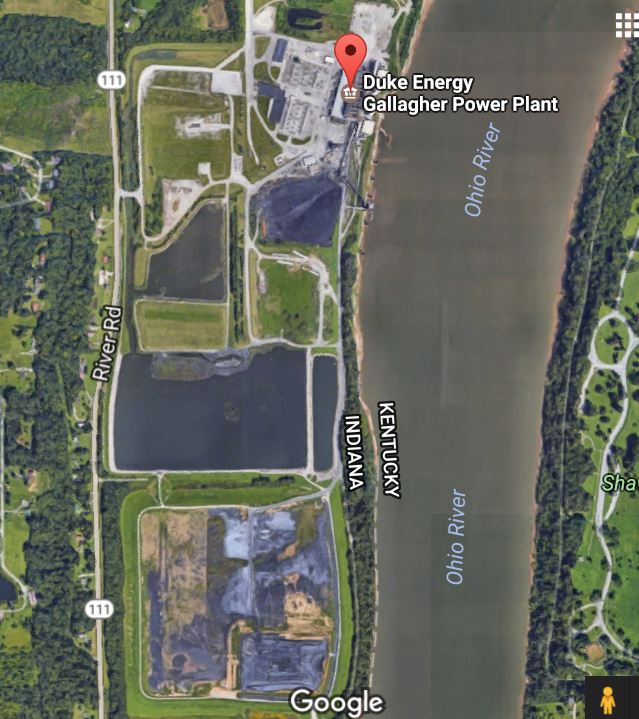
9 million tons of Duke Energy's coal ash, the EPA's proposal to loosen regulations about it, and Earthjustice's lawsuit against the EPA.


The press release from Earthjustice is reprinted verbatim, which I'm doing because it's a very big deal, literally and figuratively, that nine million tons of coal ash reposes on the property of the soon-to-be-shuttered Gallagher Station plant, which lies precisely two miles from the Reisz Mahal.

A friend recently asked Duke Energy about the situation.

We received your question about coal ash at Gallagher Station. We’re pursuing a combination of both excavation and capping in place at Gallagher. All decisions are based on science and engineering and have to be approved by state environmental regulators. Please let us know if you have further questions.

For background, a few previous posts.


9.3 million tons of dangerous coal ash right here in Anchor City? Good thing it's not a campaign issue.

Dan Coffey wasn't making it up: 500,000 truck trips would be necessary to remove Duke's toxic coal ash from the Gallagher plant's ponds.

Tonight is the public meeting about Duke Energy's coal ash disposal. Gahan to send summer intern with information about the Bicentennial Park Concert Series.


Here's the release. 


---

Good afternoon. Today the nonprofit Earthjustice sent EPA formal notice of its plan to sue for EPA’s refusal to hold an in-person public hearing on proposed coal ash regulatory rollbacks. This action is being taken on behalf of impacted communities throughout the nation, including New Albany with the Lower Ohio Riverkeeper based there as a plaintiff, as well as a resident of Louisville who lives near the Mill Creek Plant and recreates on the Ohio River. There are more Indiana plaintiffs based in Indy (Hoosier Environmental Council), Lafayette (Wabash Riverkeeper) and a resident of Lawrenceville.

The EPA’s decision to hold a hearing via an online conference call with no video eliminated the ability for many people affected by the rollbacks to participate. Here’s the notice.

The rollbacks would have serious adverse impacts on the health of individuals across the country and the environment. Specifically, this proposed rollback would make it easier for utilities to keep leaking coal ash ponds operating and polluting longer and allow millions of tons of additional toxic coal ash waste to be dumped into leaking and/or dangerously sited ponds.

The decision to eliminate in-person public hearings impairs public participation. The virtual public hearing was announced online and requires that participants register and call-in via an online platform. These hearings are particularly challenging for communities with limited internet access, which coincide with communities that are disproportionately impacted by coal ash. Only having a virtual hearing strikes at the very heart of democratic, public participation - participants have no opportunity to face and speak directly to EPA officials, to use visual aids, and bring people who are very sick from exposure but aren’t up to speaking out. At the January 7, 2020 virtual hearing several commenters openly questioned whether anyone was listening to them at all. Virtual hearings can be a useful supplement to in-person hearings but should not replace them. In addition, this comment period coincided with the holidays.

These concerns led 87 public interest organizations to write EPA requesting that it hold an in-person public hearing and to extend the comment period.

EPA rejected that request in December. Meanwhile, EPA did have the time to privately meet in-person with over 50 coal industry officials on November 19, 2019. 

Saturday, September 21, 2019

For once Deaf Gahan is right: The hilltop Fairfield atrocity is a "perfect fit" with maximum pay-to-play monetization.


The Fairfield Chain Hotel Atrocity in the newly created mudslide zone off State Street is a remarkably ugly building to be serving as the crowning achievement of any triumphant suburban development, much less atop a plat denuded and strip-mined to make way for it.


And yet Deaf Gahan somehow is impressed by all this. It can't be the aesthetics unless he's also blind, so it must be the campaign finance donations from the profiteers involved with the hotel's construction. After all, deaf, dumb and blind boys still know how to count the money.

Gahan's crack team of Goebbels-intensity spinners has gotten lots of mileage from this misplaced development obscenity, and we can only hope voters are sufficiently hip to see through the malarkey.

Naturally went WLKY went for the bait.

“It's a perfect fit and now there's talk about even adding another one (hotel) up here, along with a convention center. So, we're really thrilled about it,” said New Albany Mayor Jeff Gahan.

That's right. A convention center, of the sort Gahan is resisting elsewhere in Southern Indiana -- isn't he currently peevishly boycotting the tourist bureau's convention center feasibility study? -- but moreover, a convention center on top of a denuded strip-mined hill, accessible by a single road, presumably to be augmented by helicopter, escalator or the Starship Enterprise's transporter.

Well, we "built" this city on Gahan's lies.


Time to get real, voters.

If you’re singing joyful hosannas for a greed-driven car-centric multinational chain hotel with low paying jobs squatting on an environmental disaster area when so many infill properties nearby sit weed-choked and unused, and of course an extravaganza reliant on heavy municipal subsidies for its very existence ... well, I feel sorry for you.

To be fair, a friend offered intelligent counterpoint to the effect that there's a case for "overflow" hotel space in Southern Indiana to serve the Louisville convention crowds, with the prospect of luring guests downtown.

This is true. However, I'm not contesting the potential utility of such a hotel or the fact that our obscene neoliberal economic system in America (masquerading as free enterprise) strives to create chains, which I abhor.

It's the fact of this hideous building sitting atop what once was a forested hillside, which could not had been built at all without the active "partnership" of a corrupt municipal government.

We have many spaces where infill construction in the form of a hotel would have killed a few developmental and economic birds with one stone. Instead we're subsidizing the sheer greed of property owners.

Remember: Generic mediocrity + pay-to-play monetization = Gahanism.

Monday, August 12, 2019

"The planet is being devoured by humans" -- and their ruminants.


It's a fairly long essay, so strap in ... with some plant-based snacks. We can make an exception for chicken thighs, right?

The planet is being consumed by humans, by Mark Lynas (CNN)

Humanity is on a collision course with nature. Already 72% of the global ice-free land surface is dedicated to supporting our species, and between a quarter and a third of the entire 'net primary production' of the planet is consumed by humans.

Net primary production is a measure of the combined photosynthetic output of all the world's plants. Because we grab so much for ourselves, smaller and smaller amounts are left in the food chain for the rest of life on Earth.

No wonder so many other species are going extinct, displaced to the margins of existence in disappearing forests and degraded ecosystems. According to the latest International Union for Conservation Nature's (IUCN) Red List, 40% of amphibians, 25% of mammals, 14% birds and 33% of corals are threatened with extinction.

And it's only expected to get worse. Within another 30 years the global human population will exceed 9 billion people, meaning we will have to increase food production by at least another 70% in order to stave off mass famine.

This part might constitute an issue.

The problem with meat

The majority of the world's land is used not to feed humans directly but to support livestock. Over-consumption of meat is unhealthy, and also an environmental disaster: rainforests are cleared in Brazil both to provide pasture for beef cattle, but also to grow soya crops for export to markets like Europe where they are mostly used in animal feed.

Ruminants like sheep and cattle do not only degrade land directly through over-grazing and pollution from manure, they also release enormous quantities of methane, a global warming gas thirty times as powerful as carbon dioxide.

For Western consumers, giving up steak and lamb is arguably the single most important personal contribution to tackling both the climate and biodiversity crises. A largely vegetarian -- or better still, vegan -- planet would be able to dramatically reduce agriculture, sparing more land for nature.

However, the farming lobbies are powerful. In Europe, farmers are supported by subsidies, without which much livestock production would already be uneconomic. Europeans pay through taxes to support unnecessary land destruction by agriculture -- hardly a sensible policy.

Friday, September 14, 2018

Holy cow, Joe Sixpack! It turns out your own two eyes were right about Summit Springs stormwater runoff.


As to my long-term point about the theory and practice of journalism, there's this (story link below).

Surveyor David Ruckman and project engineer Scott Moser provided updates on the project at Tuesday's New Albany Board of Public Works & Safety meeting. They also addressed concerns about recent water runoff issues on State Street.

Ruckman, who is working on the Summit Springs project, said developers will address these runoff issues with a new detention basin that will control the water flow coming from the development site.

He said there are erosion control plans in place at Summit Springs, but the excessive rainfall events on June 20 and Sept. 8 exceeded those defenses.

It is fitting and proper for the reporter to record Ruckman's comments just as the surveyor made them at the Board of Public Works meeting. It's also axiomatic that Ruckman and his fellow Summit Springs project managers might not always wish to utter publicly what they know privately to be the case -- for whatever reason.

Conversely, it is not inconceivable that they're simply mistaken, but in the case of trusting one's own eyes about stormwater runoff problems at Summit Springs, even as city officials assure us all "technical" standards are being implemented, it turns out the public's vision has been very clear -- so much so that added detention precautions will be implemented.

Unfortunately,the story likely ends here. According to the newspaper, it has done its job by faithfully replicating Ruckman's comments. Still, wouldn't it be good to know more, both as it pertains to past performance and future expectations?

The potential follow-up questions ask themselves:

  • What's the definition of a "normal" rainfall, given two rainfalls in less than three months have exceeded the norm?
  • Are these excessive rainfalls happening more often?
  • What exactly is the legally mandated minimum retention effort required for approval?
  • What are the implications for Phase Two of the Summit Springs hilltop development?

And so on, and so forth, except we've been conditioned to expect that the newspaper's coverage now will cease, at least until the next rainfall event occurs. Usually it does, and this isn't the responsibility of the reporters. It's about management, which in the News & Tribune's case restricts the bulk of local coverage to feel-good human interest stories and gets investigative only when the target is sufficiently distant to pose no threat to the bottom line.

Not that I'm a cynic, but if so, I'd not only be asking the follow-up questions above. I'd be asking for the newspaper's explanation of current advertising revenue from Summit Springs planners and builders, as well as potential ad proceeds from the various chain businesses set to occupy the site -- all of it in the context of possible environmental hazards (among other unsavory ripple effects emanating from the development).

The genuine, over-arching point is simple. These answers are important irrespective of the tone of the questioner's voice.

Someone needs to be asking them, and yes, perhaps there'd be less need for gutter politics, exaggerated polemics and pure satire (my specialties) if those entities charged with pursuing the answers consistently and aggressively did so. They don't, and the News & Tribune shares this prize for underachievement with the C-J.

Has it occurred to anyone besides NA Confidential Nation that maybe -- just maybe -- the movers and shakers in this or any other American habitation of requisite size occasionally can't resist the temptation to cut a corner here and gild the lily there precisely because no one's paying attention?

Fake news and false facts needn't trickle down to us from above. They're just as likely to flower from below, and the need for journalism to be vigilant does not lessen closer to the grassroots. It might actually increase in importance.

And it cannot come from NA Confidential alone.

In the coming weeks, I'll be making changes to my method of operation. My working career in beer has resumed, and available time has diminished accordingly. My career goals can be achieved only by cutting blog time even further.

In addition, for quite some time it has been obvious this blog has hit a glass ceiling, insofar as pro bono local rabble-rousing is concerned. I'm too opinionated to abandon commentary entirely, but I'm just as weary of the battle as my adversaries, who've effectively blockaded me from information. As a result, all this energy needs to be diverted into work.

The game's assuredly not over. My positions haven't changed, and you can reference them by browsing previous posts. However, I'm changing the rules of engagement on my end, making the blog's local coverage less personal and more analytical.

What I need from you as a reader is greater participation.

I've always intended these pages to be an anthology, with contributors from many sides of the local spectrum. Your chance to grab apiece of my infamy is now. I know you're there, because you comment on Facebook. You're encouraged to add your voice here, in slightly longer and more traditional form, with my eager assistance in readying your words for prime time perusal.

I'll have more to say about all this, probably next week. Right now, there are things to get accomplished.

To conclude, the Summit Springs horse long since bounded from the barn. The imperative now isn't to avert the damage, because the harm's already been done. Rather, we need to be minimizing the environmental consequences -- and never, ever forgetting who's responsible for it.

Summit Springs to address water runoff with new detention basin, by Brooke McAfee

NEW ALBANY — Saturday's heavy rains brought attention to stormwater runoff issues on State Street in New Albany. Now, one of the next steps for Summit Springs developers is to address these flooding problems.

The Summit Springs development is under construction on the hill next to State Street, and in last Saturday's heavy rainfall, runoff water flooded the hillside. A video posted to Facebook shows brown water rushing down the road that leads to Home Depot.

Sunday, September 09, 2018

Technically, Chick-fil-A was correctly using sandbags in a vain effort to deter Summit Springs stormwater runoff.


The preceding screenshots are from videos posted to Facebook on Saturday evening, depicting run-off from the Summit Springs project.

They speak for themselves, and I've nothing to add.

Background can be found here and here.

Friday, August 24, 2018

Confused but cash-infused, Deaf Gahan mistakes Summit Springs water runoff for campaign donations and says, "Keep it pourin', boys."


“I think a lot of people, when you start making those kinds of adjustments and changes to our landscape, I think people should be concerned. And we’re concerned.”
-- technically, trademark gibberish from Jeff Gahan

He could never lie very convincingly, but as the untreated personality disorder advances, expect the vowel movements to increase in intensity.

Mayor: Despite water runoff, Summit Springs developers are in compliance, by Danielle Grady (Tom May Picayune)

NEW ALBANY — The video, posted to Facebook one month ago, showed a rush of brown water spilling over a wall and down the newly built Daisy Summit Road during a particularly bad storm.

Commenters were not surprised: “Figured that would happen,” said Missi Mathes-Wiseman.

Nearby residents see the video as proof that the Summit Springs development, under construction on a hill that towers next to State Street, isn’t a good idea. But the city, which approved erosion prevention and drainage plans for the project that met and, in some cases, exceed New Albany’s standards, says that’s not the case.

The Summit Springs hill is at risk of erosion and slope failures, according to a 2006 geotechnical report, which studied a previous iteration of the project. But the report also found that the hill should be fine as long as the developers, Summit Springs, LLC, follow certain recommendations.

New Albany Mayor Jeff Gahan assures that the developers are taking proper measures. Before Thursday, he hadn’t seen the Facebook video, which has since accumulated 17,000 views and 153 shares since being posted. But he did view a similar one filmed more recently, which showed a less extreme version of what happened a month ago. It was right to spark concern with the average viewer, he thought.

“But technically," he said, “[The developers are] doing what they’re supposed to be doing, and I feel good about the development, and when it’s all said and done, I think people will be very proud of it.”

As the mayor fantasizes, catch up on the story via these links.

Let's talk about the 8% and their affordable slots in the 14-story luxury middle finger high atop Summit Springs.


Illicit Summit Springs Phase Two work, redux: Can't Team Gahan's lickspittles get their damn stories straight?


Scott Wood and Shane Gibson predictably duck the reporter, leaving deputy mayor Mike Hall to explain ceasing, desisting, and illicit Summit Springs Phase Two work.


Did the developer of Phase 2 at the Summit Springs Luxury Mudslide Strip Mine Fun Park violate a cease and desist order yesterday?


A 2016 reprise: "High atop Summit Springs with friends (and relatives) in low places."


They're in it for the money: Team Gahan and its Plan Commission's cowardly and abject capitulation to the Kelleys and their Summit Springs development atrocity continues tonight.


Plan Commission to consider phase two of the Summit Springs Kelley Enrichment cluster muck development atrocity.


ON THE AVENUES: Taco Bell has as much to do with "local business" as Jeff Gahan does with "quality urban design principles."


GREEN MOUSE SAYS: Hill or valley? mural or statue? Bison or weasel? Evidently Team Gahan needs reinforcements.

Wednesday, September 13, 2017

"A lesson from Hurricane Irma: capitalism can’t save the planet – it can only destroy it."

Growth for the sake of growth?

It's the ideology of the cancer cell.

A lesson from Hurricane Irma: capitalism can’t save the planet – it can only destroy it, by George Monbiot (The Guardian)

The perpetual quest for growth drives our economics. That’s why our environment and financial system lurch from crisis to crisis

There was “a flaw” in the theory: this is the famous admission by Alan Greenspan, the former chair of the Federal Reserve, to a congressional inquiry into the 2008 financial crisis. His belief that the self-interest of the lending institutions would lead automatically to the correction of financial markets had proved wrong. Now, in the midst of the environmental crisis, we await a similar admission. We may be waiting some time.

For, as in Greenspan’s theory of the financial system, there cannot be a problem. The market is meant to be self-correcting: that’s what the theory says. As Milton Friedman, one of the architects of neoliberal ideology, put it: “Ecological values can find their natural space in the market, like any other consumer demand.” As long as environmental goods are correctly priced, neither planning nor regulation is required. Any attempt by governments or citizens to change the likely course of events is unwarranted and misguided.

But there’s a flaw. Hurricanes do not respond to market signals. The plastic fibres in our oceans, food and drinking water do not respond to market signals. Nor does the collapse of insect populations, or coral reefs, or the extirpation of orangutans from Borneo.

The unregulated market is as powerless in the face of these forces as the people in Florida who resolved to fight Hurricane Irma by shooting it. It is the wrong tool, the wrong approach, the wrong system.

There are two inherent problems with the pricing of the living world and its destruction. The first is that it depends on attaching a financial value to items – such as human life, species and ecosystems – that cannot be redeemed for money. The second is that it seeks to quantify events and processes that cannot be reliably predicted ...

Monday, May 15, 2017

Tonight is the public meeting about Duke Energy's coal ash disposal. Gahan to send summer intern with information about the Bicentennial Park Concert Series.


But remember, no Boomtown for you.

City Hall is as silent as a Bud Light & Clamato Chelada, but we're inferring that Boomtown Ball will NOT be held in 2017.

The Courier-Journal helpfully provides information on a public meeting, which (I'm guessing) few of us knew was slated to occur.

If you go:

The public meeting is 5-7 p.m. at Scribner Middle School, 910 Old Vincennes Road, New Albany.

How to comment:

The Indiana Department of Environmental Management is accepting written comments on the plan through May 28. Those comments can be sent to IDEM, Solid Waste Permits Section, Office of Land Quality, 100 North Senate Ave., IGCN 1101, Indianapolis, Indiana, attention Nick Batton.

Batton can also be contacted for more information at nbatton@idem.in.gov, according to a public notice.

C'mon, you know exactly what Team Gahan is thinking: just get on with the power plant decommissioning, and those outlawed public housing residents can be placed there, safely out of view.

Duke to close coal-ash ponds at Gallagher power plant in New Albany, by James Bruggers (C-J)

There is a Monday meeting in New Albany with Duke officials and the state has opened a public comment period

Duke Energy on Monday will be explaining its plans to close the coal combustion waste ponds at Gallagher Station power plant in New Albany.

They contain 9.3 million tons of coal-burning waste such as bottom ash and fly ash. Permanent storage or disposal of coal ash is regulated because it contains toxic metals ...

 ... The utility plans to dig out coal ash from two of Gallagher's storage ponds, according to an informational flier from the company. For three others, the ponds are to be capped, leaving the plant's coal ash in place. The company also promises long-term environmental monitoring.

Hoosier Environmental Council objects to the proposal, and its coal ash expert, Tim Mahoney, said his reading of the company's plans show the ash being consolidated on the Gallagher property. Whatever ash cannot be safely recycled should be sent to a modern landfill designed to handle the waste, said Mahoney, the council's senior policy director.

Friday, June 14, 2013

CART in the news (1): Environmental issues and civil rights abuses.


Actually, the asphalt expansion plan set forth by the oligarch apologists serving on the late, unlamented Bridges Junta discriminates not only against "poor minorities," but additionally burdens any resident of the metropolitan area seeking alternatives to the hegemony of the automobile.

Quixotic, or potential roadblock? Bridges project has begun, but still faces CART lawsuit, by Steve Kaufman (Insider Louisville)

 ... The complaint sites Section 601 of the civil rights law, which says, “No person in the United States shall, on the ground of race, color, or national origin, be excluded from participation in, be denied the benefits of, or be subjected to discrimination under any program or activity receiving federal financial assistance.”

CART alleges that:

[by eliminating public transit from the alternatives under consideration], the defendants acted with deliberate indifference to the discriminatory impact of the [Louisville – Southern Indiana Ohio River Bridges Project] and formulated a mega project that drained available federal funding . . . killing the affordable light rail transit project that had particular benefits for the protected class.

And “. . . defendants intentionally discriminated on the basis of race by adopting an unreasonable tolling plan that would disproportionately burden poor minorities for 46 years or more.”