Showing posts with label infill. Show all posts

Saturday, September 21, 2019

For once Deaf Gahan is right: The hilltop Fairfield atrocity is a "perfect fit" with maximum pay-to-play monetization.


The Fairfield Chain Hotel Atrocity in the newly created mudslide zone off State Street is a remarkably ugly building to be serving as the crowning achievement of any triumphant suburban development, much less atop a plat denuded and strip-mined to make way for it.


And yet Deaf Gahan somehow is impressed by all this. It can't be the aesthetics unless he's also blind, so it must be the campaign finance donations from the profiteers involved with the hotel's construction. After all, deaf, dumb and blind boys still know how to count the money.

Gahan's crack team of Goebbels-intensity spinners has gotten lots of mileage from this misplaced development obscenity, and we can only hope voters are sufficiently hip to see through the malarkey.

Naturally went WLKY went for the bait.

It's a perfect fit and now there's talk about even adding another one (hotel) up here, along with a convention center. So, we're really thrilled about it,” said New Albany Mayor Jeff Gahan.

That's right. A convention center, of the sort Gahan is resisting elsewhere in Southern Indiana -- isn't he currently peevishly boycotting the tourist bureau's convention center feasibility study? -- but moreover, a convention center on top of a denuded strip-mined hill, accessible by a single road, presumably to be augmented by helicopter, escalator or the Starship Enterprise's transporter.

Well, we "built" this city on Gahan's lies.


Time to get real, voters.

If you’re singing joyful hosannas for a greed-driven car-centric multinational chain hotel with low paying jobs squatting on an environmental disaster area when so many infill properties nearby sit weed-choked and unused, and of course an extravaganza reliant on heavy municipal subsidies for its very existence ... well, I feel sorry for you.

To be fair, a friend offered intelligent counterpoint to the effect that there's a case for "overflow" hotel space in Southern Indiana to serve the Louisville convention crowds, with the prospect of luring guests downtown.

This is true. However, I'm not contesting the potential utility of such a hotel or the fact that our obscene neoliberal economic system in America (masquerading as free enterprise) strives to create chains, which I abhor.

It's the fact of this hideous building sitting atop what once was a forested hillside, which could not had been built at all without the active "partnership" of a corrupt municipal government.

We have many spaces where infill construction in the form of a hotel would have killed a few developmental and economic birds with one stone. Instead we're subsidizing the sheer greed of property owners.

Remember: Generic mediocrity + pay-to-play monetization = Gahanism.

Wednesday, August 28, 2019

The imperative of infill: The first candidate to say something coherent about it might just get my vote.

Yes, Team Gahan can harness TIF and political patronage to incentivize large infill projects like Breakwater and Lancaster Lofts, but what we need are a dozen smaller infill projects with minimal financial chicanery, not two more big ones. A walk through downtown reveals plenty of open space in need of use.

Anyone?

Bueller?


Are you a candidate for city council but still have no idea what I'm talking about? You're not alone. Here's a brief explanation, and there's plenty more information out there.

Is Urban Infill a Sustainable Solution to Development?, by Matthew Pinsker (Daniel Silvernail Architect, Inc.)

Urban infill may be a viable solution for cities seeking to build tighter communities by utilizing space to its fullest potential. Conscious implementation of developments on underutilized land may be an effective sustainable agent that reduces daily vehicular travel time and the resulting environmental byproducts.

The National League of Cities’ Sustainable Cities Institute defines urban infill as “new development that is sited on vacant or undeveloped land within an existing community, and that is enclosed by other types of development.” Benefits include removing eyesores and safety concerns, supporting populations required to attract certain amenities (parks, community services, retail), and increasing the supply of affordable homes. Risks include improper management by local governments, demolishing historic buildings, and displacing residents of homes ...

Tuesday, May 28, 2019

ON THE AVENUES: Challenges are forever, but downtown New Albany's food and drink purveyors keep on keeping on.


Last week Cox’s Hot Chicken in downtown New Albany disappeared overnight. A few days later, NABC’s Bank Street Brewhouse wound down after ten years, just as its owners had announced earlier.

Six months versus ten years; a self-described sports bar that never jelled, as opposed to an eatery/brewery/taproom unable to solve the daunting mathematics of an oversized brewing system.

In slightly differing ways both these stories were viral for NA Confidential, which is highly appreciated by the editor (that’s me). Lots of new readers came to the page, and I hope they remain.

Concurrently a bizarrely detached News and Tribune didn’t help much in clarifying these events, with most staffers apparently diverted to serve as hucksters for Abbey Road on the River occurring right behind their office in Jeffersonville (it was a fine event, by the way).

I felt bad for one of the newspaper’s newest reporters, who was forced to cite Facebook posts as sources because the business owners involved weren’t answering calls. However, at Insider Louisville old pro Kevin Gibson went deeper on the Cox’s situation.

The building is owned by Bertrand Properties LLC, and the lease is held by Matt McMahan, who opened the now-defunct Big Four Burgers restaurants. Cox’s Hot Chicken is owned by Andrew Cox.

McMahan confirmed there is another restaurant working on opening in the building, but declined to say who they are or what the concept will be.

Asked why Cox’s closed so suddenly, McMahan said only, “partnership issues.”

Or, purely typical.

The heavy metal commentator Eddie Trunk is fond of saying that somewhere around 95% of music-related disputes are about money, and this percentage probably reflects reality in the food and drink sector.

Not enough money = not much of a future.

At the same time, each of these cases is entirely unique. It’s all about location -- except when it isn’t. Prices were too high, or not high enough. Bad service and noisy ambiance, too-hard barstools, unclean bathrooms, filthy smoking areas, awful on-line ratings; the list goes on and on, with enough variables to prompt doctoral dissertations.

Concurrently an overview of social media comments, taken in aggregate, suggest that very few of us know how the restaurant business actually works or understand the multi-dimensional dynamic of a (presumably) free market.

But let’s not blame the Internet for this one. Do you think it’s a coincidence that Richard Nixon resigned at roughly the same time Burger King started saying this?

Hold the pickles, hold the lettuce. Special orders, don't upset us. All we ask is that you let us serve it your way.

Seriously?

Their way?

You want these people, barely capable of matching their own socks and who can’t bear the thought of using Arabic numerals, to believe they deserve to have “it” their way?

Egads. The decline of civilization began in 1974. The arrival of Yelp only made it worse.

---

What I’ve enjoyed most these past few days are the on-line experts debating what these two recent business closings say about downtown New Albany.

They say quite a lot, although not in the way many observers intend. While not absolving our City Hall from culpability (more about that in a moment), let’s survey the food, drink and dining scene over the past year and a half.

Spoiler alert: a free-fall it ain't.

Match Cigar Bar's branch on Main Street closed, and quickly was replaced by Double Barrel. Roadrunner Kitchen came to life adjacent to Double Barrel, where Urban Bread and others used to be, then moved to Underground Station near the estimable Aladdin. Mirin subsequently replaced Roadrunner Kitchen.

Feast BBQ closed and the space was purchased by The Exchange. Comfy Cow on Market ceased to exist and was remodeled as a bar called The Earl.

Following a fire, Hitching Post underwent a complete (and notably shrewd) rebuild. Nearby, Dragon King’s Daughter’s occupied another renovated former supermarket building. La Tiendita got bigger, sank, and was replaced by El Sinaloa.

Pints&union and Longboard’s Taco & Tiki both came into being, and Quill’s vacated one space for occupancy of another. La Catrina occupied the former DKD slot facing Elm Street. Gospel Bird perished, but NA Standard will be opening there soon.

The Elks Lodge and the Red Men both continue to serve food and drink. Meanwhile no establishment downtown is using its indoor and outdoor square footage more wisely than Floyd County Brewing Company, which has come into its own as a beer and brewing destination.

The huge old department store building where La Rosita once lived, which everyone (including me) thought would be impossible to repurpose, soon will become RecBar, an entertainment venue with a kitchen of its own. At the Breakwater, Bliss Artisan recently began serving pizza and ice cream.

Then there’s Toast, Café 157, 410 Bakery and Adrienne’s; Daisy's, Lady Tron, Hugh Bir's and Brooklyn & the Butcher; Seeds & Greens, Brownie’s, Habana Blues, Hull & High Water and Bella Roma. Pride and Pastime. All of them keep regular business hours sans palpable drama.

Yes, Cox’s Hot Chicken and Bank Street Brewhouse are gone. As Gibson informs us, the former will become something else soon enough, all but assured by McMahan’s continued involvement.

Bank Street Brewhouse is available for purchase as a turnkey operation, admittedly complicated by the brewing system’s size. Judging from the calls I’ve rerouted as an ex-owner, interest definitely is there. Be reminded that Steve Resch still owns the building, and it should be obvious that he gets things done. There’ll be a new occupant.

River City Winery is a special case. Successful for nine years, it hit the skids in late 2018 – neither for lack of patronage nor the quality of the food and wine, which were excellent, but because of an ownership dispute. This one's murky.

Lastly, the Green Mouse says there may soon be a tenant for the kitchen incubator space in the rear of Destinations Booksellers -- and the long moribund Vincennes Street corridor is showing signs of revival.

Does any of this sound like a death knell?

---

Agreed: there are reasons to be concerned ... but downtown is not in catastrophic retreat. Independent food service operators, whose job it is to do the math, keep filling the spaces left when a previous operator departs. Would they be doing this in the expectation of failure?

Turnover isn’t the sign of a ghost town. It’s indication of relative health in the grassroots, where capitalism occasionally remains capitalistic. Why must a socialist like me be the one to inform you that market corrections are constant and ongoing. They're happening all the time. It helps to remember that grassroots entrepreneurial capitalism tends to lack a net. It’s unforgiving, and casualties are a constant.

For local independent business owners and managers, life stays complicated. Decision-making involves numerous moving parts, deriving from the input of hundreds of key players, including workers, farmers, bankers, media, middle men, lawmakers, and of course, customers.

As such, pertaining to lifting all the downtown food and dining boats, together and as a unified growth sector of the economy, previously I’ve reiterated the need for greater cooperation between these entities in the form of a completed restaurant association.

Rather than repeat these arguments, you can read the post here: ON THE AVENUES: Necessity was the mother of NARBA, a food and drink invention in need of re-animation.

Wait – what was that?

"NEVER MIND, DOWNTOWN IS IMPOSSIBLE BECAUSE OMIGOD THE PARKING IS HORRIBLE."

That’s plain stupid, but obviously certain preconditions have quantifiable influence, including wharehousing one's car, the economic climate as a whole, today’s snow storm, tomorrow’s heat wave, who we are as a city, and where we want to be.

By the way, we’re having an election in November.

Of course, the state of infrastructure matters much: sewers, the power grid, water, garbage, policing and ordinance enforcement. Transportation concerns exist beyond coddling your ride: shall we remain 100% car-centric, or are there multi-modal mobility options?

Jeff Speck thought so, but Jeff Gahan apparently doesn’t. Consequently a huge opportunity was squandered in 2017.

To me, job one is encouraging density in downtown residency, not by bribing huge developers to pursue one or two showpiece projects, but by providing fair incentives for two-dozen smaller ones.

The more people living within walking and biking distance of historic downtown business district, the better the business climate, and the speedier the shift to balanced offerings; as Bluegill has been asking forever, how far must one walk from his or her home NOT to drink craft-brewed pastry stouts or eat Peruvian street food, but just buy a damn roll of toilet paper?

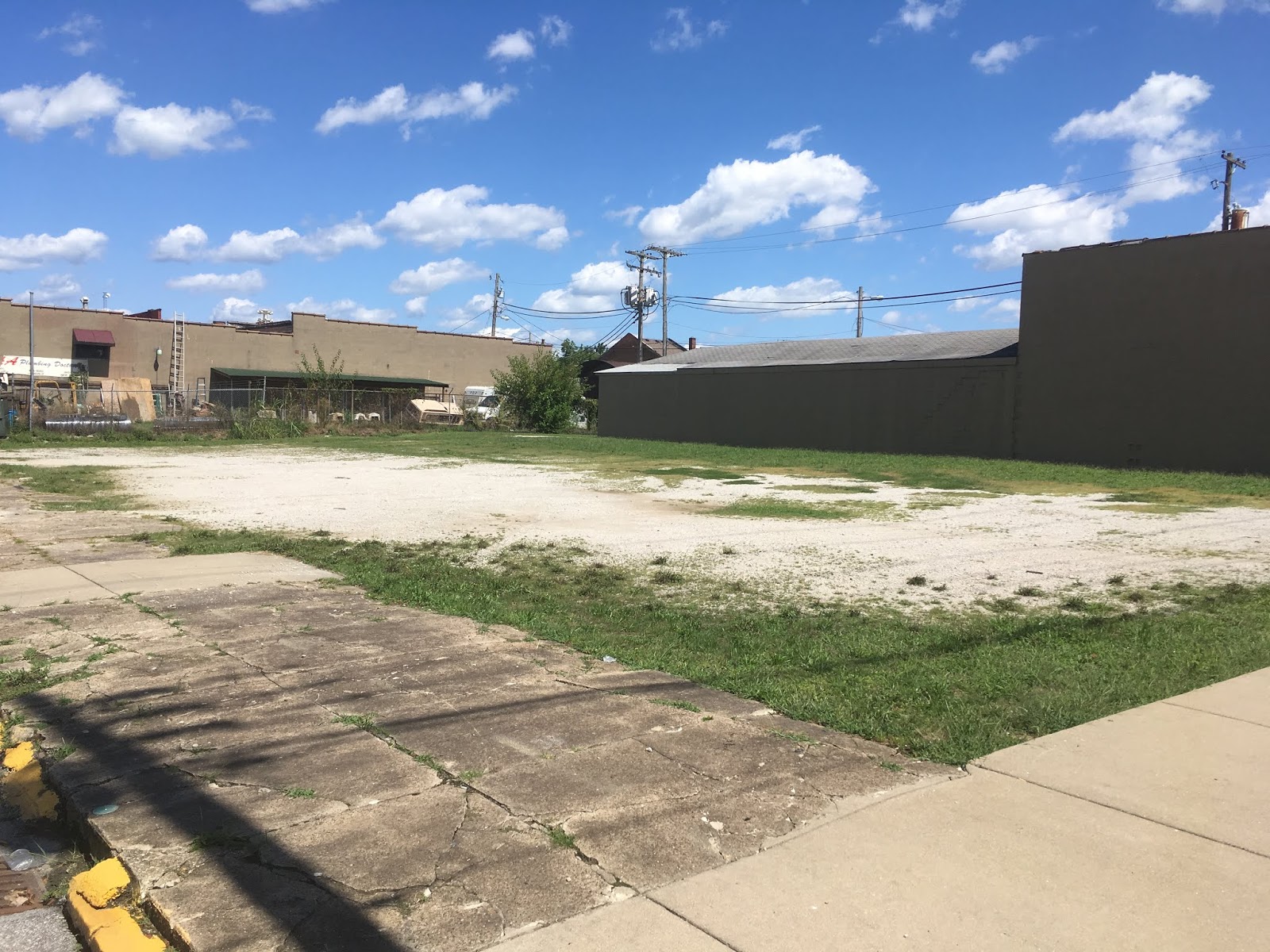
Still, my conclusion is that one good way to assure a future for your favorite downtown eatery or watering hole is to encourage residential infill. Several acres of downtown real estate have been scraped clean of buildings and now sit, coated with rain-deflecting asphalt, to be used only on widely scattered occasions as special event parking lots.

Until people are living downtown in bricks and mortar rising from the current unproductive barrenness, we’ll continue chasing our tails.

I’ve also come to realize that in spite of the advantages of having a combined Clark and Floyd County tourism bureau, which include a fine staff and useful economies of scale, the city of New Albany needs to devote time and resources to itself, for itself – and by this I’m NOT talking about the blind man’s bluff approach of billboards and advertisements currently emitted by the city, which generally serve as mayoral campaign blurbs more than “Come to Squalidity City” enticements.

To put it bluntly, outsiders contemplating where to spend their money simply don’t give a flying fug who currently serves as mayor, whether it's Gahan, Real or the ghost of Erni. Rather, they’re looking for reasons to come check out the city.

Can we please begin providing them with these reasons, and not settling for North Korean-sized images of our own Dear Leader?

Our combined tourist bureau would be even more conducive to us with a visitor center presence in Floyd County, preferably downtown New Albany. I’m told this is something that has been considered by SoIn. Which candidate for mayor will work with them to make this happen?

Finally, we need to be doing whatever we can to promote local independent businesses.

When it comes to the city’s typical economic development expenditures and abatements, it cannot be denied that the bigger the subsidy, the more likely it is being deployed to support chains and far flung corporate empires that drain cash from the local economy every single day.

Summit Springs is the most purely grotesque current example, an inexcusable and atrocious 100% car-centric environmental blotch, set to be stacked with national franchises offering low-income jobs to workers who can’t find affordable housing amid Gahan’s mantra of luxury-first.

Will the people staying in those hotel rooms even know there’s a classic downtown setting less than a mile away, or will they hop back into their cars and head to Louisville -- or Veteran's Parkway?

Yes, we have issues like these, and they need to be addressed.

No, the sky’s not falling because two independent small businesses closed.

And: Death to Burger King and all the rest of the chains.

---

Recent columns:

May 21: ON THE AVENUES: "Pints&union, where the classic beer hits keep right on pouring."

May 14: ON THE AVENUES: Where do we go from here?

May 6: ON THE AVENUES REWOUND: Ghosts within these stones, defiance in these bones (2018).

May 5: ON THE AVENUES REWOUND: Our great and noble leader soon will be going away, so let's break out the țuică and make a joyful noise.

Sunday, November 18, 2018

Forget the chain envy. What New Albany needs downtown is people living there, that's what. What's the plan, planners?

There will be a merchant meeting this Tuesday morning. Since I've criticized Develop New Albany in the past for failing the transparency test when publicizing such events, fairness dictates that I correct the record when the organization does better, and lately it has.


Are you a merchant in New Albany? Join us! Restaurant, retail, realtor, insurance, salon and all of the other amazing businesses we have... come be a part of the community. Guest speaker Todd Harrett from Axiom Financial Strategies Group of Wells Fargo advisors.

I'm feeling like a rant, and hoping someday there'll be speakers on topics pertaining to walkabilityparking, safe streets and other issues grouped under a broader umbrella of urbanism.

Each day the downtown business environment is shaped by factors like these, and yet perhaps because both DNA and the organization's merchant meetings fall under City Hall's indirect control, they're seemingly off limits for discussion.

What about the importance of infill housing, defined as "compact housing in already urbanized land near transit, jobs, and services”?

It's numero uno.

Both at merchant meetings and during numerous on-line chats, the question is asked: What does downtown New Albany need?

Invariably the answers proffered on-line revolve around chain restaurants and various start-up business ideas that no one commenting is prepared to undertake themselves, while at merchant meetings, business people tend to sit quietly as community leaders tell them what's already been decided.

The point constantly is being missed, because what downtown needs is PEOPLE who are LIVING downtown, people who are the common denominator for all these restaurant wish lists, people can walk to have a burger and beer and not be the single occupant of an automobile for a trip from places like the corner of Daisy and Green Valley, where yet another development has been approved -- and yet again, without a way for residents to ride a bike to points downtown.

Unless you consider a sharrow symbol something other than a license for drivers to wax imperialistic.

Somehow, while a central government investing in highways and subsidizing oil companies constitutes ‘freedom,’ any local investment and sidewalks and bike lanes smacks of the communist takeover.”
-- Jeff Speck, Walkable City Rules

To me, there's one huge campaign issue next year, and that's how we go about encouraging infill and population density downtown. It's an effort that must include affordable housing, and a spanking new city hall doesn't fit this imperative ... sorry, Schoolmaster B.

As an aside, if we're going to continue thinking we'll be a destination for people living elsewhere, then it's time for local government to put skin in the game as it pertains to an organized and coherent marketing campaign. This would help.

It will strike some merchants in attendance Tuesday that I'm talking about politics, which makes them shuffle nervously.

In the sense that politics is about power, then yes, it's political, and the independent business persons investing in downtown up to this point have far more power than they know, owing precisely to the combined weight of their investments.

And the way for them to achieve a greater return on these investments is for there to be more people living downtown.

What's the genius mayor's plan for that, apart from demolishing public housing already in place?

Walkable City Rules: 101 Steps to Making Better Places


Sunday, April 29, 2018

Lancaster-themed "Micro Lofts" soon will inhabit Duggins' anchor wasteland at the corner of Market and Vincennes.


If there isn't a solid chicken-fried steak with requisite non-lumpy milk gravy coming out of one of the eateries in this planned "Lancaster nostalgia" development -- think of it as Break Wind Too -- then all the retro branding will have been in vain.

As an aside, the Green Mouse was told that former redevelopment kingpin and chief Breakwater public subsidy coordinator David Duggins, currently in charge of ensuring that public housing resembles the post-tsunami templates above, actually moved into an apartment at Breakwater at some point last year, his HWC benefits plan having expired.

Perhaps soon he'll be given a summer home at Lancaster Flats (oops -- "lofts").

It also means that Duggins will be eligible to run for office in New Albany when next year's primary rolls around -- and that's far more terrifying than the Amazing Colossal Man, primarily because we don't need a $125K councilman.


Now there's a guy who can demolish public housing lickety-split. Indeed: when will it (the corruption) stop?

Read all about the micro-lofting proposal by a company that's so progressive, they even include it in the name.

---

MINUTES
NEW ALBANY REDEVELOPMENT COMMISSION

The regular meeting of the New Albany Redevelopment Commission was held on Tuesday, April 10, 2018 at 2:30 p.m., in the Assembly Room, City-County Building, New Albany, Indiana.

(snip)

The second item of Old Business was the Update for the Former Market Boy/Tommy Lancaster’s Site. Matt Toole, of Progressive Land Development, presented a concept for the site. Their goal with this project is to tie in a concept back to the heritage, to include Tommy Lancaster’s and a design similar to the Mercantile Building. They are looking to build loft apartments with mixed use retail on the first level of this three story three-sided brick with HardiePlank siding on the back of the building. Handouts detailing the design of this project were passed out to the Commission Members. Mr. Toole stated that the total square footage would be about 36,000 square feet, 12,000 square feet on each floor. He explained that they had a market study conducted on the entire southern Indiana market. Mr. Toole stated that this project will include Micro Lofts, which is a new concept seen in bigger cities, geared towards Millennials and Empty Nesters that want to be able to travel and go and come as they please. Mr. Toole stated that he believes that this concept is fresh to the market country wide but is a hit in the larger Metropolitan Statistical Areas. Mr. Toole stated that they have invested three years in to this possible development. The development will include Micro Lofts as well as a larger one bedroom unit and retail space below to include small restaurants and boutique style businesses. He explained that a goal with this development is to revitalize that corridor as well as encourage residents to utilize the Ohio River Greenway to help drive growth to the City of New Albany. Mr. Barksdale stated that the Vincennes Street, uptown corridor needs help and focus. He believes that this could be the anchor to start revitalizing that area. Mr. Barksdale asked if the retail is going to face Vincennes Street only. Mr. Toole stated that they have to work around the IDEM concerns and as a result of those, the retail will mostly face Vincennes, with some of the amenities coming off of Market Street. Mr. Toole stated that there will be green space on the property as well. He stated that they meet the parking quota. The President noted that the rendering was 4 stories. Mr. Toole stated that they pulled a design that was close to what they were looking to build. The Director asked for the total project cost. Mr. Toole responded a total of $3.5 million including site improvement. The President asked if there are any potential commercial tenants. Mr. Toole stated that nothing has been finalized, but they have had interest. Mr. Middleton asked for a target completion date, to which Mr. Toole stated this would be determined by the starting point, but that this project, weather conducive, should take no more than 8-10 months. Mr. Stewart asked if these would be rentals, to which Mr. Toole responded that they would be rentals. Mr. Dickey requested that the final renderings be sent in when they become available. Mr. Barksdale motioned to approve the Development Agreement for Lancaster Lofts contingent upon legal review. Mr. Dickey seconded and the motion carried 5-0.

Thursday, April 05, 2018

ON THE AVENUES: New Albany's downtown food and dining scene is solid ... for now.

ON THE AVENUES: New Albany's downtown food and dining scene is solid ... for now.

A weekly column by Roger A. Baylor.

Invariably when I sit down each week to write this column, I spend the first hour desperately searching for loopholes, trying to wiggle out of doing it.

Isn’t there a rerun, a trick, or something slapdash I can use to fulfill this obligation, which after all primarily is intended to suit my own standards of consistency?

But usually, after an hour of digging, reading and flailing, I get back on the beam and manage to come up with something.

Today’s “something” is shift. Shift happens, and so far in 2018, the downtown New Albany food and dining scene is shifting so rapidly that you can’t tell the changes without a scorecard.

Match Cigar Bar's branch in New Albany closed, and subsequently it was announced that a bar called Double Barrel will replace it (they’re working on licensing).

Roadrunner Kitchen sprang to life adjacent to the future Double Barrel, where Urban Bread used to be, leaving NABC Café and Brewhouse without a kitchen, except that Taco Steve moved in, and Bank Street Brewhouse was re-rebranded. Now there’s a vacancy at the kitchen incubator space in the rear of Destinations Booksellers.

La Tiendita got bigger, and following a fire, Hitching Post underwent a complete (and noticeably shrewd) rebuild. It has reopened for business. A stone’s throw away, Dragon King’s Daughter’s new location is being completed.

In the other direction, astride two-way Market Street, the Pints & Union pub is progressing toward completion, and Longboard’s Taco & Tiki is slated to open by early summer. Quills isn’t going anywhere, but the coffee shop’s footprint will change.

Consider that these comings, goings, reboots and launches already were a matter of public record prior to both Feast BBQ and Comfy Cow closing within days of each other.

Still, almost overnight everyone lost their minds.

It’s too strong of a reaction to conclude that downtown suddenly is in retreat. I’m hardly a serial optimist, but it’s premature to begin issuing doom-laden pronouncements about bubbles bursting.

However, there is a “correction” of sorts under way, and in truth, corrections are constant and ongoing. They're happening all the time. It helps to remember that grassroots entrepreneurial capitalism tends to lack a net. It’s unforgiving, and casualties are a constant.

For local independent business owners and managers, life stays complicated. Decision-making involves numerous moving parts, deriving from the input of hundreds of key players, including workers, farmers, bankers, media, middle men, lawmakers, and of course, customers.

Last week people were savaging Ryan Rogers for pulling the plug on Feast BBQ. Perhaps they’ve forgotten that he received national publicity when the restaurant opened in 2012 -- and with it, New Albany’s name went up in lights. It was a wonderful boost.

Since then, Rogers’ business model has thrived, and evolved. A five-and-a-half year run in the restaurant business is rare and enviable, and in 2018 he has multiple metro Louisville restaurants and other calculated uses for his time and money. He made an economic decision in closing Feast’s location here, and I’m reasonably certain the building won’t remain vacant for long.

Similarly, Comfy Cow has been through a lot lately. There was a recall of ice cream last year, and then a shift to out-sourced production; earlier this year, a new owner took control and decided that one Southern Indiana location was enough. As with Feast, there is a considerable (and purely logical) back story.

I’ve received no tips as to what might become of the Comfy Cow building.

Reader: “Roger, why don’t you put a Cincinnati-style chili parlor in there?”

Roger: “Why don’t YOU?”

---

Here's my two cents.

As it pertains to lifting all the downtown food and dining boats, together and as a unified growth sector of the economy, previously I’ve reiterated the need for greater cooperation between these entities in the form of a completed restaurant association.

Indie business owners have poured time and money into their businesses, and their potential influence is greater than they realize, although far less so if their clout isn’t combined and directed as one.

Rather than repeat these arguments, you can read the post here: ON THE AVENUES: Necessity was the mother of NARBA, a food and drink invention in need of re-animation.

Shift itself is perpetual, and it isn’t necessarily unfavorable, but in the aftermath of Feast’s and Comfy Cow’s departures, hundreds of opinions and concerns were emitted on social media.

What’s the problem downtown?

What can be done to solve it?

Why can’t we have (choose one) an axe-throwing range, Whole Foods, dirt bikes on the levee, and activities for children?

NEVER MIND, IT’S IMPOSSIBLE BECAUSE OMIGOD THE PARKING IS HORRIBLE.

No, it isn’t, but obviously certain preconditions have quantifiable influence, including the economic climate as a whole, today’s snow storm, tomorrow’s heat wave, who we are as a city, where we want to be, and available options for getting there.

Of course, there is infrastructure: sewers, the power grid, water and garbage. Transportation concerns exist beyond coddling your ride: shall we remain 100% car-centric, or are there multi-modal mobility options?

(Jeff Speck thought so, but Jeff Gahan apparently doesn’t. Consequently a huge opportunity was squandered in 2017.)

To me, job one remains encouraging density in downtown residency, not by bribing huge developers to pursue one or two showpiece projects, but providing fair incentives for a dozen smaller ones.

The more people living within walking and biking distance of historic downtown business district, the better the business climate, and the speedier the shift to balanced offerings; as Bluegill has been asking forever, how far must one walk from his or her home NOT to drink craft beer or eat Peruvian street food, but just buy a damn roll of toilet paper?

Regrettably, a central truth recently has emerged from zoning decisions at city council, in that arriving at a working definition of acceptable density has become so tortuous and Byzantine that concluding how many angels can dance on the head of a pin sounds easy to resolve by comparison. Our community pillars are so terrified of their own shadows (and of those crowds in the council chamber) that they can’t settle on a consistent formula.

Still, my conclusion is that one good way to assure a future for your favorite downtown eatery or watering hole is to encourage residential infill. Several acres of downtown real estate have been scraped clean of buildings and now sits, coated with rain-deflecting asphalt, to be used only on widely scattered occasions as special event parking lots.

Until people are living downtown in bricks and mortar rising from the current barrenness, we’ll continue chasing our tails.

I’ve also come to realize that in spite of the advantages of having a combined Clark and Floyd County tourism bureau, which include a fine staff and some useful economies of scale, the city of New Albany needs to devote time and resources to itself, for itself – and by this I’m NOT talking about the blind man’s bluff approach of billboards and advertisements currently emitted by the city, which generally serve as mayoral campaign blurbs more than “Come to Squalidity City” enticements.

To put it bluntly, outsiders contemplating where to spend their money simply don’t give a flying fug who currently serves as mayor, whether it's Gahan, Real or the ghost of Erni. Rather, they’re looking for reasons to come check out the city.

Can we please begin providing them with these reasons, and not settling for North Korean-sized images of our own Dear Leader?

If we’re to continue reliance on the combined tourist bureau, then we need to negotiate an visitor center presence in Floyd County, preferably in downtown New Albany. I’m told this is something that has been considered. It’s time to make it real.

Finally, we need to be doing whatever we can to promote local independent businesses.

When it comes to the city’s typical economic development expenditures and abatements, it cannot be denied that the bigger the subsidy, the more likely it is being deployed to support chains and far flung corporate empires that drain cash from the local economy every single day.

Summit Springs is the most purely grotesque current example, an inexcusable and atrocious 100% car-centric environmental blotch, set to be stacked with national franchises offering low-income jobs to workers who can’t find affordable housing amid Gahan’s mantra of luxury-first.

Will the people staying in those hotel rooms even know there’s a classic downtown setting less than a mile away, or will they hop back into their cars and head to Louisville -- or Veteran's Parkway?

Yes, we have issues, and yet I think downtown food and dining is solid, at least for now. However, next year there’s a wonderful crossroads: a municipal election, and the chance to gauge the aptitude of political aspirants as it pertains to these and many other questions.

Start jotting them down, folks. This time, let’s make them answer.

---

Recent columns:

March 29: ON THE AVENUES: Al Knable doesn’t lie, but the local Democratic Party is a flood-plain Pinocchio. Let’s censure it at the ballot box.

March 22: ON THE AVENUES: Remembering Max Allen, bartender extraordinaire.

March 15: ON THE AVENUES: The books I've been reading during the winter months.

March 8: ON THE AVENUES: Necessity was the mother of NARBA, a food and drink invention in need of re-animation.

Friday, December 22, 2017

Befuddlement at the news as strange council bedfellows unite to defeat West Street Mews.


The News and Tribune's Chris Morris recorded the quote as 6th district council representative Scott Blair tried to explain his opposition to a townhouse development off West Street in New Albany.

(Councilman Scott) Blair had other concerns. "There are just too many units for two acres. Seems too congestive for me," Blair said.

Actually, normal usage of the adjective congestive lies in specialized medical applications, like congestive heart failure: "Involving or producing too much blood or other liquid in an organ."

We use congested to describe “clogged,” “overcrowded,” or “overfull,” as when a lifetime of eating fatty fried food leaves one with congested arteries. In like fashion, overpopulated cities and crowded roads are said to be congested.

Bankers. Can't live with 'em ... can't teach 'em the meaning of words like density and infill.

Meanwhile, "mews" might be trite and annoying developer-speak for townhouses in Coffeyville, but it jibes point by point with those same passages about infill and density included in the city's new comprehensive plan -- the one authored by Team Gahan to encourage housing precisely like this, and yet opposed last night by three of four councilman in Gahan's own sad party, plus Blair (huh?) and Dan Coffey himself.

Maybe the project's backers forgot to grease Dear Leader's re-election wheels.


We are reminded of a bedrock truth pertaining to city council politics in New Albany, which won't ever change for so long as Coffey remains a councilman, because the reason why the West End forever languishes is that Coffey himself opposes change in his own environs with clock-like regularity.

The Wizard simply cannot survive in a socio-economic habitat any different from the one he has cultivated (read: kept waaaay down) during more than two decades of underachievement. He can always get the votes he needs from absentee ballots collected at Riverview Tower; not so ironically, a building comprising public housing units slated for refurbishing rather than the guillotine.


Coffey is nothing if not consistent. Blair is nothing if not confused.

By the way, the Horseshoe Foundation non-binding resolution passed unanimously. Morris must have left the meeting before then. Ominously, with Elizabeth Beilman departed, New Albany's about to get it good and hard from Hanson's tone-deaf newspaper in terms of non-coverage -- again.

Council votes down plan for townhouses

PUDD defeated by 5-4 vote

NEW ALBANY — It's back to the drawing board for the proposed West Street Mews Development.

Thursday night, the New Albany City Council voted 5-4 to reject a PUDD request in an R-2 district at 1105-1109 West Street on third reading, which defeats the proposed ordinance. The proposal was to build 26 townhouses on the 1.9 acres of vacant property. Without a PUDD, only 12 units can be built there now under R-2 zoning laws.

"It's back to the drawing board. This puts an end to this process," said attorney Greg Fifer, who represented West Street Mews Development, after the meeting.

The development had already received approval from the New Albany Plan Commission. And one city councilman, Dr. Al Knable, said he thought it would be a great addition to the neighborhood.

"It would be nice to have this sort of dwelling in there," Knable said prior to the vote. "The key to this is owner occupied. We need more of that in town. I think it would be one of the better developments in that part of town since I was a kid."

However, after a long discussion, the change to a PUDD did not have enough support. Knable, Matt Nash, David Aebersold and David Barksdale voted for the PUDD while Scott Blair, Dan Coffey, Greg Phipps, Bob Caesar and Pat McLaughlin voted against.

Friday, August 12, 2016

CONSTRUCTION UPDATE: You know, the new, unsubsidized infill building where the Horseshoe Bar used to be (137 E. Spring).

August 12.

Circa early May. 

Windows and doors have been installed, and bricklaying has started.

Unsubsidized, entrepreneur-driven infill -- in downtown New Albany, without sewer tap-in waivers. Is it only a dream?

May 24: Matt Chalfant's infill construction at 137 E. Spring -- you know, where the Horseshoe Bar used to be.

May 24.

1988.

Tuesday, May 24, 2016

Matt Chalfant's infill construction at 137 E. Spring -- you know, where the Horseshoe Bar used to be.


It has quickly progressed from nothing to something.


Unsubsidized, entrepreneur-driven infill -- in downtown New Albany, though without sewer tap-in waivers.  Wow.

This lot has remained in a state of gravel since the Horseshoe Bar decided to fall to the ground one night in the 1990s. Here's a view of the bar in 1988, from the online.com/photo/FFC20873-8C67-405A-B18B-002037089514">Indiana History Room Archives.


I'm told this will become an office, not a bar.

Filling the holes in the streetscape? I'm for it, though expect to hear wails of anguish -- dude, we're losing six parking spaces!

Monday, April 18, 2016

Extremely rare sighting of infill construction WITHOUT massive TIF subsidies.


How is it possible?

And how will Team Gahan claim credit?

But seriously, let's hope Matt Chalfant decided to ask for his cut of the Flaherty Collins Double Secret Sewer Tap-In Waiver pie.

Saturday, August 29, 2015

Midtown Renaissance: It depends on what you mean by "painted lady."


I suspect the use of "painted ladies" is intended to imbue these rare instances of New Albanian urban infill with architectural respectability.

"Painted ladies" is a term in American architecture used for Victorian and Edwardian houses and buildings painted in three or more colors that embellish or enhance their architectural details. The term was first used for San Francisco Victorian houses by writers Elizabeth Pomada and Michael Larsen in their 1978 book Painted Ladies - San Francisco's Resplendent Victorians.

But while it's probably no longer politically correct, I prefer Elton John's word association.


"Painted lady" is a euphemism for a prostitute, but Elton's voice is in fine form in this 1976 recording.

Sunday, June 07, 2015

Defending hated buildings, and building a better New Albany.

Empire State Plaza, Albany NY (from the article)

One of the central misnomers about historic preservation is that is espoused to the exclusion of new buildings. Rather, the idea that the greenest building is the one already standing impels preserving and reusing what we already have, even as we contemplate the functionality and aesthetic of "next."

This being the 30th anniversary of my first European vacation, I've been contemplating my exposure to cities (Berlin, Vienna, Budapest) that suffered significant damage during World War II, and the way that their urban tapestry embraces old, new, and everything in between. I've often observed to those commending the revival of downtown New Albany that the real turning point will be when surface parking lots created by demolishing older structures become the site of new construction.

That's why ill-considered projects like the farmers market expansion make so little sense. Prime acreage is lost for what is supposed to be, by its very nature, a transient institution.

If we insist on subsidizing and incentivizing companies from elsewhere to erect new buildings, as with the sewer tap-in waivers granted Flaherty and Collins for the apartment buildings at the moribund Coyle property, then we'd be better off stepping outside the box and borrowing a page from Columbus by encouraging boldness in design.

Is it really progress to obliterate the historic tavern at 922 Culbertson, which stood the test of time and could have been rehabbed, with houses made of pressboard and balsa wood -- ones designed primarily for campaign press releases, and not sustainability in a neighborhood so desperately needing it?

The underlying point in each of the following defenses of "hated" buildings is that civilization is renewed through the new, in addition to honoring the old. Every day is a snapshot of a composite.

In a place like New Albany, these decisions must be removed from the money mill of partisan political considerations, as so tirelessly exploited by Team Gahan, and based instead on rational decision-making and consistent, demonstrable criteria.

Seven Leading Architects Defend the World’s Most Hated Buildings, as told to Alexandra Lange (New York Times)

Can the field’s top minds change the way we think about a doomed housing project in Naples or the most abhorred skyscraper in Paris? Allow them to try.

Sunday, May 17, 2015

The "solution is density," in which small parks play a design role.

There is no room for creative design downtown? Red = blank urban fabric.

Once New Albany had a grand post office at the corner of Spring and Pearl. It was targeted by Suburban Think and bulldozed in the 1960s for conversion into a mundane parking lot.

So it remained until just a few years ago, when we spent far too much money, perhaps a million and counting, to transform the space into what's known now as Bicentennial Park, one bounded by a building, an alley, and two one-way streets, one of which is a high-speed arterial.

The appearance of Bicentennial Park undoubtedly is an improvement on the poorly maintained parking lot owned by notorious slumlords, but it was built without multi-modal use in mind -- and might mere beautification have been done less expensively?

Also, as with the farmers market build-out at Market and Bank, a crucial street corner is tied to an occasional use concept rather than soon-to-be possible infill construction. With all due respect to my friend David White, high rises never were as much the objective as achieving density by filling gaps downtown.

The overall "message" as conveyed by the city's design, and its periodic use of Bicentennial Park for organized events, is that it isn't really a public space meant for adaptation and impromptu use. Rather, it's for shows and for gigs it wasn't built to support, meaning that each such temporary use must be funded again, over and over. How does this make sense?

The planning and design of Bicentennial Park were decreed from the top-down, and they ignore inclusive principles of community and placemaking in favor of finding a spot to erect a self-congratulatory plaque.

Meanwhile, in DC ... a counter example.

Fairfax trades a parking lot for a new park, by Canaan Merchant (Greater Greater Washington)

Old Town Square in Fairfax used to be a park that nobody used because it was wedged between two parking lots in the middle of the city's small, historic core. Now it's bigger and more inviting, and it's helping Fairfax embrace its urban roots.

Tuesday, March 03, 2015

Building Commissioner to council: This round of Bud Light is on the mayor, 'cuz we've created 160 vacant lots in 3 years!


How's that infill program going, Mr. Mayor?

You do know what this means, right?

It's the part where something is built to fill in the hole created by a governmental philosophy of demolition first, sustainability second?

Urban Infill

Urban infill is defined as new development that is sited on vacant or undeveloped land within an existing community, and that is enclosed by other types of development. The term "urban infill" itself implies that existing land is mostly built-out and what is being built is in effect "filling in" the gaps. The term most commonly refers to building single-family homes in existing neighborhoods but may also be used to describe new development in commercial, office or mixed-use areas.

Hmm. Looks like we're only pursuing one of these angles. Given yesterday's revelation that Jeff Gahan has $95,000 dollars in his campaign fund, the most sensible explanation of City Hall's infill "strategy" plays out as follows.

1. Campaign finance optimization is best served by a policy of demolition-first and infill-later, as these extractive bits pertain to neighborhoods. It makes the likes of CCE nice and fat, and then the largesse trickles back.

2. Campaign finance optimization is best served by a policy of TIF-induced incentivization for out-of-town developers, as it pertains to plaque-ready, big-ticket housing developments in election years. See "largesse," preceding.

Of course, it doesn't hurt to have the Democratic Party chairman on a cherry-picked Redevelopment Commission, does it?

As a side note, you'd think that if Jeff Gahan genuinely supported implementation of the Speck plan, at least he'd level with CCE:

Once upon a time, not so long ago, you were the area's primary eco-terrorists; now I've personally rehabilitated you as praiseworthy heroes of capitalist demolition. Now, about the streets: Don't let it go to your head. Shut up, take your mayhem commissions, and be sure not to forget Papa Gah at Christmas.

Here's a look at Louisville infill, courtesy of Broken Sidewalk.

Let's see. Walkability, two-way streets and traffic sense would serve as incentives for this sort of investment ... nah, fugetaboutit. In our skewed system of governance by the "C" students, we just tear shit down. It's both easier, and greasier.

Douglass Boulevard’s insightful infill apartment building rises from the ground

It’s out of the ground. A three-story infill residential building at 2068 Douglass Boulevard in the Highlands has been making some serious construction progress and looks ready for brick once the weather improves.

Sunday, June 15, 2014

"Changing the way we tax property to discourage speculation and encourage compact, infill development."


Another example of subversive thought lying somewhere outside the self-restricting box that local government prefers inhabiting. But wait: The Democrats are having a convention, and looking for innovative plat ... form ...

Never mind.
To Revitalize Downtowns, Tax Land Speculation: Five reasons to love land-value taxes, by Jerrell Whitehead and Clark Williams-Derry (Sightline Daily)

... So how is it that, even in the core of the Pacific Northwest’s largest metropolis, on some of the most valuable real estate within city limits, you can find so much land essentially still sitting idle?

One of the biggest reasons is also one of the most obscure: the structure of the property tax.

Under today’s tax rules, leaving a lot empty, or letting a building slowly rot, gives the property owner a light tax bill, thus allowing landowners to hold onto under-developed properties year after year after year. In essence, these land speculators become free-riders: their properties rise in value, sometimes dramatically, because of the hard-fought efforts by neighbors and city government to create vibrant and attractive downtowns. Yet many land speculators detract from the value of their neighborhood by leaving productive land derelict or by allowing buildings to disintegrate.

So what’s the solution to all this underutilized land? Perhaps the simplest one is an idea that’s been around since the late 1800s: changing the way we tax property to discourage speculation and encourage compact, infill development.

Wednesday, April 23, 2014

Speaking of infill housing for those vacant lots ...


Mr. and Mrs. Confidential have decided this would be our chosen design if we were to downsize and build a house on one of the vacant lots that Dan Coffey mentioned yesterday at the redevelopment meeting.

Don't you think it's time to spice up the historic areas with some punchy, efficient modern design?

Photo credit

Dan Coffey says sensible things about infill.

On duty at yesterday's redevelopment confab, during which most of the time was spent accepting bids from the usual construction and design suspects, councilman Dan Coffey got real.

EMPTY HOUSES

Commission and New Albany City Council members Dan Coffey and John Gonder will head up a committee to look at ways to partner with private contractors to build homes in empty lots around the city.

“The city owns hundreds of lots,” Coffey told the members. “I would like to work with the public and private sector where a builder could buy a lot for a nominal fee and try to get some houses built instead of torn down.”

The committee will gather the information and report back to the commission.

Sunday, September 22, 2013

More brutalism in sclerotic thinking than architecture, at least in Nawbony.


In the interest of fairness, and coming a week after the latest New Albany historic homes tour (which we very much enjoyed), here's a look at recognition for brutalist architecture in the UK.

And what is brutalist architecture?

It's largely what we skipped over in New Albany. When we demolished buildings here, more often than not we designed vacant lots to take their place, and did not even bother with rebuilding. Of course, there are exceptions. I imagine the Riverview Towers building might qualify as brutalist, although it's a bit dull and Bulgarian to fit, at least in my opinion. Bluegill, if you're reading, please weigh in.

Perhaps we can give protection to brutalist vacant lots? Especially the unused ones with asphalt.


UK's brutalist architecture celebrated as four postwar buildings get listed status; Bunker and electricity substation are among structures awarded Grade II and Grade II* protection, by Peter Walker (The Guardian)

Given that diehard critics of postwar architecture already liken its creations to bunkers, warehouses and electricity substations, they could be forgiven for feeling simultaneously vindicated and horrified at the news that the government has now granted protected listings to precisely such structures.

They are among four constructions built between the 1950s and 1980s – the last is a slightly less forbidding Mies van der Rohe-inspired steel and glass home – given Grade II or II* status on Friday by the government.

The news coincides with Brutal and Beautiful, a new exhibition by English Heritage, which advised on the listings, examining the nation's attitude to our recent architectural past ...