Showing posts with label urban density. Show all posts

Wednesday, August 28, 2019

The imperative of infill: The first candidate to say something coherent about it might just get my vote.

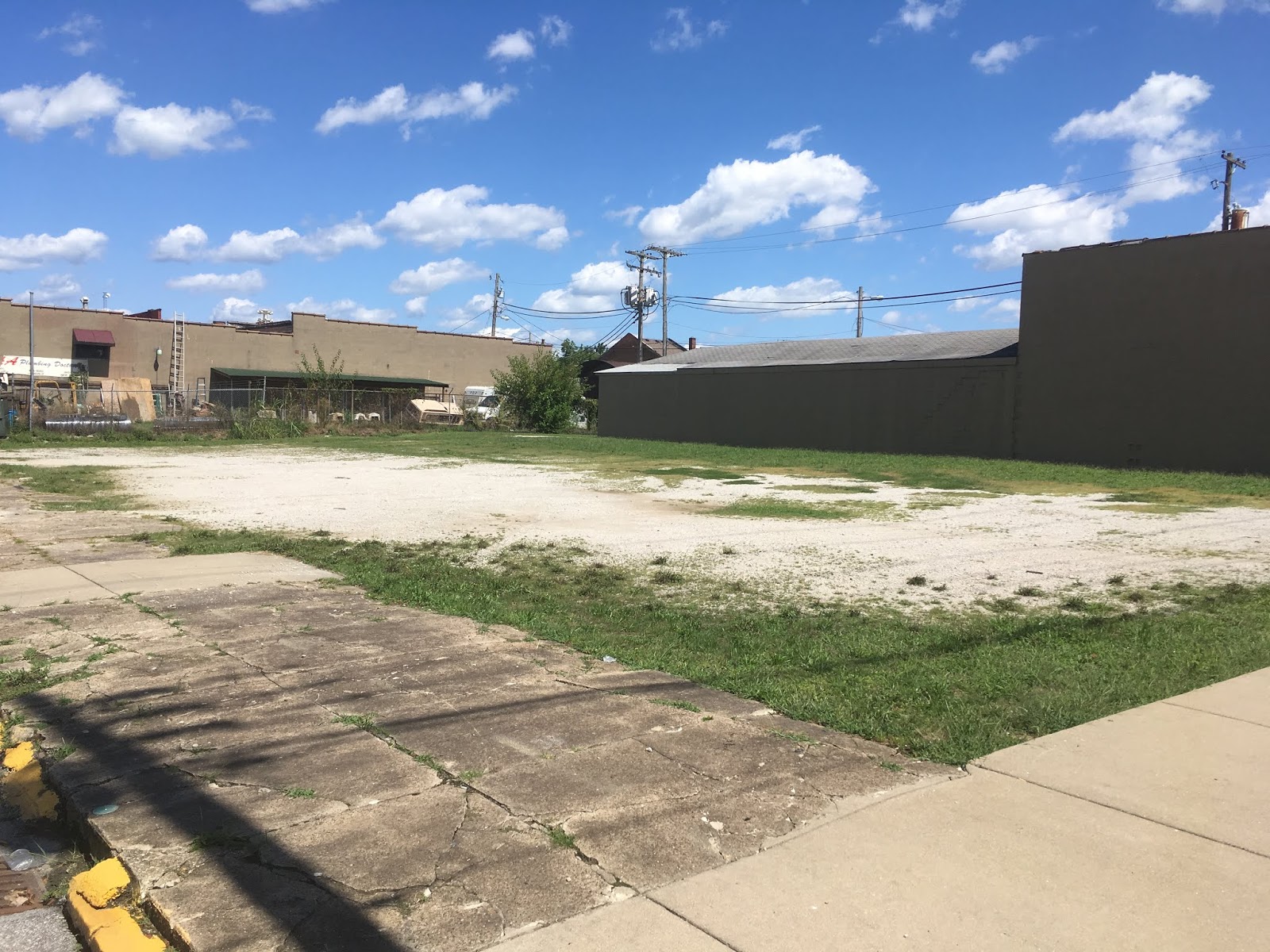
Yes, Team Gahan can harness TIF and political patronage to incentivize large infill projects like Breakwater and Lancaster Lofts, but what we need are a dozen smaller infill projects with minimal financial chicanery, not two more big ones. A walk through downtown reveals plenty of open space in need of use.

Anyone?

Bueller?


Are you a candidate for city council but still have no idea what I'm talking about? You're not alone. Here's a brief explanation, and there's plenty more information out there.

Is Urban Infill a Sustainable Solution to Development?, by Matthew Pinsker (Daniel Silvernail Architect, Inc.)

Urban infill may be a viable solution for cities seeking to build tighter communities by utilizing space to its fullest potential. Conscious implementation of developments on underutilized land may be an effective sustainable agent that reduces daily vehicular travel time and the resulting environmental byproducts.

The National League of Cities’ Sustainable Cities Institute defines urban infill as “new development that is sited on vacant or undeveloped land within an existing community, and that is enclosed by other types of development.” Benefits include removing eyesores and safety concerns, supporting populations required to attract certain amenities (parks, community services, retail), and increasing the supply of affordable homes. Risks include improper management by local governments, demolishing historic buildings, and displacing residents of homes ...

Friday, March 08, 2019

"Strong Towns is taking an in-depth look at the land tax and how it can incentivize a healthier, more resilient pattern of growth and reinvestment in cities."

Why these spaces stay red.

This week Strong Towns has started a series of articles pointing to the disadvantages of property taxation in an urban context, as compared to advantages from using a land tax instead (or a hybridized approach). These issues directly address our eternal blog questions: Why isn't this building owner taking care of his property -- and why isn't THAT building owner putting something on his eyesore vacant lot?

This is utterly fascinating.

This week, Strong Towns is taking an in-depth look at the land tax and how it can incentivize a healthier, more resilient pattern of growth and reinvestment in cities.
This series is sponsored by the generous support of the Robert Schalkenbach Foundation (RSF).

As an introduction, this. I'll be re-reading all of these links -- and the series continues next week.

What's With That Empty Lot in the Heart of the City? by Daniel Herriges (Strong Towns)

 ... Taxing Building Improvements is a Gift to Speculators

A parking lot in a bustling downtown is the classic example of a property where nearly all of the value is in the land itself, not the asphalt on top of it. In a rising market, you can hold onto the land and watch its value go steadily up (thanks to all the things your neighbors are doing to make the place more productive and successful). You can collect enough in parking fees to cover the taxes, and cash out when you're ready to cash out. Your property tax bill will be relatively low, because it's based on the sum of land value and improvements. The land may be in a central, prized location, but the "improvements" on the property (that's tax-assessor speak for any sort of structure built on the land) are worth next to zero.

The result of this logic when you extend it to dozens or hundreds of properties is that land goes under-utilized, even in extremely valuable locations like downtown Austin—the fastest-growing large city in America. This kind of land speculation creates additional scarcity downtown, and pushes more new development to the outskirts of the city, where it incurs more infrastructure costs, more miles of driving on the part of individuals, and more gobbling up of farmland for suburban expansion ...

 ... Taxing Land, Not Improvements, Leads to More Productive Uses

 This doesn't have to mean raising taxes overall. Rather, cities can redistribute the burden of property taxes by either taxing only the land, or taxing the land at a much higher percentage rate than the improvements. The latter is called a split-rate property tax.

This way, those who wish to build or renovate something on their property will face no tax penalty for doing so. And those who wish to hold onto a vacant lot or use it for something low-value like parking—in effect freeloading off of the location value created by the productive uses to which their neighbors have put nearby land—will face a much higher tax burden.

Sunday, November 18, 2018

Forget the chain envy. What New Albany needs downtown is people living there, that's what. What's the plan, planners?

There will be a merchant meeting this Tuesday morning. Since I've criticized Develop New Albany in the past for failing the transparency test when publicizing such events, fairness dictates that I correct the record when the organization does better, and lately it has.


Are you a merchant in New Albany? Join us! Restaurant, retail, realtor, insurance, salon and all of the other amazing businesses we have... come be a part of the community. Guest speaker Todd Harrett from Axiom Financial Strategies Group of Wells Fargo advisors.

I'm feeling like a rant, and hoping someday there'll be speakers on topics pertaining to walkabilityparking, safe streets and other issues grouped under a broader umbrella of urbanism.

Each day the downtown business environment is shaped by factors like these, and yet perhaps because both DNA and the organization's merchant meetings fall under City Hall's indirect control, they're seemingly off limits for discussion.

What about the importance of infill housing, defined as "compact housing in already urbanized land near transit, jobs, and services”?

It's numero uno.

Both at merchant meetings and during numerous on-line chats, the question is asked: What does downtown New Albany need?

Invariably the answers proffered on-line revolve around chain restaurants and various start-up business ideas that no one commenting is prepared to undertake themselves, while at merchant meetings, business people tend to sit quietly as community leaders tell them what's already been decided.

The point constantly is being missed, because what downtown needs is PEOPLE who are LIVING downtown, people who are the common denominator for all these restaurant wish lists, people can walk to have a burger and beer and not be the single occupant of an automobile for a trip from places like the corner of Daisy and Green Valley, where yet another development has been approved -- and yet again, without a way for residents to ride a bike to points downtown.

Unless you consider a sharrow symbol something other than a license for drivers to wax imperialistic.

Somehow, while a central government investing in highways and subsidizing oil companies constitutes ‘freedom,’ any local investment and sidewalks and bike lanes smacks of the communist takeover.”
-- Jeff Speck, Walkable City Rules

To me, there's one huge campaign issue next year, and that's how we go about encouraging infill and population density downtown. It's an effort that must include affordable housing, and a spanking new city hall doesn't fit this imperative ... sorry, Schoolmaster B.

As an aside, if we're going to continue thinking we'll be a destination for people living elsewhere, then it's time for local government to put skin in the game as it pertains to an organized and coherent marketing campaign. This would help.

It will strike some merchants in attendance Tuesday that I'm talking about politics, which makes them shuffle nervously.

In the sense that politics is about power, then yes, it's political, and the independent business persons investing in downtown up to this point have far more power than they know, owing precisely to the combined weight of their investments.

And the way for them to achieve a greater return on these investments is for there to be more people living downtown.

What's the genius mayor's plan for that, apart from demolishing public housing already in place?
Walkable City Rules: 101 Steps to Making Better Places


Sunday, March 18, 2018

Begging for density -- or, a city council meeting recap for Thursday, March 15, and the case for liquor as proper vaccine.


I live in a country that chronically devalues, denigrates and under-funds social services — or, if you will, the safety net.

Then, neglecting to drink the three martinis that might have given me immunity to the inevitable IQ-reduction therapy, I am treated to a city council populated entirely by 50-something white male NAHS graduates undertaking to discuss helping strapped local charities by reviving curbside donations by sanctioned panhandlers bearing buckets, but only the certified organizations, mind you; we wouldn’t want those in need to beg for THEMSELVES, would we?

How gauche, so let’s be sure and make the bucket brigades LOOK as respectable as possible, maybe lanyards, badges and a dress code, then they’ll fleece enough drivers on Calmed! Chaotic! two-way streets (no one can decide which, so enter your biased viewpoint here) to refrain from soaking the taxpayers for social services.

We don’t want it to LOOK bad when these sanctioned organizations like the Salvation Army shake down drivers, or it to LOOK bad for the needy to tend to their own panhandling, or for it to LOOK bad for there to be people in need in the first place, which is why perennial luminaries like Dan Coffey can simultaneously insist there isn’t anywhere near enough affordable housing in NA, then vote against the Mews proposal in his own district, though he flipped and voted for a PUDD development at Daisy & Green Valley (below), all the while insisting that 500 affordable housing units at the New Albany Housing Authority must be abolished.

Meanwhile, ask our nine city council members to define density, and their answers will range from “3” to “33” to “TILT.” The Democrats who wrote the comprehensive plan that stipulated density continue to oppose density, having forgotten to define it exactly in the document they approves.

The banker Blair supports annexing more suburban land when we know it only escalates maintenance costs. Paddy Mac thinks walkers are always to blame in accidents because they don’t know their place, and compares the street grid to the painted striping on a factory floor. Coffey plots a coup to seize municipal power for the K of C; barring that, he'll accept public money to restore the facade.

Barksdale, supposedly a Republican, supports the Mayor (a Democrat) more often than Phipps, one of Gahan’s most dependable yes men.

If I were to predicate my 2019 support for council representatives on a simple pattern of logical consistency from one meeting to the next — from ONE MINUTE to the next -- there’d be no need to even consider voting. I haven’t witnessed so many circular arguments since King Larry walked the earth (one time on a single ordinance requiring three votes, Kochert voted for, against, and abstained), when all I really want to do is to live in a country that values social services without the need to assign non-profit bucket-wielders a Caesar-issue security clearance.

The newspaper's coverage centers on the zoning ordinance. Nothing is said about the "let's make NA great again for non-profits begging in the streets" ordinance adjustment, which ultimately was tabled so Coffey can fine-tune it into a shibboleth he can micro-manage between barbecued bologna campaign backslappers.

New Albany City Council turns down proposed development at Daisy Lane and Green Valley, by Erin Walden (News and Tribune)

NEW ALBANY — A high-end housing development proposed to go near Green Valley Road and East Daisy Lane has been squelched.

The first two readings of an ordinance that would have rezoned 5.1 acres for development failed on a 5-4 vote during New Albany City Council's meeting Thursday night.

Friday, December 22, 2017

Befuddlement at the news as strange council bedfellows unite to defeat West Street Mews.


The News and Tribune's Chris Morris recorded the quote as 6th district council representative Scott Blair tried to explain his opposition to a townhouse development off West Street in New Albany.

(Councilman Scott) Blair had other concerns. "There are just too many units for two acres. Seems too congestive for me," Blair said.

Actually, normal usage of the adjective congestive lies in specialized medical applications, like congestive heart failure: "Involving or producing too much blood or other liquid in an organ."

We use congested to describe “clogged,” “overcrowded,” or “overfull,” as when a lifetime of eating fatty fried food leaves one with congested arteries. In like fashion, overpopulated cities and crowded roads are said to be congested.

Bankers. Can't live with 'em ... can't teach 'em the meaning of words like density and infill.

Meanwhile, "mews" might be trite and annoying developer-speak for townhouses in Coffeyville, but it jibes point by point with those same passages about infill and density included in the city's new comprehensive plan -- the one authored by Team Gahan to encourage housing precisely like this, and yet opposed last night by three of four councilman in Gahan's own sad party, plus Blair (huh?) and Dan Coffey himself.

Maybe the project's backers forgot to grease Dear Leader's re-election wheels.


We are reminded of a bedrock truth pertaining to city council politics in New Albany, which won't ever change for so long as Coffey remains a councilman, because the reason why the West End forever languishes is that Coffey himself opposes change in his own environs with clock-like regularity.

The Wizard simply cannot survive in a socio-economic habitat any different from the one he has cultivated (read: kept waaaay down) during more than two decades of underachievement. He can always get the votes he needs from absentee ballots collected at Riverview Tower; not so ironically, a building comprising public housing units slated for refurbishing rather than the guillotine.


Coffey is nothing if not consistent. Blair is nothing if not confused.

By the way, the Horseshoe Foundation non-binding resolution passed unanimously. Morris must have left the meeting before then. Ominously, with Elizabeth Beilman departed, New Albany's about to get it good and hard from Hanson's tone-deaf newspaper in terms of non-coverage -- again.

Council votes down plan for townhouses

PUDD defeated by 5-4 vote

NEW ALBANY — It's back to the drawing board for the proposed West Street Mews Development.

Thursday night, the New Albany City Council voted 5-4 to reject a PUDD request in an R-2 district at 1105-1109 West Street on third reading, which defeats the proposed ordinance. The proposal was to build 26 townhouses on the 1.9 acres of vacant property. Without a PUDD, only 12 units can be built there now under R-2 zoning laws.

"It's back to the drawing board. This puts an end to this process," said attorney Greg Fifer, who represented West Street Mews Development, after the meeting.

The development had already received approval from the New Albany Plan Commission. And one city councilman, Dr. Al Knable, said he thought it would be a great addition to the neighborhood.

"It would be nice to have this sort of dwelling in there," Knable said prior to the vote. "The key to this is owner occupied. We need more of that in town. I think it would be one of the better developments in that part of town since I was a kid."

However, after a long discussion, the change to a PUDD did not have enough support. Knable, Matt Nash, David Aebersold and David Barksdale voted for the PUDD while Scott Blair, Dan Coffey, Greg Phipps, Bob Caesar and Pat McLaughlin voted against.

Thursday, June 15, 2017

"Making better use of the tremendous adaptive potential of under-used existing buildings is a proven way forward."

Photo credit: Kőszeg, Hungary 2009 (and 1987)

Looking at the photo, this quote from the article seems relevant.

"Even in our most densely populated cities, parking takes up inordinate amounts of valuable urban space."

It's been the sort of week for thinking about Kőszeg.

Density Without Demolition, by Stephanie Meeks (CityLab)

Tearing down old buildings won’t make our cities more affordable or inviting. It’s time to make better use of the buildings and spaces we already have.

As anyone who’s tried to find an apartment lately can tell you firsthand, many of America’s biggest cities are in the midst of a full-blown affordability crisis. All over the country, as young job-seekers and empty nesters both look to enjoy a more urban daily experience than offered by the previous suburban ideal, neighborhoods are struggling with skyrocketing housing and rental costs and surging development pressure.

We face some tough challenges in trying to navigate these pressures, but creating a false dichotomy between affordable housing and historic preservation should not be one of them. Creating affordable housing and retaining urban character are not at all competing goals. In fact, contrary to the conventional wisdom, they can most successfully be achieved in tandem.

Just imagine these be achieving as a result of an explicit plan endorsed and supported by municipal government. We hear about these things, but as residents of New Albany, we seldom experience them.

Simply put, older blocks often offer more affordable housing options than newer areas of the city, while creating employment and entrepreneurial opportunities for urban residents of all incomes. At a time when cities are struggling with the high costs of adding new affordable housing, making better use of the tremendous adaptive potential of under-used existing buildings is a proven way forward that sidesteps many of the problems posed by demolition for new construction.

Saturday, August 13, 2016

"In light of the United States’ century-long war on low-income housing, it’s something of a miracle that trailer parks survive."


This week's trophy for counter-intuitive statements goes to Gray's sentence:

"By combining these liberal land-use regulations with narrow streets shared by all users, we ironically find in many trailer parks a kind of traditional urban design more common in European and Japanese cities."

Time to hone the intuition, then.

RECLAIMING "REDNECK" URBANISM: WHAT URBAN PLANNERS CAN LEARN FROM TRAILER PARKS, by Nolan Gray (Market Urbanism via Strong Towns)

... Trailer parks are not only cheap due to manufacturing; they’re also cheap thanks to their surprising exemption from most conventional land-use controls. Most cities zone very little space for trailer parks—presumably a reflection of the general bias against low-income housing. But where they exist, they are often subject to uniquely liberal land-use regulation, with minimal setbacks, fewer parking requirements, and tiny minimum lot sizes. The result is that many trailer parks have relatively high population densities. The New World Economics blog explains:

If you had 70% home plots/15% roads/15% shared amenities like parks and squares, 1000sf plots, and 2.5 people per household, that works out to population density of 46,000 people per square mile — with one or two story construction! At this level of density, compared to about 9,000/mile for the denser Los Angeles suburb, you could easily have a lot of neat commercial stuff (bars, restaurants, shops, schools, etc.) within walking distance.

By combining these liberal land-use regulations with narrow streets shared by all users, we ironically find in many trailer parks a kind of traditional urban design more common in European and Japanese cities. With functional urban densities and traditional urban design, the only thing missing in most trailer parks is a natural mixture of commercial and industrial uses. Many urban trailer parks likely bypass this zoning-imposed challenge by locating within walking distance of commercial and industrial uses.

Sunday, May 17, 2015

Downtown housing? "People increasingly want to live by such amenities" as Specked-out complete streets.

Roger, when are you going to write about something other than transportation infrastructure?

I do, and I will, but what should be evident after all this time is that when it comes to the way a city is run on a daily basis, it's all about infrastructure. After all a mayor is not the CEO of a company producing flanges, nor an event planner, and definitely not a rock star.

Rather, he or she is charged with using the city's resources to best set the table and to lay a foundation for enhanced economic development and a bettering of our quality of life as residents. Connectivity, transparency and multimodality are fine themes to begin the coordination of infrastructure by design, as opposed to political party monetization imperatives.

When infrastructure management directly impacts economic development and quality of life, we see the scenario below, in Minneapolis, where a greenway is in part responsible for new housing, and subsequently, desired urban density -- growth where it make sense to grow.

New Albany has just such a project, designed to work in precisely the same fashion. It's called Jeff Speck's Downtown Street Network Proposals. The sooner we implement them, the faster their planned socioeconomic outcomes begin to transform downtown New Albany, with ripple effects that eventually can and will extend to the city limits.

But until we've done something, there has been nothing. Eighteen months are too long to wait to start thinking about beginning. If the incumbent mayor Jeff Gahan can't bring himself to acknowledge openly what he insists are his privately held beliefs, then he must be replaced by someone who will.

I have a person in mind, too.

Streetscapes: Midtown Greenway spurs urban development, especially in Uptown, by Thomas Fisher (Minneapolis Star Tribune)

Few places in the Twin Cities have changed as dramatically as the northern edge of Minneapolis’ Midtown Greenway, where during the past decade, developers have invested more than $200 million and constructed more than 1,200 apartment units in mostly six-story buildings that extend from Hennepin to Lyndale avenues.

Whatever you might think about the design of individual structures or the rental rates of many units, the sheer size, scale and speed of the development remains impressive, with buildings sometimes as colorful as some of the cyclists on the adjacent bike path.

That bike path, stretching 5½ miles along a former below-grade rail line, helped attract these apartment buildings, as well as others farther to the west and a few to the east. The corridor amply deserves its recent receipt of a 2014 “Great Places Award” from the Sensible Land Use Coalition, which recognized the years of work by the Midtown Greenway Coalition to make this one of the nation’s best urban bike trails. People increasingly want to live by such amenities, and the transformation of the former industrial area into one of the city’s hottest housing locations, in such a short time, testifies to the power of a place like this.

For all the appeal of what the development community has created, however, the Midtown Greenway still needs improvement ...

... Over the past 70 years, American cities have faced pressures to suburbanize, replacing the higher-density land uses before the Great Depression with lower-density, large-lot development, which led to lower tax revenues, even as aging urban infrastructure required higher maintenance and repair costs. Although caught between that rock and a hard place, cities have often continued to pursue suburban projects, however self-defeating the result. The development along the Greenway shows another way.

Friday, April 06, 2012

Urban density: “We really are kind of preachy, because we know it works.”

Thanks to council member John Gonder, who links to this article at his blog. Line to remember:

"Cities, (Joe) Minicozzi laments, are woefully ignorant about exactly which types of neighborhoods and development put the most financial strain on public coffers and which kick in the most money."

The Simple Math That Can Save Cities From Bankruptcy, by Emily Badger (The Atlantic Cities)

... We tend to think that broke cities have two options: raise taxes, or cut services. Minicozzi, though, is trying to point to the basic but long-buried math of our tax system that cities should be exploiting instead: Per-acre, our downtowns have the potential to generate so much more public wealth than low-density subdivisions or massive malls by the highway. And for all that revenue they bring in, downtowns cost considerably less to maintain in public services and infrastructure.