Monday, May 13, 2013

BREAKING: "England said Malysz also was instrumental in ... helping turn downtown into a dining haven."


Now we know why Carl went to Columbus: It's a city that doesn't have ENOUGH rental properties, a situation presumably requiring the mindset of a New Albanian to remedy, seeing as we have too much of it.

But heck, he was finished here, wasn't he?

What was there left to accomplish in New Albany after solving the affordable housing problem, orchestrating Midtown's renaissance and helping establish two dozen eateries?

Has that Superman movie yet been released?

There may have to be revisions.

Mercy.

The disinformation being excreted by the ex-mayor to a guileless Associated Press is simply breathtaking in its factual nonchalance, and the best indication yet that in 2015, there'll be another attempted comeback.

Housing woes, rental property shortage addressed in Columbus, Indiana (Associated Press, via C-J)

COLUMBUS, IND. (AP) — The new director of community development in Columbus is meeting the challenge of solving the city's housing shortage head-on as the city eyes public-private partnerships to help address its issues.

Carl Malysz, a former deputy mayor in New Albany, started his job April 22. He told The Republic that he is already working to figure out a strategy to improve conditions.

Columbus Mayor Kristen Brown said a shortage of rental property is driving up rents and making it difficult for families of all income levels to find places to live.

"We have hit a bit of a crisis in the rental market here," Brown said. "Even all the way at the high end, people coming in to work for Cummins or other employers literally can't find places to live."

Malysz, who led similar efforts in New Albany, said he wants to develop a strategy to improve conditions so everyone has access to "good, affordable housing."

That includes improving some distressed neighborhoods and creating more market-rate properties.

"We aspire to make things better. If you do nothing, if you are not progressive, if you do not look forward, you will eventually find yourself at ground zero," he said.

In New Albany, Malysz orchestrated a $6.6 million grant that helped revitalize a dilapidated, midtown neighborhood, former Mayor Doug England said. The program called for rebuilding homes and selling them to younger, lower-middle-income people to help stabilize the neighborhood.

England said Malysz also was instrumental in attracting Hitachi Data Systems to New Albany and helping turn downtown into a dining haven.

Sickeningly, chief tolling advocate Kerry Stemler now placed on tolling junta.

Daniels and Dalby are gone; 1Si and Stemler live on.

In the context of bridge tolling, for which Kerry Stemler has been a prime S & M fetishist from day one, his presence on the tolling body constitutes a "local voice" in the same way Applebee's is a "neighborhood" grill ... rather in the fashion of Miller Lite being a "fine pilsner" beer ... and just like Gitmo waterboarding is the "American way."

And does Mike Moore really believe that Stemler's seat gives Clark County a "voice"?

Is he that bedazzled by the oligarch enrichment society?

What about the voice taken away from Clark County -- from all of Southern Indiana -- in the first place by the Stemler-driven Bridges (Tolling) Authority?

This one's little more than rubbing shit into our wounds. Then again, that's about all Kerry Stemler's ever been good for.

The board that will set tolls on new Ohio River bridges includes two local representatives, by Marcus Green (Courier-Journal)

The six-member board that will set toll rates for the new Ohio River bridges is finally set — and includes only two people from the counties directly affected by the project, along with one from nearby Shelby County, Ky.

Indiana and Kentucky agencies last month appointed Kerry Stemler, a Sellersburg, Ind., businessman, and former Kentucky Revenue Secretary Dana Mayton of Shelbyville, as the final members of the “tolling body” that will establish rates and recommend ways to ease the effects of tolls on low-income drivers.

Nash suffers through a Coffey-centered council conclave.


We watched last week's council ordeal together. My version came in two parts.

Coffey: Planets and employers must be protected from human rights.

Gone for so long, the Copperhead suddenly returned to the fray. The old Dan Coffey oozed to the surface to begin an impromptu filibuster in objection to the stipulations of the Human Rights Commission, ones that he happily approved thrice before in 2012, evidently without ever reading the document he rubber-stamped.

and

Council still snoozing as Meginity asks for a Bicentennial Commission audit.

Unfortunately, if Meginity believes a council that has tended to regard bicentennial oversight as a disease akin to poison ivy or genital warts now will be swayed by the mere eloquence of a whistle blower to perform long overdue audits, he's likely to receive yet another clear reply.

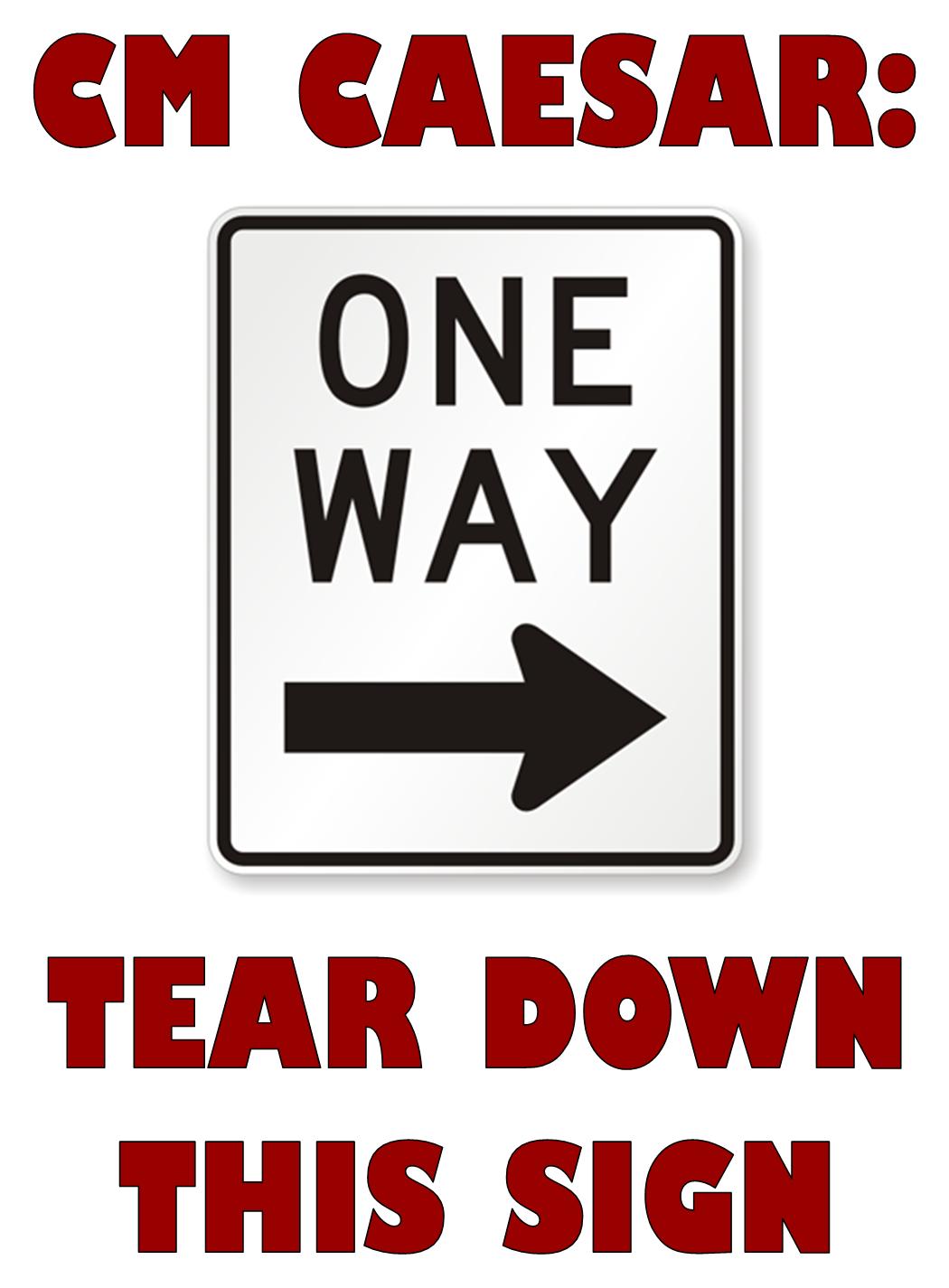
Now, by fluke of the calendar, we're sentenced to another meeting this coming Thursday, May 16. We know there'll be a bicentennial audit resolution, which Dan Coffey will oppose because he possesses all the necessary information, and for whatever other tactical copperhead maneuver of the moment, he's up for some Caesar fluffing.

KZ on BicenComm: Pass me an abacus.

Not unexpectedly, commission member (and councilman) Bob Caesar could not be reached for comment. What are the odds that he votes on the resolution rather than recuse or abstain? Solid, I'd say.

It's really too bad about the bicentennial experience to date. Apart from audits and oversights, had the big kids just decided (for once) to be genuinely inclusive and let others have just a bit of sandbox time, we might have accomplished something. But from the very start, the foremost imperative was to guard the birthday from those who would use it. Oh, well; it's all so utterly New Albanian.

There's always the Tricentennial.

For this reason, I decided that NABC will sit out this year’s “official” commemoration, better to honor “next,” or the more hopeful, forthcoming party we’re all guaranteed to miss – not because we were not invited, as was the case in 2013, but because each and every one of us will be dead as door nails in 2113.

Take it away, Matt.

NASH: Lessons from a council meeting, by Matt Nash (N and T)

Over nearly four years of writing this column, I have attended many New Albany City Council meetings. I had been taking a little break from going because of the emotional toll that it takes on my soul, but I decided to return this week ...

... When he had finished speaking, Mr. Coffey gave a vote of confidence to Councilman Bob Caesar as co-chair of the committee, and said that the council had been given every piece of information that they asked for. No one else had any comments and the meeting was adjourned.

Mr. Megenity’s comments raise some very important concerns. Has the all the money that has been collected for the bicentennial events been accounted for? Why was the treasurer not in charge of depositing all monies? How many people had the ability to write checks on the committee’s account?

Motorbikes, Thunder and Weird Scenes Inside the Gold Mine.

Through New Albany.

Mufflers optional.

Or, like pretty much every weekend in nice weather; whatever.

As a non-motorized cyclist, I mention this revved-up observance of Armed Forces Appreciation Day only because of the interesting wording. Not in a bad sense, mind you, just interesting. There is an edge of sorts to the language, perhaps implying that not everyone at the big kids' table approved -- and let me tell you, NAC understands THAT feeling.

Event hosts are identified as "citizens" and a "bicentennial committee" (the leaden Commission itself?) It is a "free event" (how would you charge to watch motorcycles from public sidewalks ... on second thought, leave Harvest Homecoming out of it). The thunderous motorcycle ride is mentioned at the official Bicentennial Commission page, but with nary a comment apart from the poster itself. At the city's Facebook page, Thunder was assigned an exclamation mark, although pretty much every utterance gets one of those, rendering them moot.

Initially I was contacted about serving beer after the ride at the Masonic Lodge, which isn't mentioned on the poster. I presume it is an "official viewing site," but at any rate, no one ever called back, and it's too late now. We'd have been pleased to do it. Perhaps there'll be "music and specials" from downtown establishments. Do any of them know anything about this?

I wonder if it's too late to have NABC's Tricentennial Ale release on June 1 classified as an official bicentennial-stamped event?


He just wants to know.


Sunday, May 12, 2013

"NYC Study Finds Protected Bicycle Lanes Boost Local Business."

Given New Albany's fairly compact layout inside the beltway, the utility of this approach embraces more than just business growth, although one imagines that economics should matter, even to folks living on Corydon Pike.

It also provides a convenient way to link neighborhoods with downtown and with each other.

Whether or not protected bike lanes are the right objective here can be debated, but the overall veracity of reconsidering our city's street grid for the contemporary world is far clearer. These streets were changed 40 years ago to reflect an emptying downtown and fear accompanying it. Now that downtown is filling back up, streets must be rationalized to reflect it. Otherwise, the goal of revitalization is being contradicted on a daily basis by infrastructural stasis.

NYC Study Finds Protected Bicycle Lanes Boost Local Business, by Mary Lauran Hall (America Bikes)

The road to recovery is in sight, and it has a bike lane.

The typical city street is a busy place. People riding bikes, walking, driving cars, and operating buses all have somewhere to to go and want to get there safely — and quickly.

But while we normally think of streets as pipelines for people and goods, public streets are about more than just moving from point A to point B. They're also corridors for public life. Streets are places where locals discover new hole-in-the-wall stores and restaurants, where window shoppers duck into shops to peruse, and where children convince their parents to stop — just for ONE second — to buy a cup of hot chocolate.

In other words, streets can also grow local economies.

A new study from the New York Department of Transportation shows that streets that safely accommodate bicycle and pedestrian travel are especially good at boosting small businesses, even in a recession.

Planting trees to combat rising temperatures ... and then there's Louisville.

Here's your takeaway line:

Aggressive tree planting and maintenance programs are actually one of the most cost-effective measures a city can take to deal with rising temperatures, which pose the most significant immediate public health threat related to climate change.

And here's the rest of the story.

There Are Few Trees in Louisville, America’s Fastest Warming City, by Sarah Goodyear (Next City)

... The tree cover in Louisville’s larger metro area is around 30 percent, according to Stone’s research, with the urban core at just 10 percent. That compares to about 45 percent in the city of Atlanta.

And that lack of greenery — unlike Ohio River Valley weather patterns or global warming — is something that Louisville’s municipal leaders could change.

“It’s at least part rooted in policy,” Stone said. “It’s one of the only major cities in the United States that doesn’t have a tree ordinance.”

"We are presiding over the destruction of the traditional retailer."

The words in the header were uttered by a Republican. Perhaps Todd Young is reading?

Senate OKs Internet sales tax, by Jim Puzzanghera (Los Angeles Times)

The Marketplace Fairness Act allows states to require large online retailers with no physical presence in those states to collect sales taxes. The legislation now moves to the House.

WASHINGTON — The Senate gave strong bipartisan approval to landmark legislation that could largely lead to the end of the nation's decades-long Internet sales tax holiday.

Now the issue shifts to the more skeptical, Republican-controlled House, where the debate will revolve around one fundamental question: Does helping governments collect an existing and owed tax constitute a tax increase? ...

... some Republicans are pushing back on his interpretation. They said the legislation raises no new taxes and just helps level the playing field between online and traditional bricks-and-mortar retailers.

"There are people on my side of the aisle admittedly who are not going to be favorable to anything that may even hint of a tax increase," said Steve Womack (R-Ark.), the lead House sponsor.

"And that's regretful," he said, "because we are presiding over the destruction of the traditional retailer that has been the backbone of American business for a long, long time."

Saturday, May 11, 2013

Down by the riverside, today: Honor Mother Earth Celebration.


The Trash Force's first Honor Mother Earth festival is today from 11:00 a.m. to 4:00 p.m. at the Riverfront Amphitheater. I'll be pouring Beak's Beast and Black & Blue Grass; $4 for 16-oz pours, cash only, please.

While you're demonstrating support for environmental awareness, take a glance at the amphitheater facility and think about how we might improve it. Better yet, with the city currently awash in bond money, consider how we might conjure the will to glance outside the box and apply creativity to improvements. It's possible. We're doing it in other areas.

ON THE AVENUES: Looking for Quality of Life bond issue bonuses? "Pick me," says orphaned Riverfront Amphitheater.

 ... Delight (with the new roof) was expressed, because after all, someone else’s money had been spent. Smiles were choreographed, victory was declared, ribbons were eviscerated, New Albany Events was chartered, self-congratulatory plaques were nailed into place, and then subsequent events held on the waterfront stubbornly reiterated the crucial point known by all and sundry even before the winds from the Gulf started blowing.

Namely: Glistening band shell or not, all remaining facilities at New Albany’s Riverfront Amphitheater remained completely outdated and inadequate.

Rather than rush to fix the ceiling, England’s team might have patiently commissioned a comprehensive overview to address the Amphitheater’s complete infrastructure needs, but it was not to be, because goldfish just don’t play banjos. Now the elephant’s a whiter shade of pale, just sitting there.

KZ on BicenComm: Pass me an abacus.


Not unexpectedly, commission member (and councilman) Bob Caesar could not be reached for comment. What are the odds that he votes on the resolution rather than recuse or abstain? Solid, I'd say.

Zurschmiede seeks audit of bicentennial commission; Resolution in response to claims made by former treasurer, by Daniel Suddeath (N and T)

NEW ALBANY — City Councilman Kevin Zurschmiede is sponsoring a resolution that calls for the New Albany Bicentennial Commission’s financial records to be audited.

Friday, May 10, 2013

LIBA's Buy Local Fair is Saturday, May 11 (tomorrow).


I'm working the Trash Force's Honor Mother Earth festival in New Albany tomorrow. Meanwhile, David will monitor NABC's presence at the Buy Local Fair, and later in the evening, Tony Beard leads the NABC team at the Derby City Roller Girls bout. It makes me tired just writing it ... and next weekend is Louisville Loves Mountains and RiverRoots music event in Madison, Indiana.

Damn. Event season finally is upon us. Time to get to work.

---

BUY LOCAL FAIR THIS SATURDAY!

Sat. May 11, 2pm-8pm
Louisville Water Tower, 3005 River Road
Free admission (parking $5/vehicle, free bicycle valet)
www.keeplouisvilleweird.com/buylocalfair 

Celebrate local merchants and farmers at the Buy Local Fair!

* Over 150 vendors, farmers & food providers
* H2O Kids Zone (2pm-6pm)
* Craft Beer and Bourbon tent
* Performances from Nerves Junior (6:30pm), 30 Spokes (4pm) and Gideon's Rifle (2:30pm)
* Cooking Competition between Edward Lee's new restaurant Milkwood and RYE on Market
* Guided tours of Water Tower (3pm & 4pm)
* After party at Milkwood (9pm-10:30pm, tickets are free but must be picked up at the Fair, includes a complimentary drink and food)

Thanks to event partner Grasshopppers Distribution and ...

Audit those Crutchfields, or at least use them for paving stones.


What was that?

The city's now the number one lien holder on the Crutchfield mercenary coffee table door stop tome?

Oh, wait; that was Linden Meadows. The Crutchfield lien holder is the Redevelopment Commission, right? We don't really know, do we? I mean, the big kids said we shouldn't ask.

Meanwhile, credit to my friend Mark for succinctly summarizing Bicentennial Gate. Isn't if funny how for once, Dan Coffey says he has all the information he needs ... and yet he's not sharing any, is he?

Iamhoosier left a new comment on your post "Council still snoozing as Meginity asks for a Bicentennial Commission audit.": 

I don't personally know most of the principals involved in this "dispute". I do know that there has been no public accounting of funds and darn little other information about the committee's operation.

While I don't suspect any "pocket lining" to have gone on, it does appear that proper accounting and management techniques have not been used. We deserve some answers. 

Big Hair and Plastic Grass.


Thanks to Reverend Bob for linking to this book: BIG HAIR AND PLASTIC GRASS: A Funky Ride Through Baseball and America in the Swinging '70s, by Dan Epstein.

Yo, Randy ... Randy Smith ...

Web site
Facebook page

May brought additional migraines for Bowie Kuhn, via an advance excerpt of Jim Bouton's Ball Four that appeared in Look magazine. A diary of Bouton's 1969 season with the Pilots and Houston Astros, sprinkled with reminiscences from his days with the New York Yankees, Ball Four is--at least by today's standards--a highly entertaining if relatively tame read. But back in 1970, Bouton might as well have gone to Cooperstown and smeared the plaques with his own feces.

Culbertson Mansion: There will be an herbalist at the herb sale today and tomorrow.

From Jessica at the Culbertson Mansion, more than you may have known about the Friday and Saturday herb sale:

We’re having a workshop on how to use herbs in our modern lifestyles… Certified Master Herbalist Jenny Boice (she works out of Rainbow Blossom) will give the program talk – it’s at 2 pm on Friday and Saturday and is $7.

Here's more on the herb sale:

Herb SaleMay 10, 11, 2013; 9 a.m. – 4 p.m.
Admission to the sale is FREE
All’s abloom at the Culbertson Mansion! Stock up on a wide variety of plants including perennials, garden herbs, hanging baskets, bay trees and assorted porch planters. Beautify your landscape while supporting the Mansion’s extensive restoration.

Thursday, May 09, 2013

ON THE AVENUES: Similar to Yuri, Buda Hills, 1987.

ON THE AVENUES: Similar to Yuri, Buda Hills, 1987.

A weekly web column by Roger A. Baylor.

When Yuri Andropov replaced the enfeebled Leonid Brezhnev as Soviet kingpin in 1982, there was no way of knowing that the ex-KGB operative's stint at the top would last a scant 15 months. Andropov's severe health problems were never made public, but he was dying almost from the moment of accession.

When yet another wheezing and debilitated party boss (Konstantin Chernenko) assumed the leadership position in 1984, anything remotely resembling forthcoming roller coaster ride of the Gorbachev era was regarded as an impossible dream.

Decades later, we can see that while Andropov was no cuddly liberal, his many years in the KGB and frequent travels through the Soviet Bloc had provided him with a realistic – in context – perspective of affairs. Andropov's methods of "reform" within the USSR surely would have been brutally repressive; after all, he was Moscow's man on the scene during the Hungarian revolt of 1956, and yet he grasped the fundamental need to reform, something that eluded the ossified Brezhnev gerontocracy.

This isn't to imply that cosmetic reform had any real chance of success; such was the gap between the USSR's preferred method of operation and a rapidly changing world that was outpacing it in every way. It remains that if not in terms of flair and style, Andropov certainly was Gorbachev's crucial patron, without whom Gorbymania would have been stillborn.

A few years back, I read a political biography of Yuri Andropov, written in 1983 by a husband and wife team of exiled Soviet journalists, and purporting to help Westerners understand the milieu of Ronald Reagan's adversary in the Kremlin. It is a fascinating account of the deadly, Byzantine maneuverings behind the scenes in a time and place that seems even more dated than it actually was … and is.

In 1982, I received my degree from Indiana University Southeast and stepped out into a world that in geopolitical terms was absolutely defined by these matters. In resolving to travel in Europe, I, too, was defined by the Cold War whether I knew it or not.

In 1985, Chernenko's final resting place in the Kremlin Wall was barely cold, and Gorbachev had been in charge for only six months, when I entered the USSR for the first time, crossing the border from Finland aboard a bus bound for Leningrad. The route took us through the Finno-Russian area known as Karelia, which I later learned was Andropov's first power base in the Soviet hierarchy.

The bus was mostly filled with young Americans like myself, but I made friends with an Aussie named Mark, who helped me celebrate by 25th birthday by bribing our way into a restaurant and negotiating an all-we-could-drink meal (with a few little bits of inedible food included) for the price of $10 cash each.

That's dollars, not rubles.

Mark, who perhaps was a year younger than me, became extravagantly drunk, and while comically hung over the next day managed to trade three pairs of nylons for an evening of sex with a 40-something woman he met at an ice cream stand on Nevsky Prospekt. His original plan was for me to keep her friend similarly occupied, but I possessed neither the necessary hosiery nor any other commodity for creative bartering.

Besides, she was somewhat older than me, and looked a bit too much like Andropov for my tastes. I opted "in" for the remainder of Mark's vodka, and counted myself fortunate for opting "out" of my end of the tryst.

Two years later, I suddenly thought of the late and unlamented Andropov again, this time while visiting Budapest.

During the month of June, 1987, I aimlessly roamed through Western Hungary, staying in towns like Koszeg and Sopron, and ending with just shy of two weeks in the shabby but endearing capital city on the muddy "blue" Danube, scene of Andropov's defining ambassadorial triumph thirty years before.

Those were inexpensive and exhilarating times. Including a ticket to watch the rock group Genesis at the soccer stadium and a one way train ducat for the three-day, 36-hour trip from Budapest to Moscow, expenses came out to $17 a day for the month in Hungary. Subway tickets were a dime apiece, imported bottles of Czech lager came in at four for a dollar, and meals would be had for two bucks at one of the "people's" cafeterias scattered throughout the city.

The meals were acceptable for the dirt cheap price, if fairly predictable, and while they hinted at the glories of savory, lard-laden Hungarian cuisine, the commissary fare fell a bit short of world class. As my departure day drew near, I decided to splurge at a much praised restaurant in the Buda Hills, the sort of place that ordinary Hungarians could ill afford on their paltry salaries, but I could easily manage every now and then.

On a quiet and sunny Sunday, I boarded the tram and rode almost to the end of the line, got off, and easily found the recommended eatery. As customary, the full menu was posted by the front gate, and I was studying the possibilities when there was a commotion at the entrance, which was hidden in tall shrubbery thirty feet away.

An older man dressed in regulation rumpled Communist party gray suit came staggering out. I could smell the alcohol on his breath all the way from the street. The man was mumbling in Hungarian, that most incomprehensible of languages transported by the migration of Asiatic peoples to the area a thousand years ago, but what struck me as he approached was that he looked more like the deceased Andropov than the Soviet leader did while alive, and when he finally got to me, nearly stumbling on a cobblestone in the process, he slurred something angrily in Magyar-speak and very slowly launched an attempted haymaker in my general direction.

The punch didn't come anywhere close to landing, and the force of his fist's impact with the stale evening air caused him to completely lose balance and fall to his knees, where he was briskly intercepted by the group of comrades who had come running behind him. Two of them packed the old man off into an adjacent Lada, and two others began apologizing profusely to me in attempted German. I responded in Hoosier-laced American, which caused them even more consternation ("we like your mister Reagan," one managed to whisper).

Their communication skills were inadequate to convey why the Andropov lookalike wanted to slug me. I reckoned that plainly, he didn't like Germans.

As it turned out, the first beer inside was on them, and the Chicken Paprika and sour cherry soup that followed on my forints was damned good, too. In the end, it gave me a good story to tell two years later, in August of 1989, when I sat drinking beer with Vladimir Putin (another of Andropov's KGB men) at the Radeberger beer cellar in Dresden, German Democratic Republic.

But that's a tale for another day. I may tell it again, later this summer.

(first published in 2008)
Londoners and New Albanians: "Somewhere Else."


I enjoyed this song quite a lot when it came out a few years back, closer to the beginning of my wonderfully and delightfully obtuse immersion into all things New Albanian. Lately it's become an ear worm all over again, and it may be that Razorlight so aptly conveys the ambivalence that's always lurking just beneath the surface here in Na Na.

But now I just can't help myself
I really really wish I could be somewhere else
Than here

You give me everything I need
but I really really wish I could be somewhere else
Than here

I swear to the Spaghetti Monster: No more Sunday afternoon episodes of House Hunters International.

There goes the gin.


First beer, then wine. Now she's hitting the gin. This cat's on a jag; at least her human's holding on. I hope no one is detecting a pattern.

Wednesday, May 08, 2013

The fate of the public market space.

(From the photo archive at the library's Indiana Room)

But could they sell local beer at the farmers market way back then?
The 10 Greatest US Public Markets That Met the Wrecking Ball, by David K. O'Neil (Project for Public Spaces)

It is no secret that market halls, market sheds, and market districts were once more prevalent in American cities than they are today. Hundreds of markets burned down, were demolished, were removed for “higher and better uses” (oh, how I hate that term), or were replaced with empty “market squares”. Most towns, large and small, had at least one market that usually served as one of the most important, centrally located institutions in a growing city. Local economies were built around markets, which offered affordable opportunities to people who were looking to start a small business and vital lifelines connecting consumers and producers.

Matt Lorch sets sight on da Judgeship.

I'd hate to lose Matt's mischievous countenance at council conclaves, but onward and upward. The lawyering business comes naturally to Matt, and he's conscientious and diligent. Best of luck to him.

Lorch to run for Superior Court Judge; Local lawyer currently serves as council attorney, by Daniel Suddeath (N and T)

New Albany City Council Attorney Matthew Lorch is seeking to be the next judge of Floyd County Superior Court No. 2.

Exclamatory zeal: "2013 Harvest Homecoming Planning is Underway!!!"

Harvest Homecoming's brief annual business plan is utterly incompatible with a revitalizing downtown filled with independent small businesses that operate year-round -- but you already knew that. The only question is whether local government will ever get the memo, and if so, bothers reading it.

Harvest Homecoming

2013 Harvest Homecoming Planning is Underway!!!

Updates will be coming to this site in the next couple months, but until then here are the new dates...

HARVEST HOMECOMING PARADE: SATURDAY, OCTOBER 5, 2013

HARVEST HOMECOMING BOOTH
THURSDAY, OCTOBER 10- SUNDAY, OCTOBER 13

2013 Theme: "Harvest of History"

Tuesday, May 07, 2013

Council still snoozing as Meginity asks for a Bicentennial Commission audit.


And that's why NABC is sitting this one out and skipping ahead to next century: I'll see your bicentennial, and raise you a Tricentennial. Whatcha got?

Reporter Daniel Suddeath set the stage earlier on Monday, predicting an appearance before the city council last night by Vic Meginity -- retired teacher, historic preservationist, and as we learned, former treasurer of the city of New Albany's Bicentennial Commission.

How this came about proved a top-quality reminder that civic dysfunction is alive and well 200 years after the ill-fated Scribner canoes ran aground.

By the way, boys and girls, are you also wondering how many Crutchfield Coffee Table Door Stops have been sold so far? We'll get back to that.

Meginity proceeded to meticulously question the bicentennial committee's handling of monetary accounts, charging that commission and private monies were commingled and liberties taken with accounting, all on his watch but without his input.

He told of how he approached commission members seeking an explanation, then went to co-commission chairs Shelle England and Bob Caesar, then various city officials, and finally to the mayor. Nothing happened, and then Meginity was told by Caesar he'd be fired along with an assistant, so he quit first.

When Daniel's newspaper report is published, I'll link to it here. It should suffice to say that Meginity believes there should be an audit of the bicentennial commission's accounts, and moreover, there should be accessible information as to just what the commission has been doing with roughly a quarter of a million dollars since it was formed, turned loose ... and never, ever monitored by the city council or anyone else.

Meginity said that he became aware of potential problems only last October, and coincidentally or not, October 1, 2012, was the most recent occasion for the  council to utterly refuse even a cursory probe into the commission's dealings and expenditures. It was the occasion for final approval of Bicentennial "Rent Boy" Park, and council member Caesar was buttressed by co-chair England in deflecting all questions.

England's position was clear: This is the big kids' table, and thou shan't ask.

The council's reply last October was equally clear: So very sorry for so much as insinuating a questioning stance; carry on; like we'd ever want to know anything of you, heaven forbid!

Unfortunately, if Meginity believes a council that has tended to regard bicentennial oversight as a disease akin to poison ivy or genital warts now will be swayed by the mere eloquence of a whistle blower to perform long overdue audits, he's likely to receive yet another clear reply.

HA HA HA HA HA ... especially after Coffey, of all people, leaped to Caesar's defense and assured all and sundry that for the first time in recorded human history, every last bit of the bicentennial "information" has thus far been passed from jeweler Centurion to the council and the copperhead himself.

In the end, the main reason why this episode so saddens me is that Meginity himself artfully alludes to the probable crux of the issue in his report to council, of which I've obtained a copy.

He notes that New Albany is his "adopted hometown for the past 50 years."

Yes, "adopted."

Small wonder the cool kids dumped him.

Dude isn't even from here.

Coffey: Planets and employers must be protected from human rights.


On July 19, 2012, New Albany's city council approved the establishment of a Human Rights Commission.

City council unanimously approves a human rights commission.

Unanimously?

That's right.

All eight council persons in attendance last July (Pat McLaughlin was absent) approved the final reading, including the 1st District's Dan Coffey. Reporter Daniel Suddeath of the News and Tribune even mentioned there was "little discussion" of the measure, which is the way I remember it, too.

Last night, at the council's first of two May meetings in 2013, the Human Rights Commission was back on the agenda. As city attorney Stan Robison explained, the new ordinance is meant to correct errant wording and change the HRC's meetings from every two months to quarterly.

(Shouldn't someone eventually ask aloud why all parties involved worked so long to procure this shiny new HRC vehicle, and now behave as though they're terrified at the prospect of it being rolled out of the garage? But it is late, and I digress)

A quick vote on first and second readings seemed imminent, but then it happened.

Gone for so long, the Copperhead suddenly returned to the fray. The old Dan Coffey oozed to the surface to begin an impromptu filibuster in objection to the stipulations of the Human Rights Commission, ones that he happily approved thrice before in 2012, evidently without ever reading the document he rubber-stamped.

So, what were Coffey's specific objections to the new corrective ordinance?

Did he seek to reject the pagination change, the subject-verb agreement reconciliation, or the meeting calendar reboot?

No.

It seems that somewhat belatedly, it has occurred to Coffey that when "Mars changes and becomes Jupiter," we must realize that employers are people, too, and keep these silly human rights considerations from applying to actual human beings in the private sector -- especially if said considerations are being passed along by (shudder) ... a "non-elected committee."

Gads.

Rather like the one Coffey voted to enable just last July.

Is this about Chick fil-A again?

Ah, but it seems that there's now a vague and unrevealed "situation," one that a councilman perennially obsessed with gaining all the relevant information could neither explain coherently nor describe apart from inscrutable code words normally reserved for whole planets.

Coffey's artless prattling continued as his fellow council persons scratched their heads. Even Shirley Baird forcefully objected to Coffey's formless meandering, and finally Greg Phipps asked whether the secret word just might be "transgender."

Coffey mumbled assent, still unable to bring himself to say the word aloud, but holding that in cases of interplanetary change, then it's "not the same person" any longer.

Leave it to John Gonder to state the obvious: The entire discussion, being entirely irrelevant to the ordinance being considered, sounded suspiciously like something for the Human Rights Commission to discuss.

That is, if the city ever lets it meet.

Phipps did not change the wording. The first two readings passed 8-1, with Coffey for once refraining from abstaining and hitting the "no to non-persons who dare to hold jobs in New Albany" button.

That's the situation, dear reader. We thought the old council was gone. Last night, there was a startling return to form.

Should greater quality be added to quality-of-life pools?


Speaking for myself, I've always tried to avoid swimming, because it's so hard keeping that nasty chlorinated water out of my beer.

And, regular readers know that there have been questions about the expenditure required to build this particular edifice (now merely water underneath the bond issue).

Here's an Internet petition that comes from a different angle.

Build A Better Pool ... in which Mayor Gahan is encouraged to "design a more robust swimming facility than the one currently proposed."

Let no one say I didn't provide another side to the foregone conclusion.

Monday, May 06, 2013

Probability high that 1Si's "think local" box lunch will contain red herrings.


The Green Mouse has been hacking on-line again. I keep telling him to stop, but he just will not listen. Bad mouse.

He's learned that One Southern Indiana is keen to help small, local business owners, although the single most logical step -- doing away with 1Si, which is the perennial defender of the oligarchs, whose monopolistic interests collide with those of small, local business -- appears to have been omitted from the action list.

It's fairly hilarious to note that two looming threats to small business health, which 1Si now seeks to play a leading role in protecting, are downtown bridge construction and subsequent bridge tolls, both of which 1Si has (of course) enthusiastically endorsed. Physician, heal thyself ... although I don't see THAT on the agenda, either.

Wouldn't you just love to see the invitation list?

Full disclosure: I ain't on it.

---

Greetings!

As I approach my six-month mark as President of One Southern Indiana, I am working with our Board of Directors and many members and volunteers on developing a Strategic Plan which will help guide our organization’s direction over the next 3-5 years. I am excited for the many opportunities for businesses in Clark and Floyd county to thrive, and we are looking for ways to add value to the good work that many of your organizations are currently doing. We are also sensitive to not duplicate your efforts, but instead to enhance the business climate for our smaller and locally-owned businesses.

Therefore, you are invited to a Luncheon meeting to determine the opportunities and concerns of the locally-owned businesses and the merchant organizations that are working on their behalf. In today’s competitive marketplace it is imperative that communities are proactive in determining the challenges of our local businesses, and through a unified effort, address these issues to foster local buying habits and make Southern Indiana the destination stop for the region’s needs. We believe there may be areas in which we can collaborate to contribute to a successful business environment.

Please join One Southern Indiana, Think Local and the other merchant associations to share your association’s strategies and to identify those areas where help is needed.

The Luncheon meeting will take place at One Southern Indiana Tuesday May 7th from 11:00 – 1:00 p.m. We will provide boxed lunches. Please RSVP by email to dannyj@1si.org.

The suggested agenda would be as followed:
1. A welcome and introduction (All)
2. Purpose of the meeting (Wendy Dant Chesser)
3. Strategic Direction of each Association (All)
4. Collaborative Opportunities (All)
5. Next Steps (All)
6. Adjourn

Thanks, and I hope you can join us!
Wendy

Wendy Dant Chesser | One Southern Indiana
President & CEO
4100 Charlestown Road
New Albany, Indiana 47150
812/945-0266
www.1si.org

Gold mostly unavailable, so we'll pave the streets with EDIT.


It's a city council Monday, and millions will be spent on paving. The question now is this: When do we begin calming these newly paved streets and returning the New Albany street grid to two-way traffic? It would be a fine step toward walkability ...

Why walkability?

 ... Jeff Speck’s “Walkable City” provided the foundation of the March 21 forum. During the forum, Speck concentrated mainly on the advantages of walkable communities and neighborhoods.

During the Q&A session that followed, he touched briefly on how walkability is accomplished, but saved most of that information for the following day’s luncheon ...

 ... He said architects and planners in the 1950s through the 1980s “screwed up” by planning cities dependent on suburban commuters.

Because of their aesthetic values, walkable communities began to appeal to younger planners and architects in the 1990s, which led to the conclusion that walkable communities were more vibrant and active. Over the past two decades, experts from other fields have touted the virtues of walkable communities and warned of the perils of those that are not.

The meeting agenda is posted, and the newspaper preview is here:

New Albany council to weigh funding for paving, tornado sirens; New sirens would boost coverage downtown, by Daniel Suddeath (N and T)

After months of discussion, the council is slated to vote on footing $2 million in paving this year with Economic Development Income Tax funds.

Initially, the council had considered bonding as much as $5 million of paving, but the majority of the body felt borrowing money for resurfacing wasn’t a good idea.

Councilman John Gonder said during a work session this week that the city is already incurring more debt since a bond was approved for an aquatic center and other quality-of-life projects that are projected to cost up to $18 million. Through EDIT, the council has the means to fund $2 million in paving this year and in 2014 without having to pay interest, he continued.

“If we don’t have enough discipline to do that, then shame on us,” Gonder said.

This week in closing loopholes: Marketplace Fairness Act.

What a novel idea: A slight pinprick of personal inconvenience, but better for us all?

Why I Love the National Internet Sales Tax Plan; You might end up paying more, but it’ll be good for America, by Farhad Manjoo (Slate)

... Instead of imposing a new tax, this bill addresses a tax-evasion scheme. If you want to argue that states should abolish or lower sales taxes on all businesses, both offline and online, that’s fine. But none of the critics are pushing for cutting sales taxes for everyone—in fact, conservatives generally see sales taxes as preferable to income taxes. Instead, by opposing this bill, they’re merely arguing for an unequal policy—that some businesses should collect sales taxes and other should not.

Sunday, May 05, 2013

Merchant Mixer/Downtown Business Owners minutes; next meeting is on May 22.

Thanks to Larry Ricke and Pam Peters for taking notes. If you're doing business downtown, please come to the breakfast meeting at Bank Street Brewhouse on the 22nd. I'll have coffee and doughnuts on hand.

Curious about walkability and why it matters? Go here for a very good book.

---

Minutes of Downtown Business Owners Wednesday, 04/24/13

The meeting was called to order by acting chairman, Larry Ricke, at 8:00 a.m. at the New Albanian Bank Street Brewhouse.

Businesses in attendance were: Ricke & Associates; YMCA; Develop New Albany; Padgett Museum; Gallery on Pearl; Sew Fitting; New Albanian Brewing Company; Michell, Timperman & Ritz; REMAX Realtors; and the City of New Albany.

The purpose of this group was a topic of discussion. According to Mike Kopp, this group was originally started in his Develop New Albany administration to act as a liaison between the downtown merchants and the Develop New Albany Board of Directors.

Curt Peters was asked to chair this group. After much discussion by those in attendance, it was decided that this group should be separate from all other organizations and this group should be used as a sounding board and depository of information for all the other groups like Develop New Albany; Keep New Albany Clean & Green; lSI; New Albany First; and the City of New Albany. The mission is to be a coalition of downtown business owners to share information by communicating the opportunities and concerns of our downtown businesses.

Old business - Joe LaRocca said he and Develop New Albany wanted what was best for downtown New Albany. Mike Kopp said he was approached by a business located outside of downtown to see how we could help them. This will be referred to Develop New Albany for their response.

New business - Bicentennial Park was discussed by Michael Hall from the City of New Albany. Scheduled opening is mid-May 2013. The city is working on planned entertainment for the downtown area and more would be discussed as plans are finalized.

Two-way street changes were discussed briefly and it was decided to make this the primary agenda item of our next meeting, along with the suggestion to possibly return parking meters to our downtown area and increase promotion of our available surface parking lots.

Next meeting is scheduled for Wednesday, May 22nd at 8:00 a.m. at the New Albanian Bank Street Brewhouse. Please come and participate. The City of New Albany will present their findings on traffic flow in downtown New Albany and two way streets will be discussed. We need all downtown business owners' input.

"No beer sales this year at farmers markets."


The bill actually passed the Senate in 2013, but was "bottled" up in the House by that same lugubrious fellow who said he'd happily restore Prohibition if given the chance. Perhaps he'll retire soon. In the meantime, small Indiana brewers merely seek a playing field similar in dimension to that of our small winemaking brethren. Legislators increasingly seem to be getting the message; we'll get there.

No beer sales this year at farmers markets (thanks to Beer Pulse for the link)

Now she's on the wine.


I've hidden the gin, because the cat's on a jag. Wine courtesy of River City Winery.

Saturday, May 04, 2013

News and Tribune thinks Rep. Clere's bridges, aesthetics and tolls really aren't so keen, after all.

Make no mistake, this editorial is appreciated, if for no other reason than the a annoyance it brings to the local oligarchy. After all, the Kerry Stemlers of our community are accustomed to barking orders, not being questioned.

But something else should be said, too: Where were you two or so years ago, when we really needed you?

The News and Tribune editorial board is comprised of Publisher Bill Hanson, Editor Shea Van Hoy and Assistant Editor Chris Morris. Better late than never, I suppose.

OUR OPINION: If you’re going to do it, do it right

The Ohio River Bridges Project is massive. It’s projected to cost more than $1.6 billion and will take about three years to complete, construction officials say.

With primary construction kick-off just weeks away, some of the smaller details about the project are getting scrutiny, like the bridges approach and overpass aesthetics recently questioned by city of Jeffersonville officials ...

SNIP to the chase.

... issues like the disparity in the quality of aesthetic touches — let alone the fact that Hoosiers will be paying a disproportionate amount of tolling for the new bridges — can do nothing but make Southern Indiana residents feel put-upon. How else should Hoosiers be expected to feel given the facts?

But Wingfield does bring up a good point — there’s still time for Southern Indiana residents and officials to do something about the slight, on aesthetics at least.

We’re calling for construction officials to set aside funding to make the Indiana portion of the project uniform and on par with the planned aesthetics in Kentucky. We urge readers to write INDOT officials and their area state legislators calling on them to take action. And while they’re at it, it wouldn’t hurt to talk about the still-undecided tolling plan.

Down with the NCAA? Sounds wonderful to me.

Even if you buy the bilge water of collegiate amateurism, and I surely don't, you should be in favor of dismantling the NCAA -- which does more to enhance the hypocrisy than end it. Dow, down, down. As fast as possible.

The Lawsuit That Could Bring Down the NCAA, by Jonathan Mahler (Bloomberg)

The storm that’s slowly rolling toward Indianapolis quietly gained strength this week with the filing of several devastating documents in a federal court in California. If it stays on course, it’s going to hit with biblical force, reducing the National Collegiate Athletic Association to a heap of rubble.

This storm is also known as O’Bannon v. NCAA. It’s an antitrust lawsuit filed in 2009 by former UCLA All-American basketball player Ed O’Bannon and a handful of other ex-college athletes, who don’t think the NCAA should be profiting from their names and images without sharing the royalty payments.

I had to cut her off.


Good tunes and beer, but her taste in food still runs to mass-produced gruel.

Friday, May 03, 2013

BSB’s Derby Menu for tonight and tomorrow.

It got started yesterday, and I had the lamb chops with Tunnel Vision last night. Chef is rocking it, and the beer lineup is the best it's ever been.

BSB’s Derby Menu for Thursday through Saturday, May 2 – 4

Maybe I'm making my peace with the Kentucky Derby? Nah, just needing to get all mercantile every now and then. Have fun and be safe today and tomorrow.


Dining in New Albany for Derby? Well, why not?

The Derby edition of Eater Louisville's Heatmap has two New Albany establishments among the 15 metro Louisville go-to spots: Feast BBQ and The Exchange.

The Eater Louisville Heatmap: Where to Eat Right Now

Granted, this is but one food and drink web sites among many, and it didn't even exist during previous Derbies, but the fact remains that it's pleasant to live in a place that's part of a positive conversation. For once.

The only Derby song that matters.


Not that atrocious Dan Fogelberg number.

Thursday, May 02, 2013

ON THE AVENUES: Beers by the light of day.

ON THE AVENUES: Beers by the light of day.

A weekly web column by Roger A. Baylor.

Some daytime beers are more memorable than others, even when at first glance, there doesn’t seem to be anything at all memorable about them. It probably has to do with the setting.

In the fall of 2006, my band of intrepid beercyclists spent a cool, overcast Friday morning peddling the dedicated bike routes (ah, the joys of civilization) southbound from the Czech border near Znojmo, through the pastoral region of Lower Austria called the Weinviertel. Our ultimate destination was the Danube River, where we’d join the Danube Cycle Path, a veritable superhighway of pleasurable riding.

Just after lunch, we rode into a small town with a railhead where we intended to hop a local train for the last few miles into the city of Tulln, situated on the Danube. First there was the little matter of a much needed sag, and some restorative food and beverage: A bowl of goulash, a couple of lagers and some vital post-ride commentary and analysis.

The local family-run restaurant wasn’t busy. There was a friendly waitress willing to tolerate our halting attempts at speaking German, news showing on the television, and a warm, inviting atmosphere for stew and refreshment. As we ate, three schoolchildren stopped by and went straight to the bar – for gargantuan ice cream sundaes.

No one so much as batted an eye. In America, a do-gooder would have called 9-11 or child protective services. Fortunately, we were in Europe, where sense might yet be common.

We paid and rolled down the street to check the afternoon rail schedules. Across the way was a small neighborhood tavern, ideal for idling for a few minutes more before departure. Over at Rick’s, the barflies were chatting, smoking and conversing. Sports coverage was on the tube. Two mud-caked workingmen were medicating, and while they may have been kicking back at the conclusion of a long day, I got the impression that their drinks may have constituted break time between ditch assignments.

Eventually we boarded the train, stowed the bicycles, and enjoyed the brief commute to Tulln. As it turned out, a Friday evening regional wine festival awaited our rapt patronage, as well as an inauspicious brewpub with good unfiltered “zwickelbier” and heaping platters of pork and sausages. A leisurely ride into Vienna began the following morning.

---

Looking back on that day, my thoughts invariably return to lunch in the small town, and our drinks at Rick’s. It’s the little things in life that matter, and counter-intuitively, those are the days you’ll often remember – perhaps not the precise details, just the sensation of experiencing fun and authenticity sans the hype and chest-beating and retweeting that seem to accompany every sip of an adult beverage these days.

A mug of beer, a loaf of pumpernickel … and whomever you’re sharing them with, alongside a corresponding thought: How many times have I personally enjoyed such a timeless tableau in what I consider my natural habitat, the corner watering hole? There have been hundreds of communions, here and abroad. Life seldom gets better than these.

When you’re a tourist, it is a blessing to take time from your own life and experience complete detachment from normal routine; better to have a daytime beer when and where you like while observing the normal everyday routines of others. It can be participatory or voyeuristic. If the act of escape requires another beer or even three, it doesn’t matter one jot if the ensuing nap takes you through the afternoon. After all, you’re on holiday.

The point is that one is not bound by the foolish convention of only drinking beer in the evening. Rather, beer can be enjoyed in natural sunlight. According to the Bible … or it may have been WC Fields:

“When I was a child, I used to speak like a child, think like a child, reason like a child; when I became a man, I did away with childish things and devoted my attention to daytime beer drinking whenever the opportunity presented itself.”

---

Later during the same trip abroad, there was a second memorable episode of daytime beers, culminating with Happy Hour in the restaurant car on the EC-22.

It began with two rainy noontime hours spent within the confines of Vienna’s Westbahnhof, enjoying a train station lunch of Weisswurst and “chili con carne” (i.e., the same goulash as always with Mexican-style seasoning) before adjourning to half-liters of fresh draft Zipfer Urtyp and a roomy place at the stand-up counters at the imbiss facing the central hall.

By the time the sun reappeared, it was 14.00 and the train was west of the city, half an hour into an eight hour journey to Frankfurt. It was a providential signal to visit the restaurant car for scenic libations and a paperback novel.

The train was making good time across the well-ordered Austrian countryside as I savored a Konig Ludwig Hefeweissbier. Mind you, wheat ale isn’t my favorite beer style, but it was a viable alternative to the pedestrian Warsteiner available in bottles or on draft. In fact, my feet rested atop a full 30-liter keg being stored beneath the high-top restaurant car tables.

The long-distance express train was scheduled to make relatively few stops during the course of its journey to terminus at Dortmund in Germany, but several of them were clustered in western Austria right around 15.45 to 17.00, prime commuting hours, and the “regulars” – mostly men – came on the train for a beer, cigarettes and conversation, then got off again further down the tracks and could be seen hopping over to adjacent platforms to switch trains and finish their trips home.

All the while the pleasant vistas swept past, magnified by the oversized windows of the restaurant car. The attendant, a man in his mid-fifties dressed in an official uniform of dark pants, white shirt and red vest, regretted to inform me that the Hefeweissbier was gone, so I gritted my teeth and sipped Warsteiner, instead.

Later, when it was dark outside and lunch a distant memory, I strolled through the six seating cars separating the restaurant (located in proximity to first class, not the bicycler’s 2nd class wagon at the rear) from my seat and settled down to an epicure’s dinner of canned herring, black bread, and apricot jam, as purchased at a supermarket earlier in the day and packed for just the occasion.

Also in the picnic basket were two cans of Stiegl lager from Salzburg. They guided me into Frankfurt, where the following morning I had but one question for the desk clerk.

“When do the bars open around here?”

Germany. Now there’s a place for daytime beers.

Elaine Bradley of Neon Trees.


Once Upon A Time's Josh Dallas isn't the only artist with a background in New Albany. Elaine Bradley is the drummer for Neon Trees, a band I've come to enjoy quite a lot since Richard Atnip introduced me to the music a couple of years back.

My column at LouisvilleBeer.com is about Indiana craft brewing.

A quick note: Those tracking progress of this year's "artisan distilling" legislation in Indiana will be pleased to know that it passed and has been signed by the governor. I'm told there are a few stray wording clean-ups to occur in 2014, but the main hurdle has been cleared. Rep. Ed Clere was the prime mover of this legislation, and deserves credit accordingly.

Tomorrow I'll be attending a meeting in West Lafayette aimed at coordinating the Brewers of Indiana Guild, Purdue University and state government toward the aim of establishing agricultural research in areas pertaining to beer and brewing (it's been done for a long time with grapes and winemaking).

Maybe some hops and barley growing, and a micro-malting business in Indiana? It might happen if we can manage row in the same direction.


BIG Logo 2013
What was that?
How many breweries are located in the state of Indiana?
Only your friendly statewide trade organization knows for sure, although with the situation changing so quickly from week to week, the Brewers of Indiana Guild (BIG) probably isn’t capable of a completely accurate count, either.
The best guesstimate bandied about during BIG’s annual meeting in April was about 63 operating breweries, with as many as a dozen more in the planning stages.

Wednesday, May 01, 2013

Red Yeti brewpub coming to downtown Jeffersonville.

Let's just be careful not to confuse Red Yet's HopIPAtamus with NABC's Hoptimus, okay?

Apart from that minor quibble, and to paraphrase the Czech proverb: Blessed is the city that houses a brewer.

Jeffersonville undoubtedly moves forward with the prospective addition of fresh local beer beer, making our friend Goliath so very happy that he even has kind words for the incumbent.

Currently there are 63 breweries in the state of Indiana, with numerous other being planned, including Red Yeti and Point Blank in Corydon. When every hamlet in the state is no more than a day's bike ride from a brewery, Hoosierdom will have arrived. But would be remain red, or turn blue? Is there a correlation? Inquiring minds want to know, but not until after we've had a few liters.

Congrats to Red Yeti and downtown Jeffersonville.

A BREWING BUSINESS: Red Yeti Brewing Co. cuts the ribbon on downtown brew pub, by Braden Lammers (News and Tribune)

... Paul (Ronau) said the idea for opening a brew pub started while the couple still lived in California.

An information technology employee with UPS, he said he has been a home brewer for some time and decided that he wanted to turn pro. But the prospects of opening the restaurant while the couple was living in California were not feasible.

Brandi, who said she had been working in restaurants in California, said the couple could not overcome the hurdles of launching a startup on the west coast. The Salem native decided it would be a better fit if they came back to Southern Indiana to try and launch their business.

Paul explained that the plan was, initially, to locate near Avon.

Their real estate agent, Mike Kopp, vice president of commercial sales with ReMax First, pointed them to downtown Jeffersonville.

REWIND: May Daze, or "as opiates go, booze is vastly preferable to religion."

A yearly reminder of relevance around the world, and irrelevance in America, as originally published at NAC on April 26, 2012.

---

ON THE AVENUES: May daze.

A weekly web column by Roger A. Baylor.

By the summer of 1987, when I first visited the geopolitical conglomeration formerly known as the Soviet Union, the country’s annual May Day parade in Moscow had long since ceased to be a showcase of international socialism.

Rather, it had reverted to the overt, and was staged as an ideological pageant of nationalistic fervor – a genuine, old-fashioned, patriotic flag-waver for Mother Russia.

For the bedrock Soviet worker, who according to prevailing mythology was the chief beneficiary of international socialism, May Day’s single biggest selling point was being able to avoid the drudgery of the factory for a few precious hours. He’d have rather been on the beach at a posh Black Sea resort in Bulgaria, but what could be done?

At least for a while he could forget about the dystopian Five Year Plan by hopping the subway from his cookie-cutter, high-rise suburb to the historic center of the city, queuing with fellow vodka-bearers, plodding behind the massive missiles through cobblestoned Red Square, and then finally passing the reviewing stand arranged atop Lenin’s Mausoleum for a fleeting glimpse of the jowly old men in furry caps, grimacing arthritically as they waved vacantly into space.

The parade was a choreographed set piece, of course, one fraught with symbolic properties, both for natives seeking clues to the direction of their country apart from the stultifying daily propaganda, and for observers elsewhere, like professional Kremlinologists in the employ of Western intelligence agencies.

These consulting spooks subsequently would examine film of the May Day parade, reshuffle their tea leaves, and strain them through a few hoary apocryphal algorithms. Passwords would be repeated, reports submitted, meetings held, and murmured decisions reached. In appropriately clandestine fashion, money would be exchanged, and a hush briefly might descend, until suddenly, somewhere in the world, a legally elected government was overthrown – first one of the Capitalist paymasters’ choosing, then another selected by the Communists, each in its own turn, serving the dual purpose of preserving the status quo, and stimulating both full erections and full employment among participating secret agents.

---

Long before the decade of the 1980’s, the workers of the world – be they in Akron, Cape Town or Tashkent – already understood that they neither had united, nor shed their chains in any fashion sufficient to exercise control over the means of production.

The stewards of the world’s two great economic “-isms” had divided the planet into manageable spheres of influence, with the non-aligned throngs always ripe for recruitment and exploitation. At the end of a day’s toil, the best way for just plain folks to endure the enforced pieties of a May Day parade -- or a 4th of July picnic -- was to remain under the influence.

As Ernest Hemingway reminds us, the bottle is a blessed means of sovereign action. You first drink from it, and then throw it in the direction of the oppressor. In cases of rotgut, you can drink some of it, and then set the remainder aflame just prior to tossing (see “cocktails, Molotov”).

During the Cold War, Russians and Poles chose vodka. Cubans opted for rum. I always imagined the Czechs and Hungarians to be more fortunate than most, seeing as they possessed beer (Pilsner Urquell) and wine (Egri Bikaver) of a higher uniform quality than produced by Warsaw Pact neighbors.

For Americans, there’d be gallons of insipid ice cold light lager and a few pints of Jack Daniels. Choices from our NATO allies might have ranged from English cask bitter to ouzo in Greece, and from schnapps (Germany) to cider (Spain).

It goes to show that as opiates go, booze is vastly preferable to religion.

---

To recap, May Day takes place on May 1, and generally refers to springtime public holidays in the northern hemisphere, where the cultural tradition began long before Marx, Engels and Gus Hall.

For more than 125 years, May Day also has been considered International Workers' Day, which we Americans eventually chucked to another time on the calendar (Labor Day, at summer’s end) so as to avoid confusion with the Commies. Why? Labor and left-wing political movements first established May 1 as International Workers’ Day in memory of those who were killed and wounded during the Haymarket Massacre in 1886, which took place in Chicago.

In all my trips to Europe, only once did I find myself in position to physically attend a May Day parade. It was in Vienna, in 1987. I got up early and walked into the city center from my hostel across from Westbahnhof, finding a comfortable place to stand along the Ringstrasse near City Hall.

The various unions, workplaces and numbered districts each were represented, and at the end, after the sanctioned social elements had marched past, there were series of menacing, piggybacking trailers: Anarchists, Maoists, random radicals and even a mob of hooded Muslim extremists.

Ah yes, I remember it well. Afterwards, I splurged on schnitzel and local draft beer, reflecting on the way that America’s customarily oblivious exceptionalism has detached its labor holiday from the rest of the world’s.

It’s too bad.

For us.

Documentary: "Quadrophenia: Can You See the Real Me?"


The YouTube link is here: Quadrophenia: Can You See the Real Me? (BBC4 Documentary). The documentary is about 70 minutes long, and so you may wish to go there instead of watching here. The official BBC 4 documentary page has further details.

When the Who played Yum a couple months back, it inspired a column: ON THE AVENUES: Ain't it funny how we all seem to look the same?

There is likely to be yet another column soon on the topic of Pete Townshend's autobiography, "Who I Am." I've read it. I'm still digesting it -- much as with Quadrophenia, these many years later.