New Albany is a state of mind … but whose? Since 2004, we’ve been observing the contemporary scene in this slowly awakening old river town. If it’s true that a pre-digital stopped clock is right twice a day, when will New Albany learn to tell time?
If the rot is as deep as it seems, many of the enablers will begin slipping away to preserve future self-aggrandizement opportunities. It's likely to end with a whimper, not a bang. Like so many suffering from toxic masculinity, particularly the hardcore narcissists, there is an element of cowardice.
... This is toxic masculinity in action—the sense of entitlement, the embrace of privilege, and the wanton exercise of authority over others. It’s also marked by the rejection of any qualities that might be considered feminine, including gentleness, vulnerability, and empathy—the very qualities that Biden is relying on to distinguish himself from Trump.
For Trump, and for so many men desperate to hold onto control they fear is slipping way, the tactics include disparaging rather than encouraging others, reacting harshly rather than reasoning calmly, seeking certainty rather than struggling with complexity, and blaming others in a conflict, instead of first reckoning with their own responsibility. As the psychologist Terry Real puts it, “We raise boys to live in a world in which they are either winners or losers, grandiose or shame-filled, perpetrator or victims.”
The power that most men feel is fleeting and fragile, easily shattered by criticism, and uncushioned by the capacity for intimacy. Without deep relationships, including with themselves, too many men find themselves perpetually looking for ways to fill their inner emptiness and prove their worthiness.
The core struggle for men is not with one another, but between our own warring selves.
The United States has failed to reduce pedestrian and cyclist fatalities as fast as comparably affluent European nations, a new study finds — and the authors think we must employ the same simple, effective policies that they did to catch up in the fight the bloodshed.
Researchers from Virginia Tech and Rutgers University compared the last 28 years of available transportation fatality data from the United States with data from the four countries with the most closely comparable national travel surveys and levels of affluence: Denmark, Germany, Netherlands and the United Kingdom. All four peer nations had reduced per capita pedestrian fatalities by at least 61 percent over the course of the study period — and standout Denmark did so by a whopping 69 percent — but the U.S. reduced ours by just 36 percent.
In other words, our worst peer country’s Vision Zero progress was nearly twice as fast as ours in the last three decades. And of course, U.S. pedestrian fatalities actually increased dramatically between 2010 and 2018. Only the U.K. experienced even a moderate increase over the same period — and some U.K. safety experts blame the rise on American-made SUVs.
By means of explanation, the Floyd County Health Department commented today.
---
Prom Event at The Grand
July 14 2020
"The Floyd County Health Department has been made aware of a dance event held on July 10, 2020 at The Grand in New Albany Indiana that was attended by approximately 200 juniors and seniors from New Albany High School. This event was not sanctioned by New Albany High School. The number of attendees are within limits set forth by Governor Holcomb. However, news photos clearly show the lack of social distancing and use of face masks by the participants.
"Due to the recent Increase in Covld-19 cases in Floyd County, the Floyd County Health Department recommends that everyone wear masks and practice social distancing. If you attended the event at The Grand and develop symptoms of Covld-19 please contact the Floyd County Health Department for testing at 812-948-4726."
I'm not shaming the kids. That would be a cop-out. They're merely following the breathtakingly bad examples set by their elders.
COVID-19 is the most significant public health crisis in my lifetime, and what's the response?
Parents who refuse to parent.
Elected officials who refuse to govern.
Purported adults who refuse to think.
As always, lots of talk about freedoms, but crickets chirp when the subject shifts to responsibility. I suppose it makes perfect sense if you're an adherent to the notion of "survival of the fittest," except we're not the animal kingdom in a wilderness setting.
Human civilization itself is testament to our communal and collective capabilities. Stripping away these layers painstakingly built over centuries so that robber baron capitalists can make even more money is the ultimate expression of anti-social behavior, and yet this is what we've chosen to venerate: selfishness, greed, narcissism, materialism, ignorance.
But it isn't your willingness to dismiss science and risk your own life (although the fact that you're not making recreational jumps off tall buildings leads me to believe you still accept the laws of gravity) that bothers me, it's the narcissism -- your eagerness to drag the rest of us down with you.
As an atheist, I'm having a hard time understanding how Jesus justified this attitude; then again, the Bible was written long ago, prior to scientific knowledge as we know it now. Karma and an overview of how diseases are transmitted combine to restrain me from throwing my hands into the air and saying fine, harm yourself. That's because in harming yourself in an epidemiological sense, you're putting others at risk.
And because it's all about YOU, we're supposed to accept your gracious gift of willful ignorance with good humor?
Go ahead. Growl and scream; curse the libtards; reference FOX news or a meme written by a bot in one of the Stans; display your penis-enhancement firearms, rev your engines; and tell me again how it's just the flu.
Thing is, COVID isn't paying attention to any of your empty-headed theatrics. At long last we have a role model for perfect impartiality, without bias or partisan politics.
In the Soviet Union, during those long decades of heavy-handed state censorship, there was a saying among writers.
It was "this one’s for the drawer," or "I'm writing for the drawer," meaning there was no hope whatever that what was being written would be suitable for publication. The words were written in the knowledge that they'd be consigned to the desk drawer, where maybe later -- most often, after the writer was dead -- something might change and his or her words would be read and appreciated.
Samizdat was the practice of illegal publication; recopied by hand, mimeographed and later photo-copied. These illegal publications often were anonymous by necessity, with readership small but often more widespread than might be assumed. It's almost a quaint notion in our current, fractured age, this idea that truth mattered.
Maybe I'll try writing for the drawer, too. Blog readership is down, so maybe I can hide in plain site just for once. After all self-censorship wears on a man.
Here goes.
There's a pandemic going on. If you're in the local indie food and drink business and you're not taking masks and social distancing seriously, you're writing off a big portion of the potential customer base in order to appease a smaller percentage of loudmouthed know-nothings.
I wish there was sufficient unity of purpose among business owners to actually call out the scofflaws honestly, and openly. It won't happen, though. Speaking only for myself during this time, it's a tremendous crisis of conscience for me. I'm tempted to walk around town like Diogenes, asking service industry people, "Why are acting as though the aim is to bring everyone down with you?"
Do you read the news -- or is the cognitive dissonance too great, and those lies you're telling yourself too persuasive? Your optics are horrendous, and your acting supremely bad.
Not only are you embarrassing all of us, but ignoring reality and pretending like the pandemic isn't still with us is setting the stage for bad things to happen to the rest of the segment. If you're dismissing public health, are you also chucking food safety and other hygienic standards into the bin?
Yes, it's true; narcissistic bad actors have always been with us. But they're glaringly obvious at present, and to be honest, I resent it a little more each day as so many of you reject science in favor of voodoo.
Well, that felt good.
Now into the drawer it goes, where no will see it until much, much later.
True, a great deal of reopening fervor owes to personal narcissism and a pervasive ignorance; science always will be attacked because it differs with the delusion of superstition.
However we shouldn't make the mistake of thinking there'd be no active participation in the resistance to science from those entities standing to profit the most from individual narcissism.
Many of the same extreme right operatives who created the “Tea Party” are behind the anti-science and anti-intellectual spectacles opposing measures designed to combat the Covid-19 pandemic. And with much the same agenda.
By now, that is not much of a secret, but it is nonetheless necessary to expose these roots, and to debunk the anti-science conspiracy theories they help spread ...
(snip)
As a final thought, it has not escaped my attention that the right-wing anti-science protestors largely did not wear face masks while demonstrating, nor did they observe social distancing. By contrast, the Black Lives Matters protests that erupted after the police murder of George Floyd overwhelmingly wear face masks. (Nor did they carry weapons.) I’ve participated in four Black Lives Matters marches at the time of writing this article, and not only can I confirm that almost everyone wears masks, but there are always a couple of people handing out masks to people who need one. That’s the difference between people who think others should die so they can get a haircut and those with a strong social conscience.
I was working on this post when a notice from my former business popped up on social media feeds.
Good for them.
Pints&union will return next Tuesday, June 9. In exactly what format is, as yet, unknown.
I know it's frivolous to be writing much of anything without acknowledging the Black Lives Matter protests taking place in Louisville, just a few miles from my house. To me they're entirely justified protests, and government's response has been horrendous. Mayor Greg Fischer is underwater, and should resign.
This said, it has been utterly fascinating to see which local food service operators have spoken up about the protests -- during which admired BBQ chef David McAtee was killed by police -- and which have continued hawking their wares on the street corner as though nothing important was occurring, just as they were doing following the pandemic reopening period, as though science had been a ghastly imposition the previous months.
By the way, it may surprise you to learn that COVID-19 did not agree to take a holiday amid the unrest.
Yes, there is a considerable schism within the ranks of local restaurateurs. It was there before, albeit more hidden than not, and kept in check by commonalities and shared experiences. There always were narcissists on one-side and the public minded on another; the coronavirus then pulled back the curtain, and now protests for simple human injustice have sealed the deal.
And yet, in spite of it all, I retain a certain loyalty to the segment, if not some of the less defensible bad actors populating it. I'm not "outing" anyone; they've outed themselves, and I'm confident that lots of folks who "get it" can "see it" clearly without me pointing.
However, speaking for myself alone, it's just not going to be possible for me to be close with some of them any longer. It's going to be difficult for me to patronize them. I intend to keep it to myself, but some of the shrillness and superstition masquerading as public health (and justice for all) have been repugnant.
History sometimes offers us the chance to stand up and be counted. Some restaurateurs are seizing this moment, others not so much. I wish there weren't a scorecard now, but it's there. I can't NOT look at it.
My friend and boss Joe Phillips is on the right side of history.
“I have a huge problem with people choosing profit over people. And I would rather go bankrupt"
At Pints & Union, a pub in New Albany, Ind., a skeleton crew readies for a rush of Saturday evening to-go orders. Save the sounds of that kitchen prep, it doesn't feel much like a restaurant anymore. The smell of beer has been replaced by the smell of bleach, while the wooden booths have long been sanitized and subsequently covered in plastic. Occasionally, a pedestrian tries to open the bright red front door —rattling it against its navy frame — but it's been locked for weeks.
Takeout orders are now called into the restaurant and paid for via phone; once they are ready and the customer is outside, only then is the door briefly opened by a masked and gloved employee who places the carryout bag on a small table nearby to be retrieved.
According to owner Joe Phillips, this is the way Pints & Union is going to operate for the foreseeable future as a way to prevent the continued spread of the novel coronavirus. This is despite the fact that Indiana Governor Eric Holcomb cleared all restaurants in the state (save those in three "hotspot" counties: Marion, Lake, and Cass) to open at 50% capacity as of May 4.
"There's a lack of testing in southern Indiana," Phillips said. "There's only one place you can get tested locally — it's the health department — and it's only open on Saturdays from 11 to 1, and you have to have symptoms. So no one is getting tested."
However, in late March, the chief medical officer at Baptist Health in New Albany called Floyd County, in which the city is located, a "hotspot for the coronavirus" after over 20 people tested positive.
The amount of unknowns about the virus and its spread is, Phillips said, his largest deterrent against reopening.
"I have a huge problem with people choosing profit over people," Phillips said. "And I would rather go bankrupt."
I'm leading with this photo of Luna because communing with our three cats is much more fun than contemplating my status as a baby boomer. It annoys me tremendously to belong to this cohort, but if the youngest of the boomers are 54 and I'm 59, nothing much can be done about it apart from my ongoing efforts to stay out of simplistic boxes.
Consequently for some boomers, this opinion piece might seem overly harsh. Unfortunately for them (for us), it's largely spot-on. Scrooge-like deathbed conversions, anyone?
Nothing has prepared us for the baby boomers’ return to infancy
... The boomer generation’s youngest member is now 54, and as a group, they are 65 million strong, the largest generation in U.S. history. They are the children of the late 1940s, the ’50s, and the early ’60s, who came of age in an era of unprecedented prosperity and hard-earned luxury. No wars, no famines, no economic disasters occurred their entire lives. (The hardships they endured pale to what had come before.) The one great threat, the fall of capitalism to communism, never happened. (Like almost everything else in their lives, they exported the violent part of that conflict to Asia and South America and other places where the people weren’t white, even in their own country.)
They grew up with massive infrastructure projects — the U.S. interstate highway system, the power grid, and the water supply — which were all completed while they were still young. Their parents were forged in a time that saw two world wars, the Great Depression, and pandemic disease; a generation who vowed that their children, the boomers, would never suffer as they had. Hardened like steel by their experiences, the Greatest Generation succeeded. Universities were state-funded. The government was greatly expanded to include Medicaid and Social Security. Peace was built through diplomacy and U.S. dollars. The environment was protected. Parks were built and waterways cleaned.
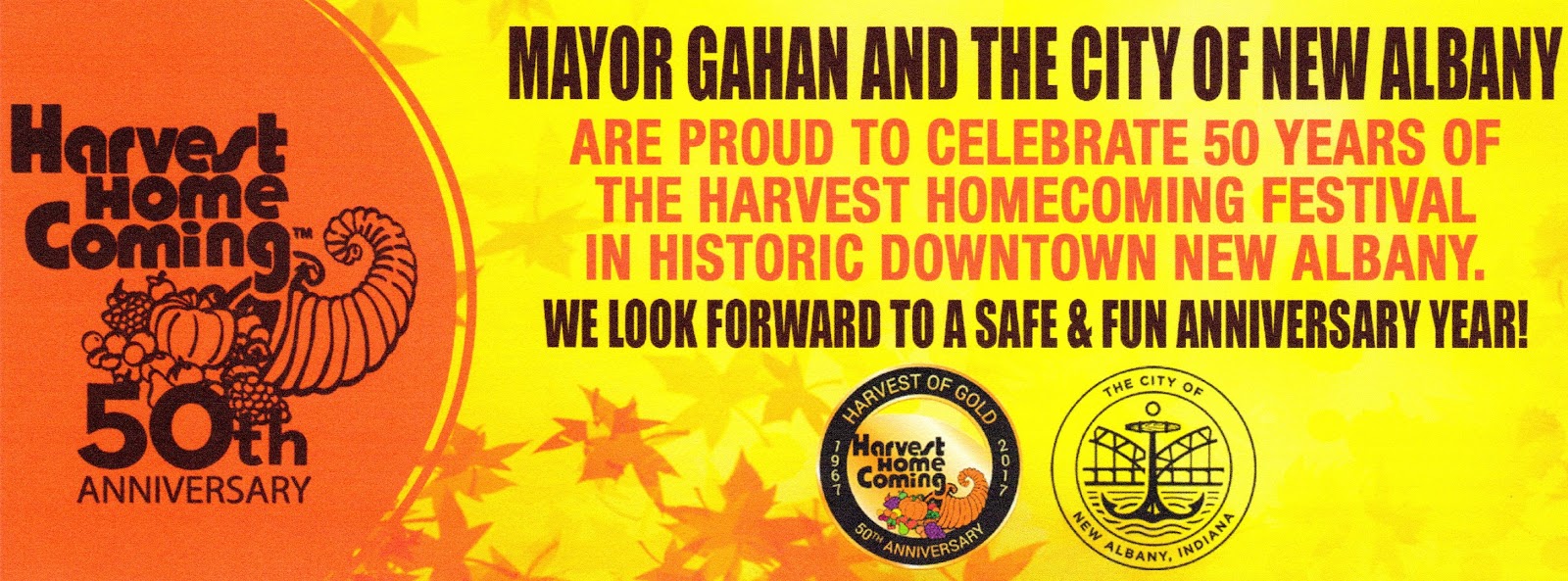
Note the use of the word "we" in this shameless whopper from Slick Jeffie.
SUPPORTING EDUCATION: With the help of school administrators and concerned parents, we succeeded on an initiative that rebuilt 2 brand new city schools, remodeled current facilities, invested in new equipment and technology, and created better spaces for learning for our children and families. Let’s keep moving New Albany forward!
Note to Abigail.
A simple rule for using numbers in writing is that small numbers ranging from one to ten (or one to nine, depending on the style guide) should generally be spelled out. Larger numbers (i.e., above ten) are written as numerals.
You'd think they'd teach this rule in school.
Rebuttals?
MC: "Wow. Talk about taking credit when none is due. The voters of Floyd County, through a referendum, approved all of this. What’s next? Taking credit for the sun coming up tomorrow? I mean, how desperate do you have to be to come up with actual accomplishments? How about telling us the total debt load of New Albany now versus when you came to office. I’ll even let you off the hook by excluding the sewer department, which has it’s own budget."
RC: "Exactly HOW did either the mayor or New Albany government make this happen?"
SW: "Let me get this straight -- so he supported education by taking property tax money away through TIF, forcing the school system to run a deceptive referendum campaign for a huge tax increase?"
KC: "Help me understand what the city had to do with this."
BM: "Heard Gahan was taking credit for the incredible full moon tonight as well."
Calling yourself a "progressive"?
Here's an idea: Hold Jeff Gahan to the same standard of truthfulness that you maintain with Donald Trump. Think you can do that?
Has Gahan done anything "progressive" in eight years?
Running up debts for your children and grandchildren to pay isn't really "progressive," is it?
How can you "move forward" with an anchor as your official symbol?
Apart from lazy coverage, I'm trying to remember the last time Louisville metro police and prosecutors took longer than ten grudging minutes to absolve drivers from blame when non-vehicular human beings have been killed by drivers.
It is exceedingly rare, isn't it?
Ever wonder why it's always the car that kills and not the person piloting it?
When a driver kills someone on foot, is it an act of God, beyond anyone’s power to prevent? Or is it the result of a broken system in desperate need of reform?
To read the coverage of the May 31 killing of 80-year-old Arnulfo Salazar in Charlotte, North Carolina, you’d think it was a random, unpreventable tragedy. Or that Salazar could have saved himself if only he’d been more careful. The stories don’t convey any sense that Salazar was failed by a hostile and unforgiving system.
Let's skip to the conclusion.
One thing that’s certain, however, is that journalists should be more skeptical of police accounts of pedestrian deaths.
Far too often, police rely exclusively on the testimony of the driver — the victim can no longer tell his or her story. And when the only version of events that gets reported is a story that absolves the driver while blaming the victim, the public discussion of street design and driver behavior won’t even mention possibilities for reform. And that means more people will lose their lives.
It's actually possible to reduce the narcissism of car-centrism: "Unlike the U.S., the E.U. has found ways to redesign vehicles and roads to reduce pedestrian deaths."
U.S. pedestrian deaths are at their highest level since 1990. Possible explanations include wider roads, sprawling cities, heavier traffic in residential areas due to navigation apps and increasing distractions from digital devices. And according to victims’ families and safety advocates, the problem is a crisis state and local governments have been slow to address. Arren Kimbel-Sannit reports.
snip
The Hubanks apartment complex is half-a-mile away from the signal crosswalks on Central and Seventh avenues. That's a long way to walk for people who need to catch a bus to school or work.
snip
National advocacy groups say deaths like Keshawn's are more common in low-income areas. It's evident in Southern California, where residents in underserved neighborhoods are waiting for safer streets.
snip
The couple wants safer roads and safer drivers. They know changing laws and minds is a challenge. But it's not impossible. The European Union has seen a 36 percent decline in pedestrian deaths between 2007 and 2016. Experts say it's because, unlike the U.S., the E.U. has found ways to redesign vehicles and roads to reduce pedestrian deaths.
The narcissism of car-centrism is like a narcotic. Once we get behind the wheel, it's all about our individual need for a fix -- and if you're not WITH drivers, you're AGAINST them.
What makes one car more efficient may not work when you apply it to a city.
For years, progressive urbanists and environmentalists have advocated for synchronized traffic lights. Syncing lights, theoretically, makes everyone's lives easier: They promote a sense of flow and easiness on the road, and they reduce pollution, because a car running smoothly runs cleaner than a car stopping-and-starting.
So, the need to sync traffic lights has become somewhat well-known. The Baltimore Sun's transportation reporter wrote in 2010 that the "most common source of complaints" he heard from readers was out-of-sync lights. In 2011, a libertarian think tank praised Georgia's effort to syncronize lights, citing statistics about reduced drive times and gasoline usage. And sometime this year, according to an LA Daily News report, Los Angeles will complete its three decade-long effort to syncronize traffic signals across the city.
Except synchronizing traffic lights may not actually work. Todd Litman, of the Victoria Transport Policy Institute, writes in a recent post that efforts which increase flow, like signal-syncing or expanding-road-capacity, only theoretically reduce emissions:
[R]esearch suggests that at best these provide short-term reductions in energy use and emissions which are offset over the long-run due to Induced Travel. Field tests indicate that shifting from congested to uncongested traffic conditions significantly reduces pollution emissions, but traffic signal synchronization on congested roads provides little measurable benefit, and can increase emissions in some situations.
14 years and 13,727 posts into this writing experiment, I've long since given up trying to remember what I wrote and when I wrote it. Often I'll get a brilliant idea about a topic, start writing, then become overwhelmed with deja vu. Upon closer examination, it will be revealed that I certainly have "been there" before, perhaps ten years ago, often using an eerily similar pattern of words.
Earlier today I referenced a craft beer commentary.
The rest of the day something indefinable kept nagging at me. It wasn't until 9:00 p.m. that my YouTube feed disgorged the link (above) about the new Twilight Zone series, which in turn prompted me to search NA Confidential for the article about Rod Serling that I seem to have remembered writing.
I found it, and my leitmotif was "narcissism," or the very word that kept occurring to me as I read the Pokemonification screed. Consequently, I've been plunged into one of my familiar moods of contemplation with regard to then versus now.
Obviously the world was a very different place for me in April of 2013. Trench warfare at NABC Bank Street Brewhouse was ongoing, and in retrospect the craft beer world outside our besieged perimeter was a confusing and fog-shrouded landscape.
Re-reading my words almost six years later, I stand by them. What I didn't know at the time was my eventual decision to deal myself out of the war and sidestep the narcissism (the Pokemonification?), resolving to navigate a course backward to the egg -- to hop off the tilt-w-whirl and find a quiet, clean, well-lighted spot to contemplate the universe with a mug of Pilsner Urquell or Fuller's London Pride.
As John Lennon sang, "I just had to let it go."
In 2016, I kept repeating to people that comebacks are impossible unless you go away -- and I did just that. While I was away, metaphorically, there was enough time and space to rediscover who I really am, as opposed to the role I was expected to play in an off-Broadway production of Craft Beer Nation. It was a role I'd become weary of performing, because my beer-related interests (along with numerous other topics having little to do with beer) were elsewhere.
Every now and then we must shed our skins and evolve into the next iteration. The process can be gratifying and painful in equal measure, and my only complaint is that in the overall scheme of things for me, time is running short. How many reinventions are left?
Just the same, these past few tumultuous years have been worth it, all the births and deaths, ups and downs, and agonies balancing ecstasies. Most importantly, being involved with Pints&union has helped me understand that my life experience is still useful.
I'm not exactly fashionable, but I don't care. At the age of 58, I can show up with mismatched socks and not give a damn. Apart from a sliver of new music, popular culture utterly eludes me. The historic preservationists can deal with their buildings, and I'll embrace beer and beer-related culture. The re-educational "legacies" mission has only just begun.
Narcissism still annoys me, as it did Rod Serling. He's been gone for a very long time. I hope to stick around a while longer. Here's the column from April, 2013.
Heavens, what a photo.
---
ON THE AVENUES: You gaze at your own reflection, all right.
“The ultimate obscenity is not caring, not doing something about what you feel, not feeling! Just drawing back and drawing in; becoming narcissistic.”
-- attributed to Rod Serling (1924-1975)
Science fiction isn’t my forte, but no matter. Even if I seldom indulge, it is evident to me that the genre has its strengths, among them the ability to harness the otherwise far-fetched to the greater cause of allegorical relevance.
Consider, if you will, Rod Serling’s scripts for the Twilight Zone television series, many of which remain fresh and thought-provoking a half-century after their inception.
Serling’s personal mission, one that he pursued with considerable skill, was to befuddle white-bread network censors by disguising progressive commentaries as seemingly harmless manifestations of the macabre – tales regarded as inhabiting the science fiction canon, with commensurate camouflage.
As Serling pithily observed, “Things which couldn't be said by a Republican or Democrat could be said by a Martian."
To which I’d add: Things which couldn’t be said by a Republican or Democrat or a Martian might be said by craft beer, but not if we insist on a narcissistic self-absorption.
---
Lately I’ve been thinking about Serling’s admonition to reject narcissism. A talented man possessing strong viewpoints and pronounced beliefs, he came of age as a writer in the 1950s, precisely at a time when the mass hysterics and delusions of McCarthyism rendered the intellectual climate quite dangerous for those with contrarian viewpoints. It may well have been a nadir for progressivism, even by America’s remarkably low standard in such matters.
And yet, Serling possessed the innate strength of character – a sheer, contrarian stubbornness – to find a way of speaking his mind during a time when the presumed ideal of “free” speech was being honored primarily in the breach. He found a way, because to him, narcissism wasn’t a career option. I couldn’t agree more.
As others did at the time, Serling might have chosen to withhold his talent and wait for the inevitable thaw, perhaps opting for self-exile in an entirely different professional venue. Rather, he resisted drawing back and inward, and continued challenging viewers by painting the corners of the plate with nuance.
What if Serling had shrugged and gone strictly commercial, eschewing the artful for the straightforward, indulging the low common denominator all around him, and giving television audiences more by-the-numbers entertainment? Then as now, safety is easily rationalized, and in the mainstream, there’s a greater probability that the paychecks won’t stop coming.
I’m not judging others, merely noting that for whatever reason, Serling elected not to follow the easiest path. He persevered. The message got out, converts were made along the way, and these many decades later, we’re still able to learn from his experience.
---
My chosen profession is craft beer, and I’m no happier seeing it corrupted by shoe-gazing narcissism than Rod Serling -- in his world, during his heyday, and according to the parameters of his calling.
Craft beer means many things to many people, and that’s as it should be. Speaking for myself, it’s a hobby that eventually grew into an occasional paycheck; it tastes great even though it’s often more filling; it is a wonderful device for promoting the life of the local pub; and it’s the final, best hope for sustaining local pub culture.
But to me, precisely because I’m not narcissistic, there is more to craft beer than just those attributes. Naturally, self-interest as a business owner brings with it certain promotional necessities and instances of self-aggrandizement, but these are not to be confused with staring at one’s reflection in a pond filled with Barrel Aged Black Kolsch while reaching for the Kleenex ... and not because one needs to blow his nose.
Beer, as writ large, may very well be a commodity suitable for the Financial Times, but craft beer specifically also is a symbol, an analogy – a metaphor. Craft beer’s very founding principle is active and points outward, not passive and shrinking toward the inside. It is expansive in the market sense, but more importantly, in profits from the larger sense of community consciousness.
Craft beer is revolutionary, the overt rejection of an established order commonly known as mass market beer, which profits by accumulating capital for the express purpose of thwarting competition in purely Mafioso capitalistic fashion, and substitutes slavish conformity for the broad panoply of life’s possibilities.
When craft beer lapses narcissistic, and whenever the circle geeking starts, we as a presumed culture of appreciation are only providing the multinational mockrobrewing hegemonists with head space to mislead the larger segment of the market, which we haven’t yet reached. The established order we first rebelled against hasn’t gone away. It’s fighting back, and the best way to confront the Goebbelsian lies it deploys is to break away from our narcissism, stop looking in the mirror, and engage those folks standing just beyond the tent flap.
That’s because many of them want to come inside. Let’s give them a reason to do so.
I can’t be sure that Rod Serling would have appreciated craft beer, but I believe he would quickly see the merit in purging narcissism from the culture of craft beer appreciation. It’s repellant, even to those of us who already get it.
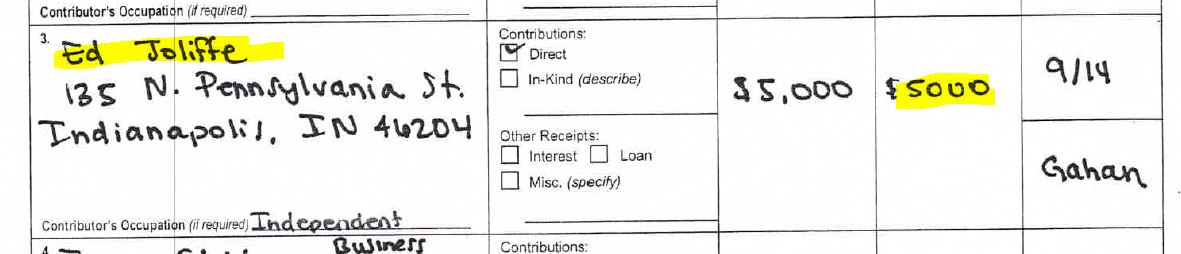
Cash-stuffed envelopes won't ever be the same once HWC completes the design for the Jeff M. Gahan Campaign Finance Modernization Act of 2018.
Kinky retro pneumatic tubes are fast, easy, and donors needn't buy flower arrangements.
---
The Psychology of Dictators: Power, Fear, and Anxiety, by Seth Davin Norrholm, Ph.D. and Samuel Hunley, Ph.D. (Anxiety) … Not only do dictators commonly show a "pervasive pattern of grandiosity," they also tend to behave with a vindictiveness often observed in narcissistic personality disorder ... ... An additional explanation of their behavioral patterns might be rooted in their individual personalities. Colloquially speaking, people often use "personality" as a synonym of how interesting a person appears to be in the eyes of onlookers, both within and from outside their respective sphere of influence. For instance, we might say that a loud comedian has "a lot of personality," whereas we might describe someone we view as boring and quiet as "lacking personality." In the psychological literature, though, personality is defined as the "enduring patterns of thinking and behavior that define the person and distinguish him or her from other people." In other words, your personality is what makes you distinct from those around you. In studying personality, psychologists can examine common traits across people and note how these traits may interact to predict behavior. In so doing, researchers can develop a better understanding of why people behave the way they do over the course of many years. Narcissism Is A Consistent Trait With regard to dictators, one particular trait that consistently stands out as relevant is narcissism. Narcissistic individuals have a "greatly exaggerated sense of their own importance" and are "preoccupied with their own achievements and abilities." They see themselves as "very special" people, deserving of admiration and, consequently, have difficulty empathizing with the feelings and needs of others. When narcissism becomes extreme to the point that it:
interferes with daily life
appears to be unusual as compared to others within a society, or
permeates multiple areas of an individual's life …
… that individual may be diagnosed with narcissistic personality disorder, which is defined by a:
"pervasive pattern of grandiosity"
"need for admiration" and
"lack of empathy"
These individuals are "preoccupied with fantasies of unlimited success" and "power." They believe they are unique and can only be associated with others of equally high status. Furthermore, they require excessive admiration to remain happy, possess an extreme sense of entitlement, exploit others, and are often envious of others. Vindictiveness Is Common Descriptions of narcissistic personality disorder seem reminiscent of what we know of dictators. Not only do dictators commonly show a "pervasive pattern of grandiosity," they also tend to behave with a vindictiveness often observed in narcissistic personality disorder. For instance, in now famous psychological experiments, researchers found that highly narcissistic individuals were more likely to try to punish those individuals who negatively evaluated their work, even when the narcissistic person believed they were administering painful electric shocks. More recent work shows that, after a negative evaluation, narcissistic people will demonstrate greater aggression even to individuals unrelated to the feedback. Such experiments can help us understand the aggressive behavior of dictators, who are known to lash out against negative evaluations. Surprisingly, narcissism could also help explain the anxious behavior displayed by dictators. Researchers have identified two forms of narcissism: grandiose narcissism and vulnerable narcissism. Though grandiose narcissism is associated with all that you might expect from a narcissist (e.g., grandiosity and aggression), vulnerable narcissism is associated with an "insecure grandiosity," which seems to produce intense defensiveness and feelings of inadequacy. Such individuals are often described as being "worrying, emotional, defensive, anxious, bitter, tense, and complaining". These components can be so extreme that narcissistic personality disorder can be misdiagnosed as borderline personality disorder, which is associated with high levels of anxiety. The intensity of the emotional experiences produced by narcissism in combination with actual dangers could produce remarkable levels of anxiety, worry, and uncertainty – to the point that one might actually consider moving their entire capital to the middle of a jungle based on the advice of an astrologer ...
Just the other day a friend was eavesdropping on a conversation.
Later he messaged to ask this question:
I saw someone referred to as an egomaniac. I started thinking about it, so can you ask Shane whether a narcissist and an egomaniac are the same thing?
They're certainly close enough for rock and roll.
Narcissist: a person who is overly self-involved, and often vain and selfish.
Egomaniac: psychologically abnormal egotism (excessive and objectionable reference to oneself in conversation or writing; conceit; boastfulness ... selfishness; self-centeredness; egoism).
The lines are blurry.
Some of the traits of narcissism –such as inflated sense of self-confidence, arrogance and egocentrism are frequently attributed to people with a “big ego”. But how can you tell if a person “just has a big ego” or if that person has crossed the line into the realm of narcissism?
There are popular usages and clinical applications.
The condition (egomania) is psychologically abnormal. The term egomania is often used by laypersons in a pejorative fashion to describe an individual who is intolerably self-centred. The clinical condition that most resembles the popular conception of egomania is narcissistic personality disorder.
Seeing as "egomaniac" was the specific reference prompting this digression ...
An egomaniac is a person who's obsessively self-absorbed. An egomaniac might only take photos of himself — never of another person.
Just because you like to take selfies doesn't make you an egomaniac — a true egomaniac has a psychological disorder that makes him believe that he is the greatest, most important person in the world. You can also use the word to describe someone you know who's a self-centered jerk, though. Egomaniac, coined in the early 19th century, combines ego, "the self," or in Latin, I, and maniac, from the Greek mania, "madness or frenzy."
Definitions of egomaniac
1 n an abnormally egotistical person
Type of: egoist, egotist, swellhead, a conceited and self-centered person
In the end, we've little choice but to fall back on the words of Justice Potter Stewart, paraphrased: I know them when I see them, so here are ten visual examples plucked at random from the blog archives. Can you even imagine what it would be like to work for a narcissist or an egomaniac -- or both?
It makes no sense to labor over writing a fresh new essay when we've all been here before, and whether or not the "keep politics out of my narcissism" caste
realizes it, we've been here ever since Goose Island died.
My excruciatingly personalized essays from five whole years ago continue today, but first, a reminder of why you should consider the nature of the threat AB InBev poses to our nice little panacea of highly rated white whales.
Yesterday afternoon I joined friends on the patio of Buckhead's in Jeffersonville. The bar was pouring Falls City's Calliope Pils. I drank it from a plastic cup while enjoying fellowship and a fine view of the Louisville skyline. You see, the revolutionary idea in the beginning was to build local beer and brewing culture. Let's nurture them, and leave those obsessive white whales to Captain Ahab.
The following first appeared here on November 9, 2012. First the 2012 preface, then the main text.
---
HIP HOPS: LOCALISM + BEER
If you have built castles in the air, your work need not be lost; that is where they should be. Now put the foundations under them.
--Henry David Thoreau
It always has been my aim to accurately describe various aspects of my beer-infused everyday world, but even as I’ve done so, my everyday world persists in evolving. Apart from necessarily using the word “beer,” I’m increasingly unsure how to view any of the rest of it.
Long ago, good beer was about imports exclusively, because there wasn’t very much good beer in America. Several thousand domestic brewery start-ups later, there’s plenty of good beer here, and these days, we refer to it collectively as “craft” beer. This term is fine by me, except that the definition of craft beer starts on a tiny end with the scant barrels produced by a nano-brewery, and ends voluminously with the nationwide airport lounge availability of Samuel Adams.
Semantics aside, the real point of this digression is to acknowledge that I’m changing, too. Back in 1982, St. Pauli Girl probably was the best beer we had during my first-ever gig as a liquor store clerk. Thirty years later, there are dozens – nay, hundreds – of far better beers available hereabouts, and while I’m entirely comfortable in making a “good, better, best” value judgment, it isn’t as simple as it used to be.
Amid the giddy, exploding exuberance, which I’ve long professed and will continue to advocate, it seems that something important is lost. There exists an understandable zeal to embrace the unprecedented availability of international craft beer, but I find myself thinking back to points of origin, and what has made so many of my beer travels memorable: Localism.
It’s drinking great beer at or near its birthplace, primarily because it never tastes fresher than by doing so, but also because the place itself matters. Beer and community reflect each other, and although we must continue to think globally, I’m sensing a new imperative to drink locally.
Home, Not Away
My professional reputation as a beer purveyor was established owing to a stubborn determination to stock the best legally obtainable (well, most of the time) beer, as brewed in locales across the planet. Nowadays, I’m far less inclined to look past my own geographical proximity. The Louisville metropolitan area has its own great beer, with plenty more quality beer being produced within a hundred mile radius.
I’ll never entirely dismiss Belgian Lambics, German Maibocks and Irish Stouts. There’ll forever be a spot for India Pale Ales from San Diego and New York-brewed Saisons, and yet they’re no longer essential to me; rather, they’re for special sampling occasions, as they were years ago when availability was limited. Inexorably, my beer drinking is shifting to local and regional sources, and for the best of all reasons: Drinking local makes me happy.
Places, Not Prizes
Shift happens. It is perhaps the single, fundamental tenet of emerging economic localism, and when it comes time to have a beer, the concept of shift means putting this principle into liquid practice.
Having acknowledged the efficacy of buying local, as measured by factual indices consistently recognizing that localism keeps more money in one’s community, my household is incrementally shifting toward local sources of goods and services, whenever practical. Shift is a process, not an all-or-nothing crusade. If my shift to locally brewed beer implied being compelled to drink an inferior product, obviously I would think differently. Fortunately, it does not.
Another contemporary societal trend to consider is the notion of placemaking, generally described as “a multi-faceted approach to the planning, design and management of public spaces.” Placemaking is a grassroots, community-based phenomenon, in which those ordinary people using a public space help to determine how that space is used. Placemaking may help in part to explain my re-emerging interest in community-based beer consumption -- keeping the beer drinking venues local, listening to the local beer drinkers, and knowing who supplies the beer.
Eyes and Palates, Wide Open
Not so long ago, Goose Island Brewing Company was a proud independent, but now it is 100% owned by the multinational monolith called AB-Inbev, meaning that in cold, hard fact, Goose Island is no more independent than an Ignatius J. Reilly-themed weenie wagon on the streets of Pyongyang, North Korea. Honkers Ale remains certifiably better than Budweiser, but to me, it really matters where the money goes … and dollars paid for Honkers ultimately travel to corporate headquarters in Leuven, Belgium, not Chicago, Illinois.
Sorry, but Goose Island sold out. Craft beer drinkers need to examine their consciences lest they sell out, too.
Session, Not Sledgehammer
I’m in my sixth decade, and my body reacts differently these days to the excesses of my profession. American craft brewing has excelled in the creation of highly alcoholic genre classics, including Imperial India Pale Ale, Barley Wine and Quadrupel, and while I still adore these styles, increasingly my palate turns to an evening’s reasonable sustainability, in the form of session beers.
The Pennsylvania-based beer writer Lew Bryson is the founder of the Session Beer Project, and he provides these helpful parameters.
Session beers are:
► under 4.5% alcohol by volume
► flavorful enough to be interesting -- no light beers, please
► balanced enough for multiple pints
► conducive to conversation
► reasonably priced
In brief, low-alcohol, but not low-taste. It's deliberately vague. The great thing about session beers, especially the ones that come in under 3.5%, is that you can enjoy several beers, and still have a BAC of under 0.04.
Craft Beer Is A Journey
Maybe some day I’ll come full circle, and find myself craving bottles of Bud Light iced in a pickle bucket. Doubtful, but entirely possible, because beer is less a destination than a journey, and you make the road signs yourself. All I’m asking is that craft beer drinkers resolve to be unafraid of where thinking can lead drinking, especially when thoughts turn to local options.
This week I'm reprising excruciatingly personalized variations on a theme of "Who Cares About Wicked Weed and All the Other Zombie Trojan Non-Craft Casualties of AB InBev and Its Brethren."
Of course, not that you shouldn't care about the nature of the threat AB InBev poses. This article goes deep in explaining why.
It's just that there is an unmistakable element of individual value systems in all these discussions. As Uriah Heep advised so many years ago, take a look at yourself.
We don't need Bourbon County Stout when other versions of wood-aged stouts (and other styles) produced by genuine indies are in the same league.
We don't need whatever sour specialty used to be brewed by Wicked Weed before its untimely demise.
Instead, we need to log off Untappd, hide the phone, find a local brewery and enjoy a fresh beer with living, breathing humans.
There are at least four Louisville area breweries I've yet to visit. Numerous other regional breweries beckon, too. You see, the revolutionary idea in the beginning was to build local beer and brewing culture. Let's nurture it, and leave the white whales to Captain Ahab.
---
The PC: Anti-local craft beer unconsciousness, revisited.
“Art can never take the place of social action … but its task remains forever the same: to change consciousness.”
-- Amos Vogel, from “Film as a Subversive Art”
When will craft beer finally change the consciousness of the American beer-drinking mainstream?”
I’m tempted to answer one question with another: Should mainstream consciousness ever be the desired outcome for craft beer?
But let’s play it straight. Some might say that craft beer consciousness already has arrived. Craft beer’s availability is wider than ever before, and statistically, most Americans live within close proximity to a craft brewer, even if the average measurement is skewed by Michigan as compared to the Deep South.
Slowly, even this imbalance is changing, and craft beer consciousness is penetrating all geographical areas of the country.
More tellingly, America’s copycat megabrewers are quite conscious of craft’s escalating impact. Through imitation and outright, unrepentant piracy – the only recourses for corporate regimes cruelly deprived of the creative gene – mass-market mockrobrews, from Blue Moon and Shock Top to zombie craft beers like those from the late, lamented Goose Island, now are routinely positioned to distract truth seekers. As always, bucket loads of marketing cash are wielded to pull soothing layers of mistruth and gloss over the eyes of the undiscerning.
Overall, my personal view about craft beer’s consciousness is that for all our obvious gains, we’re not quite “there,” at least yet.
Rather, when sociologists and psychologists at last begin studying craft beer drinkers close up and personal, we’ll know that mainstream consciousness has drawn to within a whisker, because there is no more reliable indicator of mass-market impact than the urgent need to understand the behavior of those consumers inhabiting segments poised for profit. That’s how the real money gets made.
While the analysts and shrinks are cogitating, perhaps they can help me with persistent examples of what might be termed cognitive dissonance in craft consciousness.
A prime example includes the inability (read: unwillingness) on the part of credentialed craft beer enthusiasts to tell the difference between craft and crafty as they avert their eyes from the Goose Gambit’s shelf-space-seeking drones, which are intended primarily to shift money to faraway corporate shareholders. It’s the most patently obvious bait-and-switch tactic since door-to-door driveway resealing, and yet it is ignored by many who plainly know better.
---
While we’re at it, these battered and blotted Rorschach findings also may help explain the most disquieting aspect of craft beer consumer behavior, at least to me: Anti-local craft beer unconsciousness.
It is my aim to re-situate the burgeoning craft beer movement within a context of economic localization, to revert the revolution to its point of origin, and to describe how the very consciousness of buying local is important both in non-beer terms, and in the specific way it impacts the craft beer ethos. Recently I wrote:
Shift happens. It is perhaps the single, fundamental tenet of emerging economic localism, and when it comes time to have a beer, the concept of shift means putting this principle into liquid practice.
Having acknowledged the efficacy of buying local, as measured by factual indices consistently recognizing that localism keeps more money in one’s community, my household is incrementally shifting toward local sources of goods and services, whenever practical.
Shift is a process, not an all-or-nothing crusade. If my shift to locally brewed beer implied being compelled to drink an inferior product, obviously I would think differently. Fortunately, it does not.
And yet for some otherwise knowledgeable practitioners of the craft beer ethos, “local” and “inferior” remain synonymous terms.
Why?
It is interesting to consider the contrasting reaction to “buying local” that exists, quite apart from the merits of local beer, when we speak of the retail sector: Hardware, groceries, clothing, floral arrangements and the like. I hear it often:
"But wait: You cannot compel me to spend more money than I wish to spend."
The perception is that buying local always entails higher expense to the consumer. Actually, numerous studies have addressed this perception, and the price differences therein typically are not as profound as imagined, if they even exist at all. Probably what doubters mean to say is that they cannot be compelled to surrender the big box, exurban shopping ease of finding all consumables under one roof – and that’s a different topic, one falling outside my parameters today.
But when it comes to craft beer, independent small brewers seldom hear objections about price, because craft beer enthusiasts understand that handcrafted products using higher quality ingredients within smaller economies of scale cost more than mass produced ones do. Consequently, a different and less readily explicable form of pushback occurs in the context of local beer and brewing.
How about some locally brewed beer, guys?
“No, because you cannot compel me to drink poorer quality beer. Only the best for me, you know."
This reply never fails to utterly befuddle me.
I’m a trained BJCP beer judge, and after thirty years in the beer business, obviously I’ve been around the block a few times – just ask my liver.
When I attend beer festivals these days, my samples invariably are drawn from “everyday” beers as made by small, local breweries, if only to remind me that seldom are these beers in any way unsuitable. On those rare occasion when there’s a quality problem, I’m constructively honest in identifying it, and if I can do so, in proposing a solution. Without dialogue, there cannot be a community. Without community, very little about craft beer interests me, anyway. Craft beer consciousness isn’t me against the world.
It’s us against the world.
Unfortunately, there exists a minority of self-identified craft beer opinion shapers for whom it’s never quite enough for local beer to be good, solid or sessionable.
What’s more, for them, local beer by definition simply cannot ever be “sexy” enough to justify a variant of beer enthusiasm sated only through insularity, exclusivity and narcissism, and before readers take me to task for erecting a straw man, permit me to add that I’m well aware of what such snobbery entails, because I’ve spent years now slowly recovering from its debilitating influence.
You’re damned right I’ve sinned, but consciousness is subject to evolution, and so is conscience. When I look back at my career in beer, I’m not always happy with my modes of expression, but know this: Narcissism’s not my gig, and never was. Expertise isn’t about keeping; with me, it’s all about teaching, and my record should speak for itself in that regard.
In my opinion, the breezy and frankly disdainful attitude that local beer cannot be good is a form of misplaced elitism and condescending snobbery ultimately injurious to craft beer’s larger interests. Attack mass-market swill at will; it deserves censure, but craft beer cannibalism is another matter entirely.
Beer as we know and love it does not exist in a societal, historical or ethical vacuum. Rather, craft beer consciousness exists within a community, and if we wish our community to grow sustainably, we must share our expertise broadly, not narrowly.
Consequently, I challenge the shadowy sect of narcissistic beer enthusiasts to help spread wisdom, not hoard it; to enhance local brewing and not detract from it; and in summary, to be part of the solution, not a collection of snarky Wonkas in the making. We have enough of that, already.
---
Nevertheless, at the end of the day, I remain a realist. Nothing I write or say in this column can substantively change attitudes that derive from a wide variety of wants, needs and experiences. Life’s too complicated for simplicity and we’re all different as people, but what I can make absolutely clear is this:
I’ve got the backs of local, independent brewers in this region, and when the smack starts getting talked, I’ll be there to answer it. It’s a matter of deeply held principle.
Consider joining me by waving potential craft beer converts into the tent, not erecting barriers to their enlightenment. In such a fashion, consciousness changes – and grows.
It's Greatest Hits Week at THE BEER BEAT, and rather than waste valuable drinking time trying to unravel the wicked and weedy issues surrounding the latest brewery sellout, I've concluded my spleen is more efficiently vented by reprinting a stellar selection of "wrote it all before."
As we await the next brick in the wall, I'll be reprinting a few previous columns this week, with the aim of making the case that you're better off nurturing your local and regional brewing communities than chasing white whales.
Seeing as they've been dropping like flies these past few years ...
10 Barrel Brewing apparently was the most recently deceased when I updated the following in 2014. Merely substitute the words Wicked Weed, Elysian or The Dear Departed, and it should read just as well.
---
This week in solipsistic beer narcissism (2014).
Are you fed up with words you don’t understand?
Tired of scrolling down to your favorite contrarian beer columnist, then coming to a screeching halt when he uses words like “local multiplier effect” and “egalitarianism” in the very samesentence?
Hi, Roger A. Baylor here with an amazing new product – you’ve got to see it to believe it – called the Dictionary, and it’s a do-it-yourself confusion remover with professional results … guaranteed!
Just pick the word you want to define, match it to the alphabetical listing in the Dictionary, and read the answer.
It’s that easy.
And, because it’s wireless, there are no plugs, cords, batteries, tools or wiring to worry about.
With the amazing Dictionary, you can even learn how to pronounce the word!
The Dictionary contains all the words that you’ll ever encounter in this or any other column, and yet it’s small enough to put one in every room where you might find yourself reading the newspaper. Place one next to the toilet so you don’t have to go back downstairs to the den. Keep another on the porch for smoke breaks. The amazing dictionary fits in the glove box, in your purse or on top of the coffee table.
The Dictionary’s powerful information technology lets you define old words and learn new ones. It cuts through those multi-syllable, compound nightmares with ease, and talk about shock-absorbency … Watch while I shield my head with the Dictionary as my assistant attempts to beat my brain senseless with a RateAdvocate beer review.
See? Even after continuous pounding, my synapses are still transmitting neuron signals … and my session ale remains delicious.
That’s the power and protection of the Dictionary, folks.
Call now and you’ll get the Dictionary for only $19.99. You’ll also receive my handy Sticky Notepad and Self-Sharpening Pencil, absolutely free. Just copy the problem word from my column and stick it to the Dictionary until you feel like looking it up.
Yes, you’ll get the Dictionary, the Sticky Notepad and the Self-Sharpening Pencil, all for only $19.99. But if you call right now, I’ll double this entire offer. Just pay shipping, and you’ll get two Dictionaries, two Sticky Notepads and two Self-Sharpening Pencils. But you can only get this special two-for-one offer by calling now …
---
Way back in 2010, when 10 Barrel Brewing was but a gleam in Carlos Brito’s numbers-crunching testes, President Barack Obama returned to a theme often broached during his historic campaign for the White House. It happened during the 2010 State of the Union address.
“The best anti-poverty program around is a world class education.”
No, not the Indiana wholesaler.
Naturally, the precise components of a “world class education” are open to interpretation, discussion and debate between open-minded citizens, assuming you can find any of them in these idiotically polarized times, but the overall sentiment that education is a corrective to impoverishment has been proven to be truthful again and again.
I submit that the word “impoverishment” has more than one meaning as used in this context. We’d be correct in the assumption that there are clear and compelling correlations between education and the eradication of material impoverishment.
However, we might also consider impoverishment in creative, artistic and cultural contexts, and how one’s attitude toward the general topic of knowledge, pertaining to its veracity as an end onto itself as well as the tangible benefits gained from expansive education as opposed to a confining illiteracy, shapes what we know and the uses to which we put our knowledge.
According to the ancient Greek philosopher Aristotle, who drank wine: “With regard to excellence, it is not enough to know, but we must try to have and use it."
What I think he meant is that possessing something of supposed value for the sole purpose of the object’s ability to reflect its “value” back on the holder somewhat misses the point. The true value is derived from the object being used wisely, and a well-rounded education supplies the means to make this determination.
Given the perpetual linkages between education and personal advancement, why is it that people choose to devalue the notion of education, eschewing the why, how and wherefore, and substituting in their place a solipsistic, narcissism-driven, knee-jerk, me-first hedonism?
Perhaps it’s the logical outcome of our American strains of materialism and consumerism. When it comes to pulse-quickening snobbery, exclusionary avarice and frenzied hoarding, the very last thought surfacing in one’s fevered, acquisitive brain is the possibility that all is not what it seems.
Do you still desire the object once it is revealed that the profit chain leads straight into the Texas-sized mass of plastic in the Pacific Ocean, or to the owners of factory-farmed chickens wallowing in their own feces, or to that bastard Obama’s pocket … or, into the very coffers of ISIS (read: AB-InBev).
Except you really want it, don’t you? You want it right now – and by “it” I refer not to a mass-produced Trojan Goose barrel-aged ale, but to a blissfully unexamined version of capitalist doltishness, wherein there are no reasons whatever for diagnosing the nature of the itch, only interminable scratching.
The writer Aldous Huxley called this phenomenon soma. If you don’t know the source of this reference, perhaps it’s time to read a book.
But I’m nothing if not stubborn. Ideas matter, and yet at present, both the country at large and my own beer and brewing milieu are dismally stupid and mercilessly tacky places. These daily tsunamis of crass materialism and consumerist greed have come to define the American experience, and even when the topic is “craft” beer – perhaps modern America’s signature accomplishment – we have digressed just as quickly into 24-7, must-have shopping zombies, pausing occasionally to thank Jesus for the blessed privilege of possessing our baubles, and ignoring what’s happening in our own back yards because there’s not enough status in mere localism.
It’s the old Chinese proverb – yes, you guessed it, the one printed on plasticized card stock suitable for framing, and available not from the heirs to Billy Mays, but from Wal-Mart via Guangdong Province:
"It’s all about me."
Yes, it is.
And that’s also why you don’t interest ME any longer.
---
What would happen if you combined classic sacred choral music with a thesaurus? You’d have a synonym for a seminal hymnal! Hi, Roger Baylor here for the Sing ‘o’ Saurus. It’s no ordinary reference book. Watch this!
NA Confidential's mask-free policy on reader comments.
NA Confidential believes in a higher bar than is customary in the blogosphere, and follows a disclosure policy with respect to reader comments.
First, you must be registered with blogger.com according to the procedures specified. This is required not as a means of directing traffic to blogger.com, but to reduce the lamentable instances of flaming and personal attacks on the part of the anonymous.
Second, although pen names are perfectly acceptable, senior editor Roger A. Baylor must be informed of your identity, and according to your preference, it will be kept confidential.
To reiterate, I insist upon this solely to lessen the frequency of malicious anonymity, which unfortunately plagues certain other blogs hereabouts.
You may e-mail Roger at the address given within his profile and explain who you are. Failure to comply means that your comments probably will be deleted -- although the final decision remains ours.
Thanks for reading, and please consider becoming a part of the community here, one that is respectful of the prerequisites of civilized discourse, and that seeks to engage visitors in substantive dialogue.