Showing posts with label psychology. Show all posts

Wednesday, October 16, 2019

GIVE GAHAN THE BOOT: (Wednesday) The shopping cart mayor's cartoonish veneer of a personality cult. Where do we tithe, Leader Dearest?


Last week was Harvest Homecoming, and my city's favorite amok time kept me pinned to the tarmac, but now we're back to what passes for normal here in New Gahania, where "We're All Here Because We're Not All THERE."

This week as a run-up to Decision 2019, I'm headed back into the ON THE AVENUES archive for five straight days of devastatingly persuasive arguments against four more years of the Gahan Family Values™ Personality Cult. I've already made the case for Mark Seabrook as mayor. Now let's return to the voluminous case against Gahanism in five informative and entertaining installments.

It is likely that posterity will view May, 2017 as the period when Jeff Gahan's ludicrous cult of personality spectacularly jumped the shark.


Gahan had only recently seized the New Albany Housing Authority with a publicly stated vow to bulldoze half the units, and now he was encouraging us to shop at just one bloated supermarket chain to the exclusion of others -- unless the city eventually might choose to pay for his re-election ad placements at Aldi and Wally World, too.

What's next, Big Lots?


Maybe the ads were free, intended as barter for the perfectly functional fire station the city razed (at a loss to taxpayers) so as to facilitate Kroger's ginormous enlargement.

Two years later, some of the Kroger shopping carts still bear the mark of the Anchor King.


Shopping cart worship portals weren't the first manifestation of Jeff Gahan's "inspired by Pyongyang" personality cult. In the grand tradition of failed watercolor artists, seminary students and cobblers, this middling veneer salesman concluded early in the game that destiny was clearing a path for his brilliance -- and we've been reminded of it on a daily basis ever since. 

GIVE GAHAN THE BOOT: (Monday) The Reisz Mahal luxury city hall, perhaps the signature Gahan boondoggle.

GIVE GAHAN THE BOOT: (Tuesday) Gahan the faux historic preservationist demolishes the historic structure -- with abundant malice.

GIVE GAHAN THE BOOT: (Wednesday) The shopping cart mayor's cartoonish veneer of a personality cult. Where do we tithe, Leader Dearest?

---

May 14, 2015

ON THE AVENUES: Take this cult of personality and shove it.

Human psychology is a nuanced and often bewildering topic, but it’s probably safe to assert that to some vague extent with respect to interpersonal relationships, most of us want to be liked, and prefer being liked to being feared.

(Note that in this digression, I have no intention of trying to fathom what it means to be “liked” on Facebook)

Meanwhile, as always in the real world, the devil resides fully within the details.

Getting along with people and being liked are two very different issues. To get along with someone requires that you figure out how to balance meeting your needs with that of another person until the two of you arrive at a resolution. Your best chances of being liked occur when you go along with the desires of other even if it means sacrificing your personal goals. To be liked means that other people have positive associations to you so that when they see or think about you, it's with a mental smile.
What about if you don't particularly care about being liked? You have a job to do, for example, that involves your making tough decisions that possibly cause other people to resent your or, at best, prefer to stay out of your way. When they think of you, it's with an active sense that being with you will cause them more pain than pleasure.

If human psychology is a tangled wilderness of conditioned responses and primal screams, consider the genre of politics.

Politics (from Greek: πολιτικός politikos, definition "of, for, or relating to citizens") is the practice and theory of influencing other people. More narrowly, it refers to achieving and exercising positions of governance — organized control over a human community, particularly a state. Furthermore, politics is the study or practice of the distribution of power and resources within a given community (a usually hierarchically organized population) as well as the interrelationship(s) between communities.

In the context of politics, which pertain to invasive concepts like power, control and authority, what does it mean to be liked?

Are our likes and dislikes personal, or professional?

Can politicians be inspiring, totemic figures, or do we merely tolerate them as a regrettable but necessary evil?

---

Longtime readers already know about my youthful travel experiences in Europe, and how these wanderings dovetailed with previous university studies in history, geography and philosophy, producing the opportunity to witness, albeit it briefly, the phenomenon of 20th-century communism in places like Czechoslovakia, Hungary and Poland.

At my point of debut in the mid-1980s, this political system didn’t have very long to survive, but of course this couldn’t be known at the time. During the post-war period in these places I visited, the theory and practice of communism actually was subject to change, though most often for reasons of ideology (and international power politics) rather than any natural evolutionary process.

I’ve told the story of Ladislav, with whom I became acquainted in Ostrava, Czechoslovakia in 1989. He was 65 years old, and had observed his country’s period of hopeful interwar democracy, then a devastating conflict, to be followed by the imposition of communism by the occupying Soviets and a subsequent four decades of historical entrapment.

Ladislav would have been just shy of 30 years of age when Joseph Stalin died in 1953, a termination which led to a brief period of communist reform and softening under Khrushchev.

Czechoslovakia’s own indigenous version of Stalin, a nonentity named Klement Gottwald, died of his excesses shortly after Stalin’s funeral and was replaced by Antonín Zápotocký, who gifted Prague with a huge statue of Stalin on a hillside overlooking the Vltava River.

Interestingly, the sculptor was so filled with remorse that he committed suicide prior to the unveiling, and the statue was dynamited in 1962 after one shifting of socio-political breezes, and just prior to the next.

It would be very hard to maintain the illusion than any of the men mentioned here were “liked” in ways we might fathom -- not even by their wives and children, although perhaps by their dogs. And yet, they were obeyed, venerated and even worshipped in a political-cum-religious sense, surely out of fear, but also because they had erected and encouraged personality cults to reinforce their positions.

Khrushchev the successor pilloried Stalin for his cult of personality. Ironically, the philosophical father of them both, Karl Marx, disdained the notion.

Cult of personality is a pejorative term implying the concentration of all power in a single charismatic leader within a totalitarian state and the near deification of that leader in state propaganda. Totalitarian regimes use the state-controlled mass media to cultivate a larger-than-life public image of the leader through unquestioning flattery and praise. Leaders are lauded for their extraordinary courage, knowledge, wisdom, or any other superhuman quality necessary for legitimating the totalitarian regime. The cult of personality serves to sustain such a regime in power, discourage open criticism, and justify whatever political twists and turns it may decide to take.

Many Americans will scoff, dismissing these examples as unique, arising from diseased ideals amid peculiar historical imperatives, and taking place in the lives of other people, elsewhere.

Unfortunately, cults of personality are American, too, and can exist in a democracy just as easily as in a totalitarian system of government. George Washington was resistant, and Huey Long obliging. No matter the locale, certain themes in a cult of personality are constant.

The political platform has no independent existence apart from the leader, and the political process is utterly dependent on the leader for guidance.

Manifestations of activity on the part of government also are promoted as inseparable from the leader’s benevolence, and while the leader may have utilized resources theoretically shared equally by his or her subjects, the results must always be portrayed as stemming from the wisdom of the leader.

Mistakes never occur, and when they do, they’re never, ever acknowledged even as minions pay the price.

The leader’s pre-eminence is reinforced by the constant repetition of mass marketing, including the leader’s name and image as attached to almost anything lacking the good sense to move out of the way.

Contemporary electronic media surely assists the cause of building a leader’s cult of personality, but it must be remembered that the Roman Catholic Church was adept at pursuing the same strategy for its papacy long before electricity and the outsourcing of Twitter feeds.

---

Often during the course of my own beer business, there have existed the temptation to indulge in precisely this sort of self-deification. I wouldn’t have been the first, and regrettably, I wasn’t immune to periods of relaxed vigilance, which are characterized by reading one’s press clippings (especially his own) and believing what they say.

What kept me grounded most of the time was the simple realization that I was part of a team, and the daily efforts of the team resulted in satisfied customers, who returned and made possible the survival of the business. I played one role, and it was just that: One part among many, inter-related, and meaningless when separated from the whole.

Perhaps politics works somewhat like this, and perhaps it doesn’t, but either way, the very notion of a personality cult is deeply offensive to me. What’s more, the greater our proximity to it, the more indefensible a cult of personality becomes.

If functioning as an elected official means a stock photograph behind everyone’s desk, daily laudatory references, names on plaques and a ceaseless perpetuation of peerless wisdom, then the wheels have jumped the track.

Those of Ladislav’s generation in Eastern Europe and the USSR had no say in the personality cults inflicted upon them. Those of my generation in America have a ballot box. It’s an interesting tool, and when used properly, acts as kryptonite to the cult.

Just remember that, because very soon, you’ll have a chance to act accordingly.

Friday, February 22, 2019

ON THE AVENUES SPECIAL: Take your cult of personality and shove it, Dear Leader.


ON THE AVENUES SPECIAL: Take your cult of personality and shove it, Dear Leader.

A weekly column by Roger A. Baylor.

Four more years?

So off went the Emperor in procession under his splendid canopy. Everyone in the streets and the windows said, "Oh, how fine are the Emperor's new clothes! Don't they fit him to perfection? And see his long train!" Nobody would confess that he couldn't see anything, for that would prove him either unfit for his position, or a fool. No costume the Emperor had worn before was ever such a complete success.

"But he hasn't got anything on," a little child said.

"Did you ever hear such innocent prattle?" said its father. And one person whispered to another what the child had said, "He hasn't anything on. A child says he hasn't anything on."

"But he hasn't got anything on!" the whole town cried out at last.

Jeff "Tsar of the Shopping Cart" Gahan has been branding the city in his own image and using our money to do it, but we need collective thinking, not the shoddy veneer of a personality cult.

Far more so than anchors, our foremost branding effort has been devoted to slapping Gahan's cherubic chihuahua image on every last advertisement purchased with taxpayer dollars. An anchor keeps the boat from moving. Gahan keeps the city from moving, while grandly lubricating his own pockets with pay-to-play dollars from special interests.

And yet the absurd personality cult veneer is what we keep getting, again and again. Here's a sampling.

December 16, 2018: Cult of personality: Jeff Gahan's face appears on doggie calendars and in newspaper inserts. It's blatant electioneering at the taxpayer's expense.

August 13, 2018: Earache My Eye: Check out Deaf Gahan's full page Anchor Marriage ad in Extol's wedding issue.

August 10, 2018: Shameless self-aggrandizement as Gahan invites 1Si to provide career counseling to local students.

June 13, 2018: Jeff "Look at Me" Gahan's aquatic cult of personality: He brings us health, all by himself.

February 3, 2018: Inflatable Date Night is ultimate proof that Deaf Gahan seeks to emulate Rev. Moon with a hip new campaign finance baby boom.

January 18, 2018: ON THE AVENUES: During our State of the Gahanaissance Address for 2018, feel free to resort to hard liquor. I did, and will.

September 10, 2017: Adam polishes Jeffrey's personality cult, and yet Dickey's Floyd County Democratic Party still hasn't embraced Gahan's public housing putsch.

June 11, 2017: CARTOON: Gahan Mach III ... or, daddy needs a brand new logo.

June 4, 2017: Scraping rock bottom: Jeff Gahan brings his cult of personality to Kroger shopping carts. But who paid for these political ads?

June 4, 2017: Shopping cart blurbs, magazine ads, billboards ... and now the NTSPY Awards. How much of your money is Jeff Gahan spending on all this?

Let's briefly re-examine the state of Gahan's cult of personality with the assistance of actual facts from history. This column originally was published on May 14, 2015.

Always remember and never forget: #FireGahan2019

------

Human psychology is a nuanced and often bewildering topic, but it’s probably safe to assert that to some vague extent with interpersonal relationships, most of us want to be liked, and prefer being liked to being feared.

(Note that in this digression, I have no intention of trying to fathom what it means to be “liked” on Facebook)

Meanwhile, out in the real world, the devil resides fully within the details.

Getting along with people and being liked are two very different issues. To get along with someone requires that you figure out how to balance meeting your needs with that of another person until the two of you arrive at a resolution. Your best chances of being liked occur when you go along with the desires of other even if it means sacrificing your personal goals. To be liked means that other people have positive associations to you so that when they see or think about you, it's with a mental smile.
What about if you don't particularly care about being liked? You have a job to do, for example, that involves your making tough decisions that possibly cause other people to resent your or, at best, prefer to stay out of your way. When they think of you, it's with an active sense that being with you will cause them more pain than pleasure.

If human psychology is a tangled wilderness of conditioned responses and primal screams, consider the genre of politics.

Politics (from Greek: πολιτικός politikos, definition "of, for, or relating to citizens") is the practice and theory of influencing other people. More narrowly, it refers to achieving and exercising positions of governance — organized control over a human community, particularly a state. Furthermore, politics is the study or practice of the distribution of power and resources within a given community (a usually hierarchically organized population) as well as the interrelationship(s) between communities.

In the context of politics, which pertain to invasive concepts like power, control and authority, what does it mean to be liked?

Are our likes and dislikes personal, or professional?

Can politicians be inspiring, totemic figures, or do we merely tolerate them as a regrettable but necessary evil?

---

Longtime readers already know about my youthful travel experiences in Europe, and how these wanderings dovetailed with previous university studies in history, geography and philosophy, producing the opportunity to witness, albeit it briefly, the phenomenon of 20th-century communism in places like Czechoslovakia, Hungary and Poland.

At my point of entry in the mid-1980s, this political system didn’t have very long to survive, but of course this couldn’t be known at the time. During the post-war period in these places I visited, the theory and practice of communism actually was subject to change, though more often for reasons of ideology (and international power politics) rather than any natural evolutionary process.

I’ve told the story of Ladislav, with whom I became acquainted in Ostrava, Czechoslovakia in 1989. He was 65 years old, and had observed his country’s period of hopeful interwar democracy, interrupted by a devastating conflict, then followed by the imposition of communism by the occupying Soviets, and a subsequent four decades of historical entrapment.

Ladislav would have been just shy of 30 years of age when Joseph Stalin died in 1953, a termination which led to a brief period of communist reform and softening under Khrushchev.

Czechoslovakia’s own indigenous version of Stalin, a nonentity named Klement Gottwald, died of his excesses shortly after Stalin’s funeral and was replaced by Antonín Zápotocký, who gifted Prague with a huge statue of Stalin on a hillside overlooking the Vltava River.

Interestingly, the sculptor was so filled with remorse that he committed suicide prior to the unveiling, and the statue was dynamited in 1962 after a hopeful shifting of socio-political breezes.

It would be very hard to maintain the illusion than any of the men mentioned here were “liked” in ways we might fathom -- not even by their wives and children, although perhaps by their dogs. And yet, they were obeyed, venerated and even worshipped in a political-cum-religious sense, surely out of fear, but also because they had erected and encouraged personality cults to reinforce their positions.

Khrushchev the successor pilloried Stalin for his cult of personality. Karl Marx, the philosophical father of them both, disdained the notion; after all, in a communal system, how could there be just one great leader?

Cult of personality is a pejorative term implying the concentration of all power in a single charismatic leader within a totalitarian state and the near deification of that leader in state propaganda. Totalitarian regimes use the state-controlled mass media to cultivate a larger-than-life public image of the leader through unquestioning flattery and praise. Leaders are lauded for their extraordinary courage, knowledge, wisdom, or any other superhuman quality necessary for legitimating the totalitarian regime. The cult of personality serves to sustain such a regime in power, discourage open criticism, and justify whatever political twists and turns it may decide to take.

Many Americans will scoff, dismissing these examples as unique, arising from diseased ideals amid peculiar historical imperatives, and taking place in the lives of other people, elsewhere.

Unfortunately, cults of personality are American, too, and can exist in a democracy just as easily as in a totalitarian system of government. George Washington was resistant to the notion, and Huey Long obliging. No matter the locale, certain themes in a cult of personality are constant.

➜ The political platform has no independent existence apart from the leader, and the political process is utterly dependent on the leader for guidance.

➜ Manifestations of activity on the part of government also are promoted as inseparable from the leader’s benevolence, and while the leader may have utilized resources theoretically shared equally by his or her subjects, the results must always be portrayed as stemming from the wisdom of the leader.

➜ Mistakes never occur, and when they do, they’re never openly acknowledged even as minions pay the price.

➜ The leader’s pre-eminence is reinforced by the constant repetition of mass marketing, including the leader’s name and image as attached to almost anything lacking the good sense to move out of the way.

Contemporary electronic media surely assists the cause of building a leader’s cult of personality, but it must be remembered that the Roman Catholic Church was adept at pursuing the same strategy for its papacy long before electricity and the outsourcing of Twitter feeds.

---

Often during the quarter-century course of my own beer business, there was the temptation to indulge in precisely this sort of self-deification. I wouldn’t have been the first, and regrettably, I wasn’t immune to periods of relaxed vigilance, which are characterized by reading one’s own press clippings and believing what they say.

What kept me grounded most of the time was the simple realization that I was part of a team, and the daily efforts of the team resulted in satisfied customers, who returned and made possible the survival of the business. I played one role, and it was just that: One part among many, inter-related, and meaningless when separated from the whole.

Perhaps politics works somewhat like this, and perhaps it doesn’t, but either way, the very notion of a personality cult is deeply offensive to me. What’s more, the greater our proximity to it, the more indefensible a cult of personality becomes.

If functioning as an elected official means a stock photograph behind everyone’s desk, daily laudatory references, names on plaques and a ceaseless perpetuation of peerless wisdom, then the wheels officially have jumped the track.

Those of Ladislav’s generation in Eastern Europe and the USSR had no say in the personality cults inflicted upon them. Those of my generation in America have a ballot box. It’s an interesting tool, and when used properly, acts as kryptonite to the cult.

Just remember that, because very soon, you’ll have a chance to act accordingly.

---

Recent columns:

February 19: ON THE AVENUES: I'd stop drinking, but I'm no quitter (the 2019 Gravity Head remix).

February 12: ON THE AVENUES: If it's about learning and knowledge, then by definition it's a Gahan Free Zone. You're welcome.

February 5: ON THE AVENUES: Our mayor hates non-elected boards -- except when they're his own, which is why "hypocrisy" is spelled G-A-H-A-N.

January 29: ON THE AVENUES: How has the 3rd district councilman fared since this question from 2015: "Et tu, Greg Phipps?"

January 22: ON THE AVENUES: Democrats should judge city council incumbents in districts 2, 3, 4 and 5 by their regressive deeds, not their progressive words.

Monday, June 11, 2018

There's a nice profile of Deaf Gahan in Anxiety magazine.


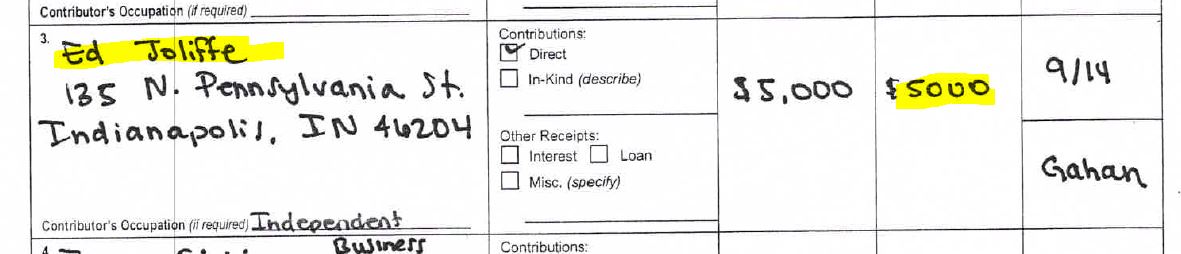
Cash-stuffed envelopes won't ever be the same once HWC completes the design for the Jeff M. Gahan Campaign Finance Modernization Act of 2018.


Kinky retro pneumatic tubes are fast, easy, and donors needn't buy flower arrangements.

---

The Psychology of Dictators: Power, Fear, and Anxiety, by Seth Davin Norrholm, Ph.D. and Samuel Hunley, Ph.D. (Anxiety)

 … Not only do dictators commonly show a "pervasive pattern of grandiosity," they also tend to behave with a vindictiveness often observed in narcissistic personality disorder ...

 ... An additional explanation of their behavioral patterns might be rooted in their individual personalities. Colloquially speaking, people often use "personality" as a synonym of how interesting a person appears to be in the eyes of onlookers, both within and from outside their respective sphere of influence. For instance, we might say that a loud comedian has "a lot of personality," whereas we might describe someone we view as boring and quiet as "lacking personality." 

In the psychological literature, though, personality is defined as the "enduring patterns of thinking and behavior that define the person and distinguish him or her from other people." In other words, your personality is what makes you distinct from those around you. In studying personality, psychologists can examine common traits across people and note how these traits may interact to predict behavior. In so doing, researchers can develop a better understanding of why people behave the way they do over the course of many years.

Narcissism Is A Consistent Trait

With regard to dictators, one particular trait that consistently stands out as relevant is narcissism. Narcissistic individuals have a "greatly exaggerated sense of their own importance" and are "preoccupied with their own achievements and abilities." They see themselves as "very special" people, deserving of admiration and, consequently, have difficulty empathizing with the feelings and needs of others.

When narcissism becomes extreme to the point that it:


  • interferes with daily life
  • appears to be unusual as compared to others within a society, or
  • permeates multiple areas of an individual's life …


… that individual may be diagnosed with narcissistic personality disorder, which is defined by a:


  • "pervasive pattern of grandiosity"
  • "need for admiration" and
  • "lack of empathy"


These individuals are "preoccupied with fantasies of unlimited success" and "power." They believe they are unique and can only be associated with others of equally high status. Furthermore, they require excessive admiration to remain happy, possess an extreme sense of entitlement, exploit others, and are often envious of others.

Vindictiveness Is Common

Descriptions of narcissistic personality disorder seem reminiscent of what we know of dictators. Not only do dictators commonly show a "pervasive pattern of grandiosity," they also tend to behave with a vindictiveness often observed in narcissistic personality disorder. 

For instance, in now famous psychological experiments, researchers found that highly narcissistic individuals were more likely to try to punish those individuals who negatively evaluated their work, even when the narcissistic person believed they were administering painful electric shocks. 

More recent work shows that, after a negative evaluation, narcissistic people will demonstrate greater aggression even to individuals unrelated to the feedback. Such experiments can help us understand the aggressive behavior of dictators, who are known to lash out against negative evaluations.

Surprisingly, narcissism could also help explain the anxious behavior displayed by dictators. Researchers have identified two forms of narcissism: grandiose narcissism and vulnerable narcissism. Though grandiose narcissism is associated with all that you might expect from a narcissist (e.g., grandiosity and aggression), vulnerable narcissism is associated with an "insecure grandiosity," which seems to produce intense defensiveness and feelings of inadequacy. Such individuals are often described as being "worrying, emotional, defensive, anxious, bitter, tense, and complaining".

These components can be so extreme that narcissistic personality disorder can be misdiagnosed as borderline personality disorder, which is associated with high levels of anxiety. The intensity of the emotional experiences produced by narcissism in combination with actual dangers could produce remarkable levels of anxiety, worry, and uncertainty – to the point that one might actually consider moving their entire capital to the middle of a jungle based on the advice of an astrologer ...

Thursday, June 01, 2017

ON THE AVENUES: Take this cult of personality and shove it (2017 remix).

ON THE AVENUES: Take this cult of personality and shove it.

A weekly column by Roger A. Baylor.

This column originally was published on May 14, 2015. The pendulum swings back to relevance today because Mayor Jeff M. Gahan is approaching a decision.

The Green Mouse says there was a period of uncertainty following the 2016 election cycle, but now the rumorama is back on track, with Gahan apparently close to seeking Ron Grooms' State Senate seat in 2018; if he loses, there'd be another mayoral run in 2019.

Recent propaganda photos released by the city show a nattily attired David Duggins, cleaned up nicely and striking bizarre mayoral poses in case he's needed to succeed State Senator Deaf in 2019.

Duggins would need to establish residency to run, but post office boxes are cheap. He'd have to do something about Bob Caesar, who wants to be mayor so badly that he's taken to arming himself with Depends during council meetings.  

Then there's Adam "Aging Boy Wonder" Dickey, who the Green Mouse believes to be contemplating a challenge to Ed Clere in 2018. Speaking personally. I think party chairmen should be more demure; besides, it's hard to imagine Mr. Disnee giving up his Redevelopment Commission seat.

Any way the bologna gets cut, and as this video indicates, we're about to be deluged with a fresh surge of Gahan's "never wrong, always right" cult of personality -- hence this timely refresher course.

Are you ready to help topple the tinhorn? The time draws near, so let's work together, okay?

---

Human psychology is a nuanced and often bewildering topic, but it’s probably safe to assert that to some vague extent with interpersonal relationships, most of us want to be liked, and prefer being liked to being feared.

(Note that in this digression, I have no intention of trying to fathom what it means to be “liked” on Facebook)

Meanwhile, out in the real world, the devil resides fully within the details.

Getting along with people and being liked are two very different issues. To get along with someone requires that you figure out how to balance meeting your needs with that of another person until the two of you arrive at a resolution. Your best chances of being liked occur when you go along with the desires of other even if it means sacrificing your personal goals. To be liked means that other people have positive associations to you so that when they see or think about you, it's with a mental smile.
What about if you don't particularly care about being liked? You have a job to do, for example, that involves your making tough decisions that possibly cause other people to resent your or, at best, prefer to stay out of your way. When they think of you, it's with an active sense that being with you will cause them more pain than pleasure.

If human psychology is a tangled wilderness of conditioned responses and primal screams, consider the genre of politics.

Politics (from Greek: πολιτικός politikos, definition "of, for, or relating to citizens") is the practice and theory of influencing other people. More narrowly, it refers to achieving and exercising positions of governance — organized control over a human community, particularly a state. Furthermore, politics is the study or practice of the distribution of power and resources within a given community (a usually hierarchically organized population) as well as the interrelationship(s) between communities.

In the context of politics, which pertain to invasive concepts like power, control and authority, what does it mean to be liked?

Are our likes and dislikes personal, or professional?

Can politicians be inspiring, totemic figures, or do we merely tolerate them as a regrettable but necessary evil?

---

Longtime readers already know about my youthful travel experiences in Europe, and how these wanderings dovetailed with previous university studies in history, geography and philosophy, producing the opportunity to witness, albeit it briefly, the phenomenon of 20th-century communism in places like Czechoslovakia, Hungary and Poland.

At my point of entry in the mid-1980s, this political system didn’t have very long to survive, but of course this couldn’t be known at the time. During the post-war period in these places I visited, the theory and practice of communism actually was subject to change, though more often for reasons of ideology (and international power politics) rather than any natural evolutionary process.

I’ve told the story of Ladislav, with whom I became acquainted in Ostrava, Czechoslovakia in 1989. He was 65 years old, and had observed his country’s period of hopeful interwar democracy, interrupted by a devastating conflict, then followed by the imposition of communism by the occupying Soviets, and a subsequent four decades of historical entrapment.

Ladislav would have been just shy of 30 years of age when Joseph Stalin died in 1953, a termination which led to a brief period of communist reform and softening under Khrushchev.

Czechoslovakia’s own indigenous version of Stalin, a nonentity named Klement Gottwald, died of his excesses shortly after Stalin’s funeral and was replaced by Antonín Zápotocký, who gifted Prague with a huge statue of Stalin on a hillside overlooking the Vltava River.

Interestingly, the sculptor was so filled with remorse that he committed suicide prior to the unveiling, and the statue was dynamited in 1962 after a hopeful shifting of socio-political breezes.

It would be very hard to maintain the illusion than any of the men mentioned here were “liked” in ways we might fathom -- not even by their wives and children, although perhaps by their dogs. And yet, they were obeyed, venerated and even worshipped in a political-cum-religious sense, surely out of fear, but also because they had erected and encouraged personality cults to reinforce their positions.

Khrushchev the successor pilloried Stalin for his cult of personality. Ironically, the philosophical father of them both, Karl Marx, disdained the notion.

Cult of personality is a pejorative term implying the concentration of all power in a single charismatic leader within a totalitarian state and the near deification of that leader in state propaganda. Totalitarian regimes use the state-controlled mass media to cultivate a larger-than-life public image of the leader through unquestioning flattery and praise. Leaders are lauded for their extraordinary courage, knowledge, wisdom, or any other superhuman quality necessary for legitimating the totalitarian regime. The cult of personality serves to sustain such a regime in power, discourage open criticism, and justify whatever political twists and turns it may decide to take.

Many Americans will scoff, dismissing these examples as unique, arising from diseased ideals amid peculiar historical imperatives, and taking place in the lives of other people, elsewhere.

Unfortunately, cults of personality are American, too, and can exist in a democracy just as easily as in a totalitarian system of government. George Washington was resistant, and Huey Long obliging. No matter the locale, certain themes in a cult of personality are constant.

The political platform has no independent existence apart from the leader, and the political process is utterly dependent on the leader for guidance.

Manifestations of activity on the part of government also are promoted as inseparable from the leader’s benevolence, and while the leader may have utilized resources theoretically shared equally by his or her subjects, the results must always be portrayed as stemming from the wisdom of the leader.

Mistakes never occur, and when they do, they’re never, ever acknowledged even as minions pay the price.

The leader’s pre-eminence is reinforced by the constant repetition of mass marketing, including the leader’s name and image as attached to almost anything lacking the good sense to move out of the way.

Contemporary electronic media surely assists the cause of building a leader’s cult of personality, but it must be remembered that the Roman Catholic Church was adept at pursuing the same strategy for its papacy long before electricity and the outsourcing of Twitter feeds.

---

Often during the course of my own beer business, there was the temptation to indulge in precisely this sort of self-deification. I wouldn’t have been the first, and regrettably, I wasn’t immune to periods of relaxed vigilance, which are characterized by reading one’s own press clippings and believing what they say.

What kept me grounded most of the time was the simple realization that I was part of a team, and the daily efforts of the team resulted in satisfied customers, who returned and made possible the survival of the business. I played one role, and it was just that: One part among many, inter-related, and meaningless when separated from the whole.

Perhaps politics works somewhat like this, and perhaps it doesn’t, but either way, the very notion of a personality cult is deeply offensive to me. What’s more, the greater our proximity to it, the more indefensible a cult of personality becomes.

If functioning as an elected official means a stock photograph behind everyone’s desk, daily laudatory references, names on plaques and a ceaseless perpetuation of peerless wisdom, then the wheels have jumped the track.

Those of Ladislav’s generation in Eastern Europe and the USSR had no say in the personality cults inflicted upon them. Those of my generation in America have a ballot box. It’s an interesting tool, and when used properly, acts as kryptonite to the cult.

Just remember that, because very soon, you’ll have a chance to act accordingly.

---

Recent columns:


May 25: ON THE AVENUES: Welcome to wherever you are, and come to think of it, Ljubljana will do nicely.

May 18: ON THE AVENUES: Are dissidents born or made? A humanities major examines his life and locale.

May 11: ON THE AVENUES: Would a Canon candidacy compromise Deaf Gahan's and Mr. Dizznee's shizz show? A boy can dream.

May 4: ON THE AVENUES: Under the volcano in Catania, Sicily (Part One).

Monday, March 27, 2017

Erich Fromm: "As long as we can think of other alternatives, we are not lost; as long as we can consult together and plan together, we can hope."


The source links sprinkled throughout the text are wonderful, and the final paragraph's links are like a course outline. There's a lot to chew on here.

The Sane Society: The Great Humanistic Philosopher and Psychologist Erich Fromm on How to Save Us From Ourselves, by Maria Popova (Brain Pickings)

“The whole life of the individual is nothing but the process of giving birth to himself; indeed, we should be fully born, when we die.”

“Every advance of intellect beyond the ordinary measure,” Schopenhauer wrote in examining the relationship between genius and insanity, “disposes to madness.” But could what is true of the individual also be true of society — could it be that the more so-called progress polishes our collective pride and the more intellectually advanced human civilization becomes, the more it risks madness? And, if so, what is the proper corrective to restore our collective sanity?

That’s what the great German humanistic philosopher and psychologist Erich Fromm (March 23, 1900–March 18, 1980) explores in his timely 1956 treatise The Sane Society (public library).

Fifteen years after his inquiry into why totalitarian regimes rise in Escape from Freedom, Fromm examines the promise and foibles of modern democracy, focusing on its central pitfall of alienation and the means to attaining its full potential — the idea that “progress can only occur when changes are made simultaneously in the economic, socio-political and cultural spheres; that any progress restricted to one sphere is destructive to progress in all spheres” ...

Wednesday, July 15, 2015

New Albany, bicycling, road rage and #GahanFail.


Minnesotans seem to be covering these topics sensibly on a regular basis. In this instance: Auto-centrists have almost every advantage, so why do they get so angry?

Drivers' antagonism toward cyclists termed 'classic prejudiced behavior', by Susan Perry (Minn Post)

... Although cycling is much healthier — both for our health and our pocketbooks — than many people realize, it’s also much more perilous than it needs to be, as Walker stresses in his article.

And a big reason for that has to do with the remarkable level of anger that many people harbor toward cyclists, both in Britain and in the United States.

Anger that, frankly, isn’t explained by the occasional bad behavior of a cyclist who, say, weaves between traffic or doesn’t stop at a red light.

As Walker points out, cyclists are rarely to blame for bike-car accidents.

Can pointy-headed disciplines like sociology and psychology help explain the rage of motorists? Yes, they can, but one must be receptive to the findings.

 ... The debate around cycling occasionally bears comparison with the treatment of so-called societal outgroups, according to Dr. Ian Walker, a psychologist at Bath University. One of his experiments to research attitudes towards cyclists involved riding around his home town wearing a long brunette wig with an electronic distance gauge attached to his bike, to see whether drivers gave female cyclists more overtaking space than men. They did, even when the “woman” was 6 ft tall and, for the drivers who happened to look in their rearview mirror, surprisingly hairy.

“What you see in discourses about cycling is the absolute classic 1960s and 1970s social psychology of prejudice,” he explains. “It’s exactly those things that used to be done about minority ethnic groups and so on — the overgeneralisation of negative traits, under-representation of negative behaviours by one’s own group, that kind of thing. It’s just textbook prejudiced behaviour.”

Such research suggests that the out-of-proportion antagonism directed at cyclists will only abate when the numbers of cyclists on the road (or, better yet, on dedicated cycling paths) increases to some tipping point, and all those angry drivers realize that the cyclists whose lives they’re imperiling are their family members, friends and neighbors.

Empathy versus the need to gain precious milliseconds while texting and wolfing down some DQ?

As it pertains to New Albany, the real point to me goes something like this: If it is deemed in our best interests to re-adapt streets in a multi-modal way to encourage bikes and enhance the experience for pedestrians, then we won't be able to achieve it on the down-low.

Rather, it will require fact-based vision (the research is abundant in favor of Specking-out New Albany yesterday) and firm resolve on the part of elected and appointed officials.

This naturally must begin at the top, with a mayor who can respond coherently and publicly to the splutterings of the enraged, as in this piece:

Let’s Put Those Tired, Anti-Bike Arguments to Rest, by Lindsey Wallace (Streets MN)

It’s inevitable. Every local news article that mentions biking, no matter how fluffy or non-controversial the article, will incite hordes of angry commenters to bring up the same tired, disproven arguments over and over again. It’s time we put those to rest.

Unfortunately, New Albany's weakest link can be found at the apex of the local political patronage chain.

Neither Jeff Gahan nor the local Democratic Party has proven equal to the task of leading in this matter. Gahan himself has yet to embrace a public position on the Speck study, while continuing to shape his private message to the predisposition of the listener -- if you're for it, he's for it, and if you're against it, so is he.

That's simply not good enough, and it's time for progressives to stop accepting Gahan's perennial excuses (when he even bothers making them), and call him out.

Me?

I'm afraid we'll have to let him go.

Sunday, June 21, 2015

Anti-intellectualism AND self-centeredness ... or, the thoroughly depressing week that was, Part 3.

Is there any compelling reason why they both can't be killing America, simultaneously?

Anti-intellectualism Is Killing America: Social dysfunction can be traced to the abandonment of reason, by David Niose

... In considering the senseless loss of nine lives in Charleston, of course racism jumps out as the main issue. But isn’t ignorance at the root of racism? And it’s true that the bloodshed is a reflection of America's violent, gun-crazed culture, but it is only our aversion to reason as a society that has allowed violence to define the culture. Rational public policy, including policies that allow reasonable restraints on gun access, simply isn't possible without an informed, engaged, and rationally thinking public.

The bookend essay at Psychology Today isn't so much counterpoint as piling on.

No, Self-centeredness is Killing America: A lack of empathy is at the root of our ills, by Ravi Chandra M.D.

David Niose rightly points out one problem in America: anti-intellectualism and the abandonment of critical thinking in certain sectors of society. However, I think this is simply a spoke on the deeper, more central issue that is at the hub of why we hate, are polarized and sometimes kill in the name of our beliefs. We are very, very self-centered and therefore we believe our own snuff.

Thursday, May 14, 2015

ON THE AVENUES: Take this cult of personality and shove it.

ON THE AVENUES: Take this cult of personality and shove it.

A weekly web column by Roger A. Baylor.

Human psychology is a nuanced and often bewildering topic, but it’s probably safe to assert that to some vague extent with respect to interpersonal relationships, most of us want to be liked, and prefer being liked to being feared.

(Note that in this digression, I have no intention of trying to fathom what it means to be “liked” on Facebook)

Meanwhile, as always in the real world, the devil resides fully within the details.

Getting along with people and being liked are two very different issues. To get along with someone requires that you figure out how to balance meeting your needs with that of another person until the two of you arrive at a resolution. Your best chances of being liked occur when you go along with the desires of other even if it means sacrificing your personal goals. To be liked means that other people have positive associations to you so that when they see or think about you, it's with a mental smile.
What about if you don't particularly care about being liked? You have a job to do, for example, that involves your making tough decisions that possibly cause other people to resent your or, at best, prefer to stay out of your way. When they think of you, it's with an active sense that being with you will cause them more pain than pleasure.

If human psychology is a tangled wilderness of conditioned responses and primal screams, consider the genre of politics.

Politics (from Greek: πολιτικός politikos, definition "of, for, or relating to citizens") is the practice and theory of influencing other people. More narrowly, it refers to achieving and exercising positions of governance — organized control over a human community, particularly a state. Furthermore, politics is the study or practice of the distribution of power and resources within a given community (a usually hierarchically organized population) as well as the interrelationship(s) between communities.

In the context of politics, which pertain to invasive concepts like power, control and authority, what does it mean to be liked?

Are our likes and dislikes personal, or professional?

Can politicians be inspiring, totemic figures, or do we merely tolerate them as a regrettable but necessary evil?

---

Longtime readers already know about my youthful travel experiences in Europe, and how these wanderings dovetailed with previous university studies in history, geography and philosophy, producing the opportunity to witness, albeit it briefly, the phenomenon of 20th-century communism in places like Czechoslovakia, Hungary and Poland.

At my point of debut in the mid-1980s, this political system didn’t have very long to survive, but of course this couldn’t be known at the time. During the post-war period in these places I visited, the theory and practice of communism actually was subject to change, though most often for reasons of ideology (and international power politics) rather than any natural evolutionary process.

I’ve told the story of Ladislav, with whom I became acquainted in Ostrava, Czechoslovakia in 1989. He was 65 years old, and had observed his country’s period of hopeful interwar democracy, then a devastating conflict, to be followed by the imposition of communism by the occupying Soviets and a subsequent four decades of historical entrapment.

Ladislav would have been just shy of 30 years of age when Joseph Stalin died in 1953, a termination which led to a brief period of communist reform and softening under Khrushchev.

Czechoslovakia’s own indigenous version of Stalin, a nonentity named Klement Gottwald, died of his excesses shortly after Stalin’s funeral and was replaced by Antonín Zápotocký, who gifted Prague with a huge statue of Stalin on a hillside overlooking the Vltava River.

Interestingly, the sculptor was so filled with remorse that he committed suicide prior to the unveiling, and the statue was dynamited in 1962 after one shifting of socio-political breezes, and just prior to the next.

It would be very hard to maintain the illusion than any of the men mentioned here were “liked” in ways we might fathom -- not even by their wives and children, although perhaps by their dogs. And yet, they were obeyed, venerated and even worshipped in a political-cum-religious sense, surely out of fear, but also because they had erected and encouraged personality cults to reinforce their positions.

Khrushchev the successor pilloried Stalin for his cult of personality. Ironically, the philosophical father of them both, Karl Marx, disdained the notion.

Cult of personality is a pejorative term implying the concentration of all power in a single charismatic leader within a totalitarian state and the near deification of that leader in state propaganda. Totalitarian regimes use the state-controlled mass media to cultivate a larger-than-life public image of the leader through unquestioning flattery and praise. Leaders are lauded for their extraordinary courage, knowledge, wisdom, or any other superhuman quality necessary for legitimating the totalitarian regime. The cult of personality serves to sustain such a regime in power, discourage open criticism, and justify whatever political twists and turns it may decide to take.

Many Americans will scoff, dismissing these examples as unique, arising from diseased ideals amid peculiar historical imperatives, and taking place in the lives of other people, elsewhere.

Unfortunately, cults of personality are American, too, and can exist in a democracy just as easily as in a totalitarian system of government. George Washington was resistant, and Huey Long obliging. No matter the locale, certain themes in a cult of personality are constant.

The political platform has no independent existence apart from the leader, and the political process is utterly dependent on the leader for guidance.

Manifestations of activity on the part of government also are promoted as inseparable from the leader’s benevolence, and while the leader may have utilized resources theoretically shared equally by his or her subjects, the results must always be portrayed as stemming from the wisdom of the leader.

Mistakes never occur, and when they do, they’re never, ever acknowledged even as minions pay the price.

The leader’s pre-eminence is reinforced by the constant repetition of mass marketing, including the leader’s name and image as attached to almost anything lacking the good sense to move out of the way.

Contemporary electronic media surely assists the cause of building a leader’s cult of personality, but it must be remembered that the Roman Catholic Church was adept at pursuing the same strategy for its papacy long before electricity and the outsourcing of Twitter feeds.

---

Often during the course of my own beer business, there have existed the temptation to indulge in precisely this sort of self-deification. I wouldn’t have been the first, and regrettably, I wasn’t immune to periods of relaxed vigilance, which are characterized by reading one’s press clippings (especially his own) and believing what they say.

What kept me grounded most of the time was the simple realization that I was part of a team, and the daily efforts of the team resulted in satisfied customers, who returned and made possible the survival of the business. I played one role, and it was just that: One part among many, inter-related, and meaningless when separated from the whole.

Perhaps politics works somewhat like this, and perhaps it doesn’t, but either way, the very notion of a personality cult is deeply offensive to me. What’s more, the greater our proximity to it, the more indefensible a cult of personality becomes.

If functioning as an elected official means a stock photograph behind everyone’s desk, daily laudatory references, names on plaques and a ceaseless perpetuation of peerless wisdom, then the wheels have jumped the track.

Those of Ladislav’s generation in Eastern Europe and the USSR had no say in the personality cults inflicted upon them. Those of my generation in America have a ballot box. It’s an interesting tool, and when used properly, acts as kryptonite to the cult.

Just remember that, because very soon, you’ll have a chance to act accordingly.

---

Recent columns:

May 7: ON THE AVENUES: In Havel I trust.

April 30: ON THE AVENUES: Until philosophers become kings.

April 27: ON THE AVENUES MONDAY SPECIAL: Et tu, Greg Phipps? Or: Anger and the electoral variability of transparency.

April 23: ON THE AVENUES REWOUND: Anachronisms and intellectuals, here and there.

April 16: ON THE AVENUES: Say a prayer for NA Confidentialas it conducts this exclusive interview with Councilman Cappuccino.

Monday, January 12, 2015

"There is an evolutionary pressure pushing motorists towards hatred of cyclists."


At Facebook, on the topic of Jeff Speck's Downtown Street Network Proposal, a person who lives in Jeffersonville and works in Louisville wrote, "I love downtown New Albany! Please no bicycles."

Including Bike Lanes

Cycling is the largest planning revolution currently underway. . . in only some American cities. The news is full of American cities that have created significant cycling populations by investing in downtown bike networks. Among the reasons to institute such a network is pedestrian safety: bikes help to slow cars down, and new bike lanes are a great way to use up excess road width currently dedicated to oversized driving lanes. When properly designed, bike lanes make streets safer for drivers, cyclists, and pedestrians alike -- page 39, Speck New Albany proposal.

So, why single out cyclists?

Moreover, why do drivers become so angry with cyclists? The BBC's Stafford says it is because cyclists "offend the moral order."

Do you agree?

The psychology of why cyclists enrage car drivers, by Tom Stafford (BBC)

Something about cyclists seems to provoke fury in other road users. If you doubt this, try a search for the word "cyclist" on Twitter. As I write this one of the latest tweets is this: "Had enough of cyclists today! Just wanna ram them with my car." This kind of sentiment would get people locked up if directed against an ethnic minority or religion, but it seems to be fair game, in many people's minds, when directed against cyclists. Why all the rage?

I've got a theory, of course. It's not because cyclists are annoying. It isn't even because we have a selective memory for that one stand-out annoying cyclist over the hundreds of boring, non-annoying ones (although that probably is a factor). No, my theory is that motorists hate cyclists because they think they offend the moral order.