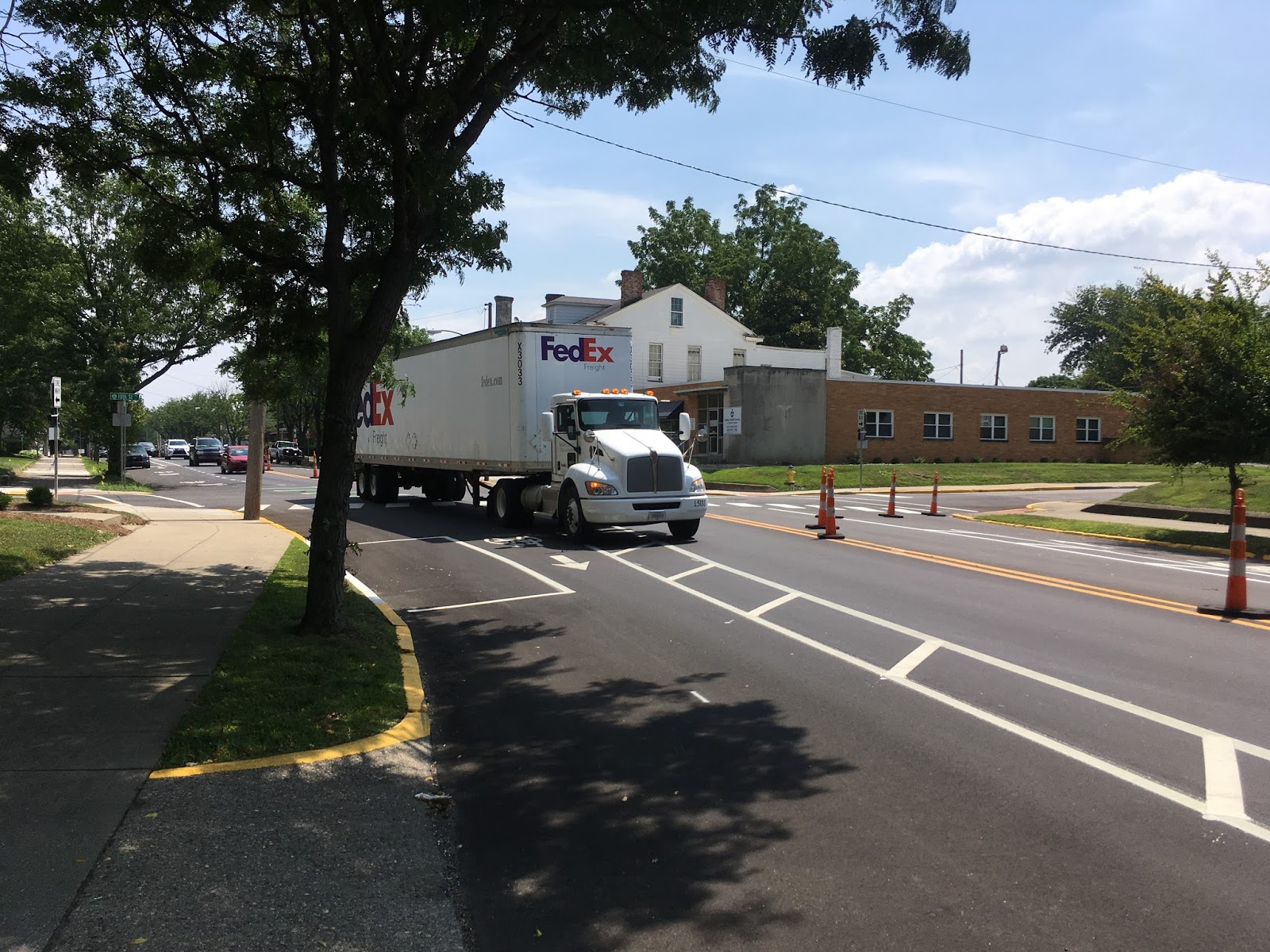
Showing posts with label sharrows. Show all posts

Sunday, March 29, 2020

You're entitled to my opinion and there's ample time, so here are a few random links.


I'm always making notes and collecting links with the idea that they might become blog posts.

Of course "stuff" happens; in January, I began "political distancing" from anti-social Gahanism, then came the disruptions of the planetary pandemic. In short, the notes and links have accumulated, and so here's a helter-skelter collection.

To kick off the chronology, you'll not be surprised that this particular publication is suspicious of Piketty.

A bestselling economist sets out the case for socialism at The Economist

Thomas Piketty’s new book may prove as famous—and controversial—as its predecessor.

In “Capital” Mr Piketty shared Karl Marx’s goal in the work of the same name that he published in 1867: to reveal the economic logic of the capitalist mode of production. “Capital and Ideology”, by contrast, is closer to the sociological writings of Marx and his followers, especially “The German Ideology” (1845-46), which sought to explain the social and political means by which capitalists maintained power over the working classes.

How many times have I heard a New Albanian return from vacation, praise a walking- and biking-friendly locale far, far away, then sigh: "too bad we couldn't ever do that here." But couldn't we -- I mean, if we weren't so stupid and cowardly about it?

Why Do We Think Walkable Towns Are Only for Tourists? by Daniel Herriges (Strong Towns)

I wrote a piece a few weeks ago about Irish villages. It was intended to make the point that it's not only possible, but utterly normal in much of the world, for some of the best walkable urbanism around to be located in smaller cities or even tiny rural towns.

In such places, the village is compact, with bustling streets and little wasted space. However, if you walk to the edge of town, you are immediately in farm fields. There is a stark line between town and country, not the suburban-style blurring of the edges we often find in car-centric North America, where the edge of town consists of a mile or two of chain restaurants and gas stations.

Earlier this year when the town of Clarksville released its ideas for much needed positive changes to the design of Brown's Station Way, the automobile supremacists came immediately out of hiding, among them Wynken (John Gilkey) and Nodd (Lindon Dodd). We know Blynken is out there somewhere, but don't worry, car fetishists -- it will be a while before the town gets around to doing the rational thing, freeing you to remain Luddites.

DODD COLUMN: Road plan full of potholes (by Nodd, in the local chain newspaper)

Brown’s Station Way — a very short, simple, unassuming stretch of mostly ignored if not forgotten road that has apparently suddenly been discovered by engineers, architects, local political types, safety experts, and developers.

Of course the local chain newspaper is unaware of safety by design, and proved it with an editorial from Terre Haute. The conclusion is correct, but it would be instructive to see Gilkey's former employer show an aptitude for modern thinking about complete streets. After all John lacks it.

EDITORIAL: For safety's sake, ban cellphones while driving

No law is going to prevent every crash or bring an end to distracted driving. But banning cellphone use while driving can help make vehicular travel safer for everyone. It’s time for Indiana to become part of that solution.

Another look at the utter futility of painted (and ignored) sharrows on roadways.

Separated Bike Lanes Means Safer Streets, Study Says, by Aaron Short (Streetsblog)

A 13-year study of a dozen cities found that protected bike lanes led to a drastic decline in fatalities for all users of the road.

Perhaps even more important: Researchers found that painted bike lanes provided no improvement on road safety. And their review earlier this year of shared roadways — where bike symbols are painted in the middle of a lane — revealed that it was actually safer to have no bike markings at all.

One can only imagine the phone sex between Gahan and Duggins as they plot to turn the coronavirus crisis into some way of demolishing public housing in New Albany. Why? Because that's what opportunistic slaves to money do when people aren't looking.

For Those Living in Public Housing, It’s a Long Way to Work, by Sarah Holder (CityLab)

A new Urban Institute study measures the spatial mismatch between where job seekers live and employment opportunities.

Depending upon which zip code they call home, researchers found that the average person using some form of government housing aid is likely to face tougher odds of getting a job near their neighborhood than the average job seeker who isn’t using assistance, even those who are extremely low-income. “In fact, the average assisted household is surrounded by 6,032 more nearby Snagajob seekers than Snagajob postings, compared with 3,056 more for unassisted, extremely low–income households — nearly double the amount,” the report reads.

Of all assisted households, those living in public housing had the biggest difference between the number of job seekers and the number of jobs nearby; next came housing choice voucher, or HCV, recipients.

And, to conclude with topicality.

A Tale of Two Plagues, by Katha Pollitt (The Nation)

Tips on self-isolation from Daniel Defoe and Giovanni Boccaccio

I’ve been catching up on the classics. For example, Daniel Defoe’s A Journal of the Plague Year, an early example of the nonfiction novel, written in 1722 about London’s Great Plague of 1665. After a slow start—the novel begins with a lot of statistics to establish its factual reliability—it picks up, as Defoe’s narrator, H.F., a prosperous saddlemaker, misses his chances to leave London and finds himself trapped in town, where he alternates between prudent isolation indoors and restless wanderings through the streets ...

... They’re definitely not having as much fun as the wealthy young people in Giovanni Boccaccio’s Decameron, who escaped the 1348 plague by holing up in the Florentine countryside, flirting and telling sexy stories.

Wednesday, August 28, 2019

Pedestrians and bicyclists in Amsterdam -- and Deaf Gahan's Nawbany.


On Monday I was walking down the sidewalk on the south side of Market when I saw a bicyclist riding down the sidewalk toward me. At this time of the morning there were no cars whatever on Market, and yet there she was, so I politely asked if she would stop for just a moment and entertain a question or three in the interest of science, and she was amenable.

From a former to a current bicycle rider, do you always ride on the sidewalk?

"Yes, almost always," she said.

But shouldn't bikes be on the street?

"It isn't safe out there -- there's no bike lane."

There's a bike lane on Spring Street.

"Sort of. The traffic still moves too fast, and anyway the bike lane ends and I'm back on the sidewalk again."

What do you think of sharrows?

"You used to ride a bike? Then you know sharrows aren't safe."

---

I thanked her and kept walking, confident that this brief conversation of two or three minutes was two or three minutes linger than any chat ever held between Jeff Gahan's inept minions, his corrupt contractors and a real human being on an actual bicycle.

By the way, there are problems in Amsterdam, too.

Can Amsterdam’s Cyclists and Pedestrians Learn to Get Along? by Sophie Knight (CityLab)

As Amsterdammers jostle for space, the city government is trying to ease conflicts between those on bikes and on foot.

Urbanists around the world swoon over Amsterdam’s cycling culture: residents trundling around cobbled streets with a child balanced on their handlebars or a friend on the back, everyone blissfully free from the road rage that infects car-heavy cities such as London and New York. What’s not to like?

Well, a few things, if you’re a pedestrian. An oncoming cyclist may barrel through a red light or crosswalk or suddenly swerve onto the sidewalk. Cyclists in Amsterdam often park their bikes haphazardly, cluttering street corners and blocking the passage of strollers, wheelchairs, and suitcase-bearing tourists.

And woe betide those who accidentally step onto a bike path. “This is Amsterdam!” is one of the kinder reactions.

“Cyclists are even more antisocial than drivers,” complains Jennifer Brouwer, 37, who is registered blind and who moved to the city’s quieter outskirts from its busy West district because she was tired of conflicts with cyclists. “They’re more likely to think, ‘Oh, I can get away with that,’ like cutting people up, cycling a hair’s breadth away from you… There is just no enforcement.”

Efforts to educate cyclists or tame two-wheelers are met with opprobrium in anti-authoritarian Amsterdam, according to “street coaches” hired by the city to do so. Nevertheless, the local government is trying to balance the needs of cyclists and pedestrians. Aware of pressure on public space as the city’s population swells, the municipality said in 2017 it would prioritize both groups, not just cyclists, in its five-year Bicycle Plan starting that year ...

Tuesday, May 21, 2019

Jeff Gahan's persistent transportation hypocrisy: Electric cars win, bicyclists lose.


If you prefer alternatives to cars, like a bicycle, then get ready to risk your life because all Jeff Gahan can do is laugh and give you another meaningless sharrow.

⚡️New Albany’s first electric car charging station -providing the power to choose cleaner energy.⚡️ Proud to provide options to our neighbors that prefer alternative energy sources.

Never forget that Jeff Speck showed Gahan exactly how New Albany might leap to the front of regional leadership when it comes to bicycling and a bicycle-friendly grid. But Gahan the suburbanite C-minus student can see only cars -- and he cannot see how two-wheeled alternatives would provide him with the same campaign finance pull as car-centric street designers.

Can you even begin to imagine the mayor on a bicycle on a street with a succession of sharrows?

I can't. Neither can he, which is why street grid stupidity like ours keeps happening.

Some Bike Infrastructure Is Worse Than None at All, by Eric Jaffe (CityLab)

It’s time to put the sharrow to rest.

Denver gave rise to the sharrow in the early 1990s, and now two researchers there offer a compelling case to put the lowly form of bike infrastructure to rest.

You’ve seen a sharrow painted on city streets: it’s that image of a cyclist below two arrows in the middle of a lane that—you guessed it—is meant to be shared by bikes and cars. The Federal Highway Administration gave sharrows its official blessing in 2009, and the symbol is now ubiquitous across urban America. It’s also arguably the least-loved nod to cycling, a low-cost way for cities to say they’re doing something about safety and street design without really doing much at all ...

Wednesday, August 22, 2018

At Strong Towns: Three reasons drivers should be celebrating and championing bike lanes.

Every time you see one of these ...


 ... think instead of this:


The word "sharrow" is a synonym for abject capitulation. It's a white flag flown by cowardly public officials, of which New Albany unfortunately enjoys an annual bumper crop.

A sharrow enables planners to pretend they're protecting cyclists, while actually doing absolutely nothing except praying drivers might occasionally share the road.


Maybe HWC's engineering guru Jim Rice can tell us more:

(insert gurgling sounds about immutable INDOT regulations) 

Are drivers a privileged class, Jim?

The Constitution fails to mention it, but then again, it says nothing about robber baron capitalism, either.

Now say hello to Rachel, who'll try yet again to penetrate your thick car-centric skull.

Why Drivers Should Support Bike Lanes, by Rachel Quednau (Strong Towns)

 ... In the last month, I’ve gotten back on my bike after several months of infrequent riding. Every trip reminds me how perilous this mode of transportation is when coupled with fast-moving vehicle traffic.

But every trip also reminds me how practical and affordable bike riding is. Each minute on my bike is a minute I’m not using up gas and incurring wear-and-tear on our family’s car. Each time I lock my bike at a new destination, I’ve saved myself $1.75 in bus fare. Each pump of the pedal is time spent in practical exercise, not at a gym that costs me $40 a month to utilize.

More significantly, every time I ride my bike, I’m saving my city money by riding a lightweight vehicle that doesn’t damage the road and rack up maintenance costs for which my local government has likely not budgeted.

What I’ve realized, as someone who both bikes and drives, is that drivers benefit a ton from bike lanes; they just might not realize it. The average driver’s reaction to a bike lane being installed in their neighborhood or along their commuting route is anger that precious road space has been taken away from cars and given over to bikes.

Here are three reasons drivers should, instead, be celebrating and championing bike lanes ...

Wednesday, May 16, 2018

GREEN MOUSE SAYS: Hill or valley? mural or statue? Bison or weasel? Evidently Team Gahan needs reinforcements.


Reporting from a greasy gin mill somewhere near Birdseye, the Green Mouse is stupefied. 

---

Only now does it makes sense -- and you simply can't make up things like this.

At the merchant meeting on Tuesday morning, the city's spokeswoman noted that there'd be a statue dedication on Wednesday at Summit Springs, and while the details eluded her, she'd send the group the info by e-mail.

I expected it to be another monument to Dear Leader, and wasn't contacted, anyway, which isn't unusual because Develop New Albany blacklists NA Confidential.

Now it turns out to have been a Hoosier National Forest event, attributed to a "Chamber of Commerce" New Albany doesn't possess, about the historic migratory route called Buffalo Trace, now drowned in asphalt, down the hill from the atrocious strip mine, at the art park no one knew existed, next to one of the city's busiest and loudest automotive intersections.

Soon it will be hailed as a "bikeable" destination, so expect to see one of Jeff Gahan's frequent campaign donors -- toss a coin -- so why not Allterrain Paving, since it got the bid for the million-plus (or two?) roadway clinging cliffside to the Taco Bell and chain hotels ...


 ... being paid a few hundred thousand to draw deadly sharrow symbols in chalk under the supervision of Pinocchio Rosenbarger, hovering above six lanes of traffic in an air-conditioned helicopter, nursing a daiquiri, making like Marlon Perkins while Jim Fowler distributes the campaign finance treasure.

Like Grandpa Jones used to say: "In NA, truth is always stranger than fact."

He had no idea.

Thursday, May 10, 2018

The redevelopment of the Vincennes corridor might begin right here, at the former Ray's Exhaust & Radiator.


I walked down Vincennes Street to Mathes Pharmacy last week and noticed that Ray's Exhaust & Radiator looked deserted, because in spite of all the ups and downs in my employment history, it's hard to stop looking at buildings like this without seeing future breweries -- and yes, it's far enough removed from the high school to be licensed.

If I'm not mistaken, the irony in this instance is that until recently, and maybe even now, descendants of the family that used to own the brewery (circa 1900) on 10th Street between Spring and Market also had the Ray's property. 

On Monday, the "for sale" sign at Ray's was up. Just remember, if you're looking to make a million in the beer business, best start with five (million).


Two other vacant commercial properties are perched on Vincennes within a stone's throw of Ray's.


As you'll note by the presence of sharrow paint (already fading after last year's paving), Vincennes Street is "bicycle friendly."

(insert guffaws here)

Add just one thing, and the mini-commercial district is ready for its naming rights to be vended by the DemoDisneyDixiecrats -- after Redevelopment kicks in a few million from TIF.

Tuesday, July 18, 2017

ASK THE BORED: If bicycles should be on the street, not the sidewalk, then why has the two-way grid plan been stripped of most cycling safety measures?


Yesterday we surveyed the scandal-plagued Gahan administration's Tour de Sharrow.

Grid Control, Vol. 15: Dooring enhancement perfectly epitomizes Deaf Gahan's "biking last" approach to grid modernization.

As noted previously (and often) in this space, a sharrow symbol might as well be the Mark of Blithering Idiot on Jeff Gahan's forehead, and my old friend K, a veteran cyclist, offers this excellent comment on the utter uselessness of the concept.

What few know about the "smash cyclist here" sharrow is that it's purpose is to remind motorists that they are potentially sharing the roadway with bicyclists, thereby theoretically making for safer cycling. So, sharrows are painted in the center of a roadway where they are obvious to motorists.


Sharrows do not delineate a bike lane. The great misfortune in the sharrow strategy is that the sharrow has the luring appearance of granting center-of-the-roadway, or "cycle here", safe cycling rights to unwitting bicyclists. Nothing improves cycling safety more than this combination; a busy roadway, a couple of doses of cognitive chaos, and the subliminal message of motorists repeatedly running over painted images of cyclists.

Ironically, at the Board of Public Works and Safety meeting last week (July 11), a member of the public returned to a favored topic, riffing on a previous appearance described here:

ASK THE BORED: "Design Is Better Than Enforcement To Make Cities Safer For Everyone."

Mr. Peterson's point, as offered last week as well as an October 2016 letter to the News and Tribune, is that we can have arterial streets designed for moving traffic at unsafe (and altogether anti-social) speeds, then easily reduce these speeds through constant enforcement -- though we wouldn't want to be a speed trap, would we? In other news, I can have my cake and eat it, too. Yet again, for the umpteenth thousandth time ...

Design Is Better Than Enforcement To Make Cities Safer For Everyone, by Charlie Sorrel (fastcoexist)

As an aside, it's never been clear to me which section of Jeff Speck's Downtown Street Network Proposal concedes a higher rate of vehicular accidents, as Peterson alleges. I've just now searched the word "accident(s)" in the proposal, and found the word used four times, each in a context of accident reduction, not increase.

Reading incomprehension is a civic institution, so let's leave it aside and proceed to one of Peterson's better recent points, though it takes a while to get there, and he may well have inadvertently stumbled on truth from a collection of flawed premises.


Take note: Warren Nash now has agreed that education about bicycle behavior is a good thing, and that bicycles should be on the street, not the sidewalk.

Note also that Nash just approved, and is implementing, a street grid plan that negates the majority of Speck's measures to make bicycle riding on the street (not the sidewalk) ... safer.

Me thinks that Nash speaks with a forked tongue. Unfortunately, this practice also is a civic institution in New Gahania. K gets the coda, too:

Speaking of cognitive chaos, the complete dismissal of Speck's ideal bicycling concept (protected bike paths, see attached picture) from two-way street implementation defies logic, at least from where I sit a couple of hundred miles from there.


If I had the opportunity, I'd be knocking on the doors of City Hall seeking a cogent explanation for the omission of protected bike lanes in favor of a MUCH MORE DANGEROUS concept that will see less use. Other than the notion that protected bike lanes initially might have an eccentric appearance to some, I can't imagine why protected bike paths were abandoned. Sure there could be a few fogyish complaints from residents, but those complaints have no merit once two-way implementation is a given. Perhaps the cognitive deficiency is mine in this case. Is there an explanation for choosing the less ideal and more dangerous while expending virtually the same resources for implementation?

There's an explanation, K: City Hall's minions neither bike, nor walk. They drive. What they have not personally experienced, they cannot fathom.

Welcome to New Gahania.

---

As an addendum, NA Confidential has been unable to confirm whether New Albany Mayor Jeff M. Gahan or anyone working in the city's administration is under federal investigation or indictment for corruption, bribery or racketeering. It is standard policy of the U.S. Justice Department to refuse to confirm or deny the existence or non-existence of investigations or subjects of investigations. A similar policy exists at the F.B.I.

Monday, July 17, 2017

Grid Control, Vol. 15: Dooring enhancement perfectly epitomizes Deaf Gahan's "biking last" approach to grid modernization.

The incredible disappearing "safe to bike here" symbol.

The following words summarize the scandal-plagued Gahan administration's approach (more accurately, its absence) in using Jeff Speck's street study as a blueprint for "grid modernization," or, the project that dare not mention "two-way streets" publicly.

If it bikes, blame it.
If it walks, marginalize it.
If it drives, subsidize it.
-- Attributed to Dan Kostelec

Speck encouraged state-of-the-art bicycling infrastructure as a considerable component of traffic calming and walkability enhancement. City Hall rejected almost all of it, for precisely the same reason it fells so many trees: minions neither bike, nor walk.

They drive.

What they have not personally experienced, they cannot fathom, which is why this formerly shady walk along the river now is denuded of foliage and is cleared as wide as an interstate highway. More on this, another time.


As noted previously, once Speck's study was handed to HWC Engineering for political monetization, members of the public saw nothing of it until the striping began, at which point we've seen plenty, including errors and issues, from which City Hall has fled as quickly as chihuahua legs will carry its timeservers.

Among these: varying parking space measurements, misdirected cross-hatching in bike lane buffers, bus stops blocking church parking, and the future death trap at Spring and 10th (above). Recent striping on Vincennes now boasts a bike land symbol half on asphalt, and the other half on curb cut.

Returning to the point: Had Team Gahan ever been serious about grid "modernization," bicycle infrastructure would have been vastly improved as a result of current expenditures. However, it has not been and will not be, and Speck's study has been largely stripped of usefulness as it pertains to bicycles.

We can expect to see this plain fact obscured by the celebratory use of the most magical symbol of all, one outranking even the mud-flats-anchor in civic importance. Follow the tire tracks to spot the symbol in this photo:


The sharrow, otherwise known as the gift that keeps on absolving planners from planning. Political willpower might keep the sharrow in remission, but in New Gahania ... mayoral conscience long since got doored.

Speaking of dooring, those too-narrow parking spaces on the north side of Spring between Vincennes and 4th will increase the likelihood of dooring.

Public education in New Gahania? Unlikely, so let's consider the Dutch Reach.

Why People In The Netherlands Open Car Doors With Their Right Hands (And Why You Should Too)

When was the last time you parked your car on a busy street and came into inches of opening your door in front of an oncoming cyclist? We’ll be honest here and tell you that it has definitely happened to us once or twice, and it is SCARY. It’s easy to forget that vehicles are dangerous, even when parked!

Now, the prospect of causing a collision when the motor is already turned off sounds like something that would be found in the “weird news” section of your town paper, but it’s something that happens all of the time in big cities. It’s called “dooring” and it can be deadly for both the cyclist and the driver.

“Dooring” is a huge safety issue seen in most – if not all – urban areas. In fact, between 2010 and 2012, the city of Chicago reported that up to 19.7% of bike crashes involved “dooring”.

On a slightly more philosophical plane:

When Freedom's Just Another Word for "Get Out of My Way", by Tony Dutzik (Frontier Group)

Over a recent vacation, I picked up Laura Everett’s new book, Holy Spokes, a meditation on the spiritual aspects of urban bicycling, which, it turns out, extend beyond praying for one’s life and calling down the wrath of God on that dude who cut you off.

In one poignant chapter, Everett, who is an ordained minister and the executive director of the Massachusetts Council of Churches, describes her sense of loss after an injury sustained in a crash kept her off her bike for a prolonged period of time:

Gone was the pleasure of moving at my own speed, on my own route, going where I wanted when I wanted. Now I was dependent on other people to take me where I want to go, on their schedule, when they wanted.

The passage reminded me of something else I’d read recently: Boston Globe columnist Jeff Jacoby’s lament for his loss of “auto-nomy” when he chose to give up his daily car commute for the MBTA Green Line following the relocation of the Globe’s offices downtown:

When you drive, you have auto-mobility. You travel where you choose, by the route you choose, with the company you choose, and at the time you choose.

The similarity between the two passages got me thinking: Could it be that, deep down, cyclists and drivers – despite often being at odds – really want the same thing? Could it also be that the desire to travel comfortably and safely at the time and in the manner of one’s choosing extends beyond those categories – even to transit riders, who are more likely to use a transit service if it serves more places they want to go, faster, more frequently and more reliably?

Or, more likely, City Hall will simply capitulate when a prominent Democratic donor-to-be-named upholds the sanctity of auto-centrism.

Baltimore Battles Its Bike Lanes, by Andrew Zaleski (CityLab)

At first, cycling advocates in Baltimore were ecstatic. After many years of lagging well behind other towns, in recent months the Maryland city made big strides to grow its bicycle infrastructure: It debuted a bike share program, a trio of protected cycle tracks, and a larger network of 122 miles of bike lanes by the end of 2016.

Then things got ugly. Residents living near the cycle tracks pushed back, raising questions over lost parking spaces and whether driving lanes were being narrowed at the expense of cars.

Team Gahan's view of "grid modernization" has been to spend millions improving infrastructure for the unchanging dominance of vehicular traffic, while cheapening or dispensing entirely with other possibilities to enhance non-automotive use and genuinely implement modernization.

It's a bare minimum but a huge missed opportunity, and I can only hope that some day we're able to make good on Deaf Gahan's crippling lack of vision -- and that no bicyclists are injured or killed until such a time arrives.

---

Previously:

Grid Control, Vol. 14: Yes, you can still park on the south side of Spring Street during the stalled two-way grid project.

Grid Control, Vol. 13: "Dear Deaf Gahan and minions: FOR THE LOVE OF PETE, STOP TRYING TO BE COOL AND DESIGNER-ISH. YOU'RE NOT, AND IT'S EMBARRASSING ALL OF US."

Grid Control, Vol. 12: Meet the artistic crosswalk design equivalent of dogs playing poker.

Grid Control, Vol. 11: HWC Engineering meets with St. Marks, city officials nowhere to be found.

Grid Control, Vol. 10: City officials predictably AWOL as HWC Engineering falls on its sword over striping errors.

Grid Control, Vol. 9: "This was supposed to be discussed with us," but Dear Leader doesn't ever discuss, does he?


Grid Control, Vol. 8: City Hall characteristically mum as HWC Engineering at least tries to answer the cross-hatching question.


Grid Control, Vol. 7: What will the Board of Works do to rectify HWC's striping errors on the north side of Spring Street, apart from microwaving another round of sausage biscuits?


Grid Control, Vol. 6: Jeff Speck tweets about NA's grid changes, and those missed bicycling opportunities.


Grid Control, Vol. 5: Egg on HWC Engineering's well-compensated face as it botches Spring Street's westbound bike buffer cross hatching.


Grid Control, Vol. 4: But this actually isn't a bus lane, is it?


Grid Control, Vol. 3: TARC's taking your curbside church parking, says City Hall.


Grid Control, Vol. 2: Southsiders get six more parking inches, but you gotta love those 10-foot traffic lanes on Spring.


Grid Control, Vol. 1: You people drive so freaking horribly that someone's going to die at Spring and 10th.

Friday, June 09, 2017

Not that Team Gahan plans to do anything about it: "Bike commuting's worst enemy isn't what you think."


At some indeterminate point, but quite soon now, Pinocchio Rosenbarger will be out there with the paint crews, drawing those trademark "Chickenshit Sharrows" symbols on streets where cyclists accepting them at face value will be the target of open season by unreconstructed and imbecilic drivers.

Rosenbarger will cluck, dance, declare victory, and cash yet another paycheck.

And Team Gahan still won't get it ... not one bit. The street grid transformation might have made the streets safe for cyclists. It will go only halfway, primarily because drivers (and paving contractors) are New Albany's only real protected species.

BIKE COMMUTING'S WORST ENEMY ISN'T WHAT YOU THINK, by Arian Horbovetz (The Urban Phoenix via Strong Towns)

 ... Most people in my home city of Rochester, New York don’t fully understand why anyone would commute using any form of transportation other than a car. This mental construct is so pervasive that any form of transit other than driving is seen as either “fringe,” or worse, seen as a reflection of the person’s socioeconomic status in life.

As we continue to crawl our way toward making cities more bike friendly for cycling commuters, the biggest barrier we may have to tackle, the one that gives people a license to dismiss it as a transit outlier, is simply perception — the misconception that bikes are a means of recreation instead of a tool for empowerment, as well as the commonly held notion that biking for transportation has to be motivated by a negative catalyst (poverty, loss of license, etc.). In fairness, bikes are tremendous resources for folks that are in these positions. It can be a game changer, helping to level the playing field for our poorest communities. But there are a multitude of other reasons people make the choice to ride instead of drive.

Many think the ultimate enemy of the bicycle is the car, but the reason cars are so dangerous is simply the false perception that our streets and roads are made for driving and nothing else. It is the complete dismissal, whether conscious or unconscious, of any other practical way of getting around. It is the lack of understanding that cars are one of many forms of transit, albeit by far the most popular one. It is the lack of respect for bikes as a viable vehicle for traveling to where you need to go.

In sum, it is the mindset that categorizes cycling as an inferior way of moving about rather than an appreciation for the personal and community health benefits it provides.

To conclude ...

Seeing bikes as transit machines, like cars only slower, is an important mental hurdle for non-cyclists to overcome. It is no different than choosing a pickup over a sedan, a sub-compact versus an SUV, or a luxury car over a coupe. It is simply another way to get from point A to point B, with advantages and disadvantages. The sooner we all accept this fact, the sooner we will begin to open our eyes to a multitude of transit options for our cities that truly benefit everyone.

Sunday, March 26, 2017

This Main Street sharrows symbol feels all patched and forlorn -- and a billboard comes tumbling down.

But just LOOK at that professional landscaping.

Never a dull moment on Main Street, is there? The beautification project is the political gift that keeps giving costing, and the billboard is less of an eyesore as a twisted heap than it was while standing.

But the aristocrats? Very happy.


Tuesday, February 21, 2017

It's the snazzy new bike repair station at the Farmers Market. What will lead to it, lanes or sharrows?


They're nice features and all, though as yet we don't know exactly how much bicycling infrastructure was stripped from Jeff Speck's original grid plan owing to City Hall cowardice.

Study: Sharrows Don’t Make Streets Safer for Cycling, by Angie Schmitt (Streetsblog)

Sharrows are the dregs of bike infrastructure — the scraps cities hand out when they can’t muster the will to implement exclusive space for bicycling. They may help with wayfinding, but do sharrows improve the safety of cycling at all? New research presented at the Transportation Review Board Annual Meeting suggests they don’t ...

Monday, October 31, 2016

A sharrows symbol might as well be the Mark of Blithering Idiot on Jeff Gahan's forehead.


Here's what we know, to date. It's isn't pretty.

1. Mayor Jeff Gahan has spent millions of dollars on park units connected to each other not by walking or bicycling infrastructure, but by roads intended for use solely by cars. These roads require constant upkeep and paving, which in turn provide numerous conduits for campaign finance sluicing, but you already knew this.

2. Whenever "safety" is used as a mantra for street grid change, however fleeting and incremental, it is a dog whistle intended to describe conditions for motorists, not walkers or cyclists, because they're incidental in the grand scheme of beak-wetting.

3. During five years in office, all Gahan has done to guard against the eventuality of toll dodging is implement a grotesquely ballyhooed road diet on Spring between Vincennes and Beharrell, describe it in terms exclusive to automotive "safety", build no bicycle infrastructure whatever between Beharrell and Silver, then draw a few scant sharrow symbols on the pavement and create unprotected bike lanes from Silver to Vincennes, after which they continue ineffectively and still unprotected along high-speed, one-way Spring until petering out downtown.

4. None of these existing bike lanes are connected to any other, or to a park, or to the city's downtown commercial area, or evince any design of being connected to anything, now or in the future. They begin and end nowhere, and not once has a city planner ever revealed a comprehensive design that might convince us otherwise -- when they've bothered to answer questions at all.

5. Insofar as consultant Jeff Speck recommended protected bike lanes throughout the street grid as part of converting one-way streets to two-way traffic, 95% of his recommendations were tossed from the grandiosely tagged "Downtown Grid Modernization Project" in what might be termed as a late-term abortion.

6. While hideous, HWC Engineering's recasting of Speck's downtown street network proposal didn't materialize from the ether. It came at the behest of Gahan and the usual timer-serving suspects among city officials, among them David Duggins, the city's presumed economic development director, whose wife works for HWC, seeing as nepotism is job one with Gahan and not proposals representing genuine progress (see "beak-wetting" above).

7. And, just for the hell of it, if the opportunity presents itself to reduce shade along this botched and unrealized street grid by felling trees, Gahan's stellar team of suburbanites does this first, then insists that in spite of the absence of evidence to the contrary, far more trees are being planted than clear-cut. When we ask for the evidence, we're told that the poor, underfunded Tree Board can only do so much.

Think about the preceding.

Then consider that the very same time-serving paycheck endorsers instituting street grid mayhem as outlined above presently are seated on a steering committee to write a Comprehensive Plan to carry the city forward two whole decades.

To more of the same?

Who are you going to believe, John Rosenbarger or your own two eyes?

Today's photos are courtesy of Bicycle Lobby, on Twitter here.


Recent documentation of conditions in the civic asylum:

WITHIN CITY LIMITS: Episode XII, How Do I Join the New Albany Planning Committee?

The composition of Jeff Gahan's comprehensive plan steering committee guarantees yet another business-as-usual silo, and compels me to vomit.

New Albany's new Comprehensive Plan to be happily midwifed by precisely the same old suspects.

Jeff Speck on HWC Engineering's bicycle-free, two-way streets abortion: "I guess that's what you get when you ask engineers who do not value biking to change a plan."

Monday, October 24, 2016

Upper Spring work continues as drivers somehow manage to pay attention in spite of their boiling anger.

Not that we don't have comments and questions -- like speculating about the next round of driver complaints?

"WTF? Those are Floyd Central's colors."


More importantly, what's with all the wasted space? Maybe Irv can plant some native grasses there.


A sharrow? Here? Is there any single facet of road design that even approaches a sharrow in terms of Rosenbargerite laziness?


It's a road diet, folks.

Tuesday, August 16, 2016

ASK THE BORED: Finally, an Honest Sharrow in an otherwise dishonest burg.

Here at NA Confidential, we're the volunteer sidewalk superintendents.

We spend time each day, documenting the often yawning gap between what City Hall's propaganda machine says it is doing, and how this jibes (or doesn't) with reality out on the mean streets.

Readers with long memories will remember Jeff Speck, who was commissioned two (three? Does it even matter?) years ago by Mayor Jeff Gahan to devise a Downtown Street Grid Proposal, subsequently printed on extra soft paper and sliced into handy squares for use in the Executive Loo at the mayor's Down Low Bunker.

Speck has started a Twitter campaign, using the hashtag #honestsharrow -- another concept unknown in New Albany.


Sharrows in New Albany: "A low-cost way for cities to say they’re doing something about safety and street design without really doing much at all."


Speaking of auto-centrism, here's another defective pedestrian crossing button.


Back in the neighborhood: ADA the hard way, on 11th Street between Spring and Market.


We could go on and on ... and do, but there's a merchant mixer meeting to catch. In the Bored's spare time, here are some issues to consider.

#GahanSafe: All the push-button "walk" signals for crossing Spring at Pearl are defective, and have been for five months to a year.


Moldering pile of shit celebrates three-month anniversary by the sidewalk in front of Ron Craig's rental property on Market Street.


The mark of The Pirate? If so, the orange paint would be applied to the sign itself, not the post.


In NA, too? "Traffic Safety Advocates Taking Action Into Their Own Hands."


No decision has been reached on new Street Piano Project, says Board of Works and Public Safety.


Not that we expect answers, mind you. In New Albany, the art's in the question, so that posterity can be the ultimate judge.

Saturday, May 14, 2016

Bicycle Infrastructure Fail(s): "The primary problem is that traffic engineering ... still has influence on planning and urban design."


Which is why, when you remark to an engineer that your city won't ever get the streets right until it decides that one really must break eggs to make an omelette, and the engineer replies that "every day I break more eggs than Waffle House," it's perfectly clear just how big of a broom will be needed for the toxic clean-up.

Or maybe a scythe and a few pitchforks wouldn't hurt, either.

If we design cities for humans, with respect for the human experience, safety, logic and ease-of-use, you wouldn’t see stuff like a bike lane in the middle of a street, or sharrows, in any city.

Ding ding ding -- that magic word, sharrows, which is the invariable "do nothing and declare victory" tactic of the Rosenbarger sect.

To paraphrase Stonewall Jackson: "Fire 'em. Fire 'em all."

Bicycle Infrastructure Fail(s), by Mikael Colville-Andersen (Cities of the Future)

... Best Practice in bicycle infrastructure is basically a century old. Dedicated bike paths date from 1892 when an equestrian path was turned over to bikes on Esplanade in Copenhagen. In 1915, the first on-street, curb-separated cycle track was installed on Strandboulevarden. From there, protected bike infrastructure spread out around the world.

Over 100 years, the infrastructure has been tested by easily hundreds of millions of daily cyclists. Planners have tweaked and experimented, made mistakes and fixed them and ended up with a Best Practice that is simple, effective, safe and cost-efficient. Generations of planners and engineers have done an amazing job and just handed us everything we need on a silver platter. There are only four types of infrastructure in Danish Best Practice. One of the designs fits any street in the nation and any street in any city in the world. Copy-paste, baby.

Why, then, do we see crap like in the photo, above, showing up on city streets? Who, in their right mind, would ACTUALLY choose to put cyclists in the middle of a street with speeding cars on either side? Certainly not anyone with an understanding of the bicycle’s role in urban life as transport or a sincere desire to encourage cycling and keep people safe. As I suggested on Twitter, find the person who is responsible and fire them. A flippant remark – but still a serious one.

The primary problem is that traffic engineering, in certain countries, still has influence on planning and urban design. In America, where this infrastructure was put in, bicycles are placed in the same category as motorized vehicles. In countries that GET the bicycle’s role in cities, they are regarded as fast-moving pedestrians and we’ve been planning for them for a century.

Monday, February 08, 2016

Sharrows in New Albany: "A low-cost way for cities to say they’re doing something about safety and street design without really doing much at all."

Days of future past.

Nothing better symbolizes the comprehensive failure of New Albany's Main Street "Improvement" Project than the street's transformation from bicycle-friendly to bicycle-prohibitive.

Yes: Those magical, transformative sharrows.

October 18, 2014
Basically, sharrows suck, so naturally New Albany plans more of them, so we can be "bike friendly" on the cheap.

November 10, 2014
"Sharrows are popular because they are politically easy," and so in NA, they'll multiply like rabbits.

January 4, 2015
Gahan AWOL as cyclist assays new Main Street sharrows: "Someone is going to get seriously hurt or worse."

May 21, 2015
This bicyclist seems mistrustful of the Main Street sharrows.

A Fb conversation ensured. A few random comments:

Jeff Gillenwater 
As many have pointed out, Main Street is indeed more dangerous for bikes now than it was before the "improvement" project.

Roger A. Baylor
Now, Spring Street between Silver and Beharrel will have no bicycle infrastructure of any sort. Rather, our planners will connect bicycles to Spring via Silver, where infrastructure is largely non-existent, and where there is no stated plan to remedy this. When I pointed this out to Larry Summers, Rosenbarger having already fled the room, Larry replied that it's the best that can be done, and there's no choice except gradually implementing inadequate remedies over a long period of time. Thus, we get what we deserve -- good and hard.

RiBr
Main St. in New Albany is a joke and median makes it worse. There is barely enough room for a car to pass a bike, and when they do, if someone was to open a door on a parked car, you are toast.

Roger A. Baylor
And folks like Greg Phipps knew this from the start. But as we've learned so often before, in NA, one doesn't fuck with the in-fix. Apart from Matt Nash, I'm trying to think of an elected official past or present who actually has tried to ride a bike locally. Surely I'm forgetting someone? Maybe John Gonder, ousted by the Floyd County Democratic Party for being an A student.
.
RR
I ride thousands of miles a year and on all sorts of roads, but I will no longer ride on Main street.

KP
My daughter came into town the other day and took me out for supper via Main Street. She was horrified at how small and dangerous it felt to drive that street. "So many blind spots." Yep.

Then there are those pesky researchers. How dare they contradict Team Gahan.

Some Bike Infrastructure Is Worse Than None at All, by Eric Jaffe (City Lab)

It’s time to put the sharrow to rest.

Denver gave rise to the sharrow in the early 1990s, and now two researchers there offer a compelling case to put the lowly form of bike infrastructure to rest.

You’ve seen a sharrow painted on city streets: it’s that image of a cyclist below two arrows in the middle of a lane that—you guessed it—is meant to be shared by bikes and cars. The Federal Highway Administration gave sharrows its official blessing in 2009, and the symbol is now ubiquitous across urban America. It’s also arguably the least-loved nod to cycling, a low-cost way for cities to say they’re doing something about safety and street design without really doing much at all.

SNIP

 ... What is clear in the Vision Zero era is that truly prioritizing bike safety means building separated bike lanes. The results should be confirmed in other cities for good measure, but they certainly seem to suggest that sharrows are poor substitutes for bike lanes at best and “more dangerous than doing nothing” at worst, write Ferenchak and Marshall.

They conclude, in a working paper recently presented at TRB 2016, with some harsh words:

As sharrows do not provide designated space for bicyclists and do not enhance the overall bicycle network, all cities should (as many already have) begin to consider sharrows simply as signage as opposed to actual infrastructure. It is time that sharrows are exposed for what they really are, a cheap alternative that not only fails to solve a pressing safety issue, but actually makes the issue worse through a sense of false security.

Thursday, May 21, 2015

This bicyclist seems mistrustful of the Main Street sharrows.

Walking to the merchant meeting at the Culbertson Mansion on Tuesday morning, I'd just crossed Main Street when I saw a person on a bicycle coming toward me, eastbound.

At first glance, seconds before I took the photo, he was riding in the otherwise empty parking lane with a couple of cars approaching behind him. The bump-out was just ahead of him, and he was going to be compelled to move out into the "sharrows" lane whether he liked it or not. There was some hesitancy, but he did.


The driver of the first car chose the opportunity afforded at the median-free 10th Street intersection to quickly pass the bicycle on the left. Maybe he didn't want to share the road, after all.

I thought to myself: "Just imagine what the Main Street design might have been under capable leadership, and with reality-based design."


Damn, that guy looks familiar.


Nah, couldn't be.

Sunday, January 04, 2015

Gahan AWOL as cyclist assays new Main Street sharrows: "Someone is going to get seriously hurt or worse."

What possibly could be unsafe with this "bike-friendly" layout?

We've said it before, and we'll say it again: Sharrows and lazy municipal governance are cut from the very same bolt of moth-eaten cloth.

"Sharrows are popular because they are politically easy," and so in NA, they'll multiply like rabbits.


In New Albany, Main Street used to be the very best place to ride a bicycle from Uptown to Downtown. Then the street was "improved" through beautification sans sensibility, and now our friend and regular reader MPC provides something that has eluded generations of underachieving city planners and designers: A voice of, and from, experience.

What he says here is reason enough to purge John Rosebarger, isn't it?

---

"Just thought I'd share my biking on main street experience with you. Someone is going to get seriously hurt or worse. I was in the supposedly "shared" lane traveling east around the Culbertson mansion, all while cars were zipping past me trying to squeeze through any place they could, forcing me into the parking lanes. Then I had to reenter traffic when I came upon those extensions that are supposed to slow traffic down. What about this renovation and painted biking signs on the pavement was supposed to make it safe for cyclists? I have no problems riding in traffic and sharing lanes, its motorists with NASCAR mentality and ambiguous "shared" lanes that are scary."

Monday, November 10, 2014

"Sharrows are popular because they are politically easy," and so in NA, they'll multiply like rabbits.


Psst ... it's almost Tuesday. Someone wake up the Board of Public Works.

This week at the Main Street Disprovement, Deforestation and Semi Trailer Non-Diversion Project, we're seeing the advent of sharrows. Here is a cyclist's testimonial.

Sharrows are worse than useless. True, they make car drivers understand that any marked sharrow is there to share with bikes, but the flipside of that is that it tends to confirm the widely held belief that bikes are NOT allowed anywhere else.

Current law follows the philosophy that EVERY non-freeway road whose speed limit is under 50 is open to bicycles and should be shared with them, whether it’s marked or not. Marking some of these roads with cute bicycle images only serves to make it seem like these roads are the only roads we belong on.

Cyclists have a right to ride on every (below) 50mph road. If automobile drivers don’t understand that, then they need to get off our streets.

In other words, on Main Street, in what was the single best place in the city for bicycle lanes, we've used the space to install decorative medians, which will enable traffic to move more quickly on interstate-width lanes despite comically lowered speed limits, because as we've all learned so many times, speed limits are not enforced, and even the $2 million-plus Main Street redesign still encourages speed, meaning that the heavy truck traffic the city claims is not being diverted to the Spring Street Bypass will continue to use these handy speed chutes, assuming the trucks actually return to Main Street ... upon which have been painted nice, dainty sharrows symbols 'cuz wishing will make it so.

Got all that? In short, we declare victory, get back in our municipal vehicles, and ride off to the suburbs to continue ignoring the Walkable City book on the coffee table.

Have you noticed that City Hall always backs away from any substantive roadway alterations designed to reduce speed by design? Of course, there isn't the first coherent purpose for any street grid reforms that do NOT reduce speed by design ... and that's why we're likely to botch the Speck report, because City Hall conflates speed with congestion reduction, and old white voters demand to pass through town quickly. It's political, and political gonads are non-existent in this city, so you can expect more sharrows:

Basically, sharrows suck, so naturally New Albany plans more of them, so we can be "bike friendly" on the cheap.


Because as we've asked previously ...

Egg, meet face: How many different ways can we botch the Main Street Deforestation Project?


Apparently, we can do it in every possible way. But those flowers ... they'll really look nice. Until they don't.

Sharrows at Grist

Sharrows discussion at the Raleigh News & Observer