Wednesday, November 16, 2005

Al Goodman in the CJ, and M. Fine factory views.

Al Goodman is back in the news today, with the Courier-Journal’s "Indiana Weekly" providing prime coverage of his preservationist efforts.

Preserving area's past for future; New Albany man tries to save old tannery, wetlands, by Steve Chaplin (special to The Courier-Journal).

Here are excerpts:

Standing near the intersection of Main and Silver streets in New Albany, Goodman can imagine great Americans like Henry Clay and William Clark being there along with American Indians launching canoes into the Ohio River. And he can sense the impact of the nation's industrialization ...

... He dislikes the part of the plan for a 17-mile, multimillion dollar riverfront loop between Kentucky and Indiana that would accommodate motorists on a new two-lane paved road in addition to hikers, bikers and other low impact users.

"They want to spend over a million dollars to put up a new bridge over Silver Creek as part of a two-lane road for cars to use the riverfront," Goodman said. "I think there are some places we just don't need cars."


Obviously, Al's future plans are an integral part of the the Greenway as well as the Main Street Preservation Association’s efforts to formulate an area plan, even if his property falls outside the exact boundaries of the Main Street historical district.

Ideas, issues and brainstorming at MSPA's Small Area Plan kickoff.

Last week it was revealed that the owner of the vacant M. Fine factory building is planning an ambitious renovation of the structure.

(He) unveiled a $7.5 million makeover into a retirement home, with 58 "independent" units and 23 assisted living, and with the stated aim of retaining the original look of the building while unifying it under one architectural design.

Here are five views of the building, which is located between 14th Street and 15th Street on Main Street. First, looking to the southeast, with 14th Street on the right:


Looking north from the corner of 14th and E. Main:


Industrial windows facing 14th:

Looking to the north, from the rear of the building:

And, finally, as it appears westbound on Main Street:

Tuesday, November 15, 2005

Views of three Pearl Street storefronts destined for restoration.

The title of Ted Fulmore’s blog says it all: Our History in New Albany.

As chairman of New Albany’s Historic Preservation Commission, Ted presided over the body’s “marathon” session last Thursday night, which he recapped the following day in November 10th - a Historic Day Indeed (updated).

Among the commission’s actions at the meeting was approval for “plans for the restoration of three storefronts on Pearl Street between Main and Market.”

Ted included a sketch of the storefront restoration that had been submitted to the HPC by Stephen Beardsley, owner of the buildings, and NAC reprints the “after” sketch here, accompanied by photos of the buildings in their current “before” state.

The three buildings between Office Supply (left) and Hannegan Hall (right) are the storefronts in question.

Here are two closer views of the storefronts.


Finally, the sketch showing design features to be restored.

We wish the best to Stephen Beardsley and commend him for taking on this project.

Duh, redux.

Straight coverage from the folks at Gannett, and not one iota of editorial opinion from NA Confidential:

House's future debated; Preservationists, owners battle over structure, by Ben Zion Hershberg (short shelf life for Courier-Journal links).

Here's an excerpt:

Lawyers for the owners of a historic house in Georgetown and the state's leading preservation organization argued in court yesterday whether the house should be restored or demolished after a fire that damaged it extensively.

Previously at NA Confidential: Duh.

News item: Baron Hill wants his job back; Mike Sodrel vows to spend him into post-Soviet oblivion using Daddy Rove bucks.

New Albany will be the third stop on Baron Hill's two-day, four-city "political comeback" tour of the 9th Congressional District, during which the former Democratic congressman will formally announce his candidacy to reclaim the seat he lost to Republican Mike Sodrel in 2004.

Hill, who was last seen in New Albany rallying the local Democratic troops (minus the Gang of Four) at their FDR dinner, will appear at noon on Wednesday, November 16th at the City-County Building. During his 9th District tour, he also will be speaking in Bloomingon and Jasper (both on Tuesday, November 15) and in his hometown of Seymour following his New Albany stop on Wednesday.

In 2004, Hill lost Floyd County to Sodrel by 600 votes out of roughly 33,000 cast. In the district as a whole, Hill's margin of defeat was less than 2,000 votes.

Rapture enthusiasts immediately declared Sodrel's victory a gift from one or another unknowable Gods, but in fact the deciding factor in the election was a seemingly endless convoy of GOP semi-trailers stuffed with barrels of cash, dispatched into the 9th District by Karl Rove, and periodically accompanied by cardboard cut-outs of Dick Cheney.

Hill has the unenviable task of matching this Republican tsunami of special interest cash, while at the same time countering Sodrel's chief personal asset -- an ability to wear his mustache in a non-threatening and sporadically jovial manner.

But ... Sodrel must somehow defend the flawed ideology of a failed regime.

If Hill can avoid the appearance of being too far to the left of the late Strom Thurmond, maybe he has chance, after all.

Bring Back Baron -- the candidate's pre-candidacy web site.

Also: Baron Hill To Announce Plans For Rematch Against Mike Sodrel.

Monday, November 14, 2005

Up with "liberal" drinking, down with Wally World, and other activities scheduled this week.

Surely Ayn Rand's epic novel "Atlas Shrugged" would have been half as long if the hero, John Galt, had chosen to achieve his goal of stopping the motor of the world the truly easy way -- by building a Bass Pro Shop.

Meanwhile, artificial reality aside, it's a packed calendar this week, so pick carefully. One request, please: Owing to the necessity of setting aside seating space at Rich O's for Tuesday's Drinking Liberally gathering, might those planning on attending please drop me a private e-mail, or comment below, and provide a (non-binding) RSVP?

Tuesday, November 15 -- Pints (plural) for democracy.

Drinking Liberally comes to Rich O’s Public House for a 7:00 p.m. session. Readers who are nodding in agreement with the organization’s stated aim of spreading democracy “one pint at a time” are encouraged to attend. While we're not expecting the city council's Gang of Four to be among those visiting, they're certainly welcome to drop in, quaff Progressive Ale, and justify their political existences.

Previously at NA Confidential: Drinking Liberally – coming soon to Rich O’s?

Louisville DL takes road trip to Rich O’s in New Albany, by Vicki Sansbury (from Drinking Liberally’s on-line forum).

Drinking Liberally helps kill the pain for lefties, by Stephen George (Louisville Eccentric Observer, July 5, 2005).

Wednesday, November 16 -- Wal-Mart: The High Cost of Low Price.

Previously in NAC, we told you that CFP and Destinations Booksellers are to screen "Wal-Mart: The High Cost of Low Price" documentary film on Nov. 16. It’s an outdoor showing (at 6 p.m. and 8 p.m.) at the Farmers’ Market, corner of Bank and Market in downtown New Albany. We're not expecting the city council's Gang of Four to be among the visitors, but they're certainly welcome to drop by and cast a symbolic vote for social consciousness.

Here are links to five articles about Robert Greenwald's film:

Five Questions for Robert Greenwald, by Sam Graham-Felsen (web-only feature from The Nation).

What a deal: Wal-Mart’s phenomenal growth is the result of sweetheart deals and taxpayer subsidies, by Greg LeRoy (from AlterNet, reprinted in Louisville Eccentric Observer).

Stunning, by Randy Smith (Volunteer Hoosier blog).

More NAC links:

Speaking of Wal-Mart, as the movie release date draws nearer, Bentonville begins circling the wagons.

And: Unsurprisingly, "Wal-Mart Healthcare Mythology Shattered."

Thursday, November 17 -- City Council meeting & ESSNA meeting.

New Albany’s City Council meets on the third floor of the City-County Building. Considering the rapidly approaching necessity of resolving the city's Great Sanitation Debate of 2005, and with diminished opportunities for populist grandstanding, it is expected that 3rd District CM Steve Price will finally reveal the details of his months-long search for stray nickels and dimes in the budget, in the process piously repeat numerous Farmer's Almanac homiles that subsequently will be cited as original wisdom by anonymous troglodytes fondling their garrottes.

Here's the most recent media coverage of the sanitation situation: Rate increase a last resort for sanitation, by the New Albany Tribune's Amany Ali.

Also on the 17th, the East Spring Street Neighborhood Association will be holding its monthly meeting at Muir Manor on Spring Street. This should be a good one, with discussions on a neighborhood plan slated to take place.

In the 18th, we will rest.

Maybe.

Sunday, November 13, 2005

Do newspapers really need informed, intelligent editorials about public policy issues? Our Tribune apparently is uncertain.

“Most people are other people. Their thoughts are someone else's opinions, their lives a mimicry, their passions a quotation.” Oscar Wilde

If the flamboyant Irish writer is correct, then is it too much for me to ask that when the external source of an opinion derives from a journalist, might that content provider at the very barest of minimums try to contribute a thought that is remotely original, or if not truly unique, at least a view that represents an intelligible synthesis of reputable commentary on the topic at hand?

Accordingly, is it too much for me to hold a newspaper’s obligations to a higher standard of intelligence than the swill-inspired crayon scrawling on the drywall above the urinals at the Luddite Bar & Grill?

Am I wrong, then, to expect journalism’s absolute lowest of common denominators to encompass intellectual honesty, earnestness and diligence, and not sloth and laziness?

If I’m indeed mistaken about these concerns, and if it’s wrong of me to expect journalists to aspire to be something more than transmitters of phoned-in Luddite graffiti, then please, run right out and hire Legal Bagel or some other charlatan mouthpiece wanna-be, and sue me.

It’s not like you don’t know who I am, and where I live and work.

In the interim, as I await my summons to explain to a jury of hooded little people why I detest mediocrity, let’s consider today’s otherwise informative New Albany Tribune and managing editor Chris Morris’s sloppy, negligent and poorly reasoned rant entitled, “Do cities really need formal smoking bans?”

It is a typically inadequate, scattershot piece that somehow is allowed to masquerade as fodder for the editorial slot, which itself is a portion of the newspaper’s acreage presumably intended for expression of its official editorial policy, and one not lightly to be given over to stream-of-consciousness ruminations unencumbered by research or the slightest effort to examine issues beyond simplistic sloganeering.

If a sense of déjà vu overtakes you while reading the “editorial” as reprinted in its entirely below, that feeling might stem from it being the third time in a year that Chris has advanced the same “argument” and mouthed the same unsubstantiated “personal freedom” mantras.

It gets no better with mindless repetition.

----

Do cities really need formal smoking bans?

It looks like the city of Jeffersonville is one step closer to passing a smoking ban – which would include most public buildings. The Jeffersonville City Council voted 4-3 last Monday night to keep the ordinance alive. It appears it’s all but a done deal.

This seems to be the trend nationally – these anti-smoking ordinances.

Louisville has already passed such an ordinance, and now it has crossed the river.

Will Clarksville and New Albany be next? Probably – it’s the “in” thing to do.

However, how much will a smoking ban benefit residents in Louisville or Jeffersonville? It seems to me these types of laws are like gun control – bad people still wind up with pistols and rifles. Smokers will still smoke. It just feels good to pass a formal law I guess.

Most business owners in Jeffersonville are against the ban. They fear it will drive away business. But, will those businesses, that once allowed smokers, attract more non-smokers when they become smoke-free?

No one knows for sure. The only thing we do know is that the government continues to try and regulate legal and personal habits. What’s next, an anti-fast food ordinance?

What is wrong with eating establishments having a smoking area, and a smoke-free area, like they have today? That takes care of both sides.

I’m sure those businesses would also install a bigger exhaust fan if that would help.

Our personal freedoms continue to be regulated or altered. We don’t need anti-smoking ordinances.

What we need to do is continue to educate our children about how smoking cigarettes is bad for their health. Education at an early age is key.

We don’t need a feel-good law that will have little to no effect on lowering the number of people who smoke.

There are bigger issues in Jeffersonville, Clarksville and New Albany to tackle than passing anti-smoking ordinances.

----

Increasingly it has become obvious that to Chris, any phenomenon he fails to understand must be some sort of “fad” perpetrated on freedom-loving Americans by the “feel-good” lobby. Apparently it has yet to occur to him to conduct research and further develop his understanding – five minutes of Googling should do the trick – as to the fundamental rationale that has guided proponents of restrictions on smoking.

That's workplace safety and the health of employees.

Yes, that’s it -- but you'll not find Chris seriously addressing it.

Make no mistake; smoking bans are not “about” reducing the number of people who smoke. They’re not “about” bar and restaurant customers.

They’re about workers.

If you wish to wave the banner against smoking bans, you are advised to refer to the history of governmental regulation of health and safety in the workplace, and not the history of cigarettes as a bizarre, flag-waving aspect of personal freedom – because that dog won’t hunt.

Note this passage from Many claim smoking ban exemptions; Louisville businesses, groups prepare for new rules Tuesday, by Joseph Gerth in today’s Courier-Journal (short shelf life for C-J links):

… most of the national chain restaurants in Louisville say they will ban smoking.

Applebee's, which operates eight restaurants in Louisville; O'Charley's, which has five; Outback, four; Texas Roadhouse, four; and Tumbleweed, five full-service, all say that they are going smoke-free in the city.

Terry Smith, president and CEO of Tumbleweed, was enthusiastic about the ban, saying his company doesn't meet any of the qualifications for an exemption.

"Even if we were to meet it, we would still go smoke-free," Smith said. "We believe in the mayor's initiative for smoke-free environment for employees, as well as our guests."

I hate chains … but they’re getting it.

Beyond this critical error in focus, Chris seems eternally unwilling to try and grasp the potential breadth of this and related topics, preferring flippant banter and inevitably jigoistic conclusions to an appreciation of the intellectual content of public policy issues.

As I asked Chris previously in Smoke 'em if you got 'em, says the 'Bune -- but not while you're pumping that $3.00 a gallon gas:

Did you read former FDA chief David Kessler's “A Question of Intent?”

Have you seen the movie “Super Size Me?”

Have you read “Fast Food Nation?” If so, you might not be so quick to blithely refer to cheeseburgers in a flippant matter as the next target of the regulators. Adults make choices ... but do children?

For instance, any debate of “fast-food bans” as a manifestation of public health must include thoughtful considerations of personal choice vs. the pervasiveness of saturation advertising and mass marketing. It’s a serious topic for an obese and increasingly unhealthy nation, but to Chris, it’s just an adolescent snigger on the path to the summary dismissal of complexity in everyday life.

Verily, Chris and the Tribune must do better than this if the writer and the newspaper are to be taken seriously as journalists, as opposed to the spokepersons for this community's ridiculously low expectations.

----

See also the debate at Jeff votes to uphold smoking ban, by the Healthblogger (NA Health blog).

Wil Greckel, who built the IUS music department, has died.

(Earlier this week)

Almost twenty-five years have passed since the completion of my bachelor’s degree at Indiana University Southeast, so it shouldn’t come as a shock to me when I hear of the passing of faculty members who were in their prime during my years at IUS.

'Wil' Greckel, who worked to bring music to IUS, dies, by Paula Burba (short shelf life for Courier-Journal links).

Ironically, I’d been holding the link below, waiting for a good opportunity to “sing” the praises of the university and its cultural impact on the community.

Indiana University Southeast Music Department Debuts New Recording Label.

There’s no better time than today to recognize the music department’s achievement, acknowledging Dr. Greckel’s three decades of service in helping to build the IUS music department into what it has become today, and remembering that when all is said and done, IUS remains perhaps New Albany’s single most undervalued asset.

Saturday, November 12, 2005

Overheard at the Luddite Bar & Grill during Morose Hour.


Larry: Reckon I just don’t get it. Our Troglodyte Shaman, who we love dearly with all our hearts, says those people in the mansion row are doing some great things for all of us with one of them small area planners, but if they’re all living in mansions, they sure as heck aren’t little people like us, are they?

Curly: No, s’pose not. They must be the “haves,” ‘cuz you couldn’t live in one of those places unless yer an elite with an agenda. We'll take care of 'em. That's politics 101.

Moe: Shut up, will youse guys, ‘for I box yer ears. I’ll explain it one more time. We’re s’posed to hate the haves when they’re for the mayor, but if they’re not for the mayor, we’re s’posed to 'pprove of their vessed interests and let ‘em use us to inherit the earth … or Butler Street, can’t remember which.

Larry: Okay, I get it, so those snobby haves who’re agin us, they’re the Garnerites and Baylorites and liberals and progresses, an’ the nice ones who’re with us are … are … well, who’re they?

Curly: Reckon they’re those ‘nymous people we read on Trog Sham’s blog, dummy, since they’re hatin’ the same people we do, right Moe?

Moe: Yeah, an’ the great thing is that they’re all out in the open an’ we know where they live, but ‘cuz we’re little people. And play. By the rules. We can attack ‘em by their names.

Larry: But Lau … I mean, Trog Sham, well she said that ‘ttackin’s bad, didn’t she?

Curly: No, ‘ttackin’s good, long as it’s us doin’ it and not them. See, it’s okay for us to hate, remember?

Moe: Right -- look, here comes Guido … anyone seen my brick?


Disclaimer: The preceding is satirical. The painting is by Bosch. Any resemblance to hypocrites living or dead is purely intentional.

Friday, November 11, 2005

My father, Veterans Day and good beer.

(Crossposted at my Potable Curmudgeon blog)

As most of you know, today is Veterans Day, 2005.

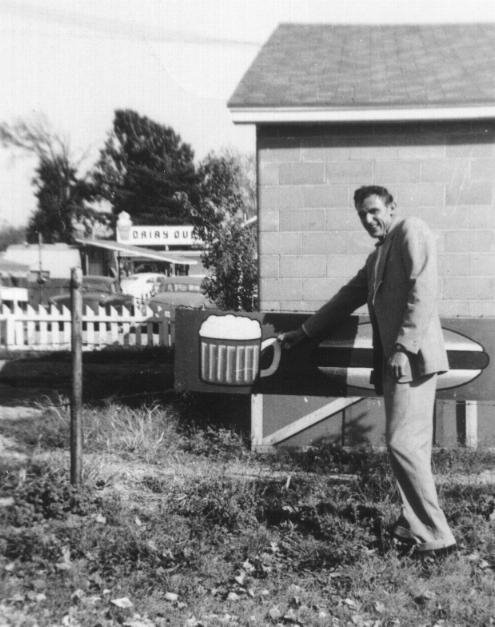
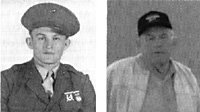
My father, who was born in 1925 and died in 2001, usually had a beer or maybe two (but unlike his son, seldom more) while reminiscing about his military service. During the last decade of his life, his favorite beer was Pilsner Urquell, and he liked it far more on draft than in the bottle. The photo above was taken circa 1952 -- when he wasn't drinking Pilsner Urquell. Oertel's 92, perhaps?

Roger G. Baylor joined the US Marine Corps in 1942 and put in two and a half years as a gun striker and shellman on the 5-inch guns aboard the battleship USS Washington in the Pacific Theater. He was called back to service during the Korean War, but remained stateside.

Not all threats to life and limb came from the enemy. During my father's time on the battleship, it collided with another American ship (ironically, the USS Indiana) and once rode out a major typhoon.

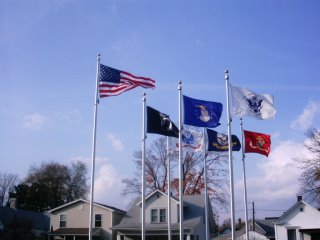
The photo below was taken earlier this week at the Veterans' Plaza on Market Street in New Albany. The memorial is being landscaped and upgraded by volunteers from the community.

The Curmudgeon encourages you to drink a toast to a veteran today. I'll be having a Pilsner Urquell after work.

Ideas, issues and brainstorming at MSPA's Small Area Plan kickoff.

Last evening at the Grand Convention Center, the Main Street Preservation Association hosted a kickoff evening designed to gather ideas and strategies toward a Small Area Plan for the Mansion Row Historic District.

Kirkwood Design Studio of Bloomington, Indiana, offered an informative presentation that might be briefly summarized as applying the lessons of New Urbanism to our unique locale -- taking inventory of what we have, knowing what has worked in other communities, and formulating a plan of action accordingly.

Diggin' in the Dirt's Ann Streckfus, an event organizer, will be returning often to these topics. Here's her first dispatch:

MSPA Still Gathering Info for Small Area Plan

MSPA was pleased at the turnout last night–53 people, including Mayor James Garner and Councilman Steve Price, were in attendance for the slide presentation by Marc Cornett of Kirkwood Design Studio, Bloomington, IN, with group discussion afterward.

As Ann notes, workshops are being held today and tomorrow. Read her article for "where and when" details.

Undoubtedly the biggest news to come out of last evening's meeting was the announcement of a renovation plan for the unoccupied M. Fine factory building, located on Main Street between 14th and 15th. The building's owner unveiled a $7.5 million makeover into a retirement home, with 58 "independent" units and 23 assisted living, and with the stated aim of retaining the original look of the building while unifying it under one architectural design.

Here's the Courier-Journal's report: Retirement home planned at factory, by Ben Zion Hershberg.

When the structure is remodeled, (its owner Jim) McCain said, "It will anchor the east end of Main Street."

Given the four bed and breakfasts currently operating on Main Street, the many historical structures already renewed, Al Goodman's work at the Moser Tannery complex, the approaching M. Fine project, attractive new condos under construction behind the floodwall off 6th, and Scribner Place finally underway on the west side of State Street, it's obvious that the Main Street corridor is primed for an explosion.

According to Marc of Kirkwood Design, absolutely central to any plan that seeks to maximize this coming explosion is traffic management: "Speeding is a traffic design issue, not a law enforcement issue," and "not just slowing traffic, but bringing it in."

In short, it is time for a massive, city-wide reconsideration of the way traffic moves in New Albany.

Marc discussed the importance of on-street parking as opposed to open parking lots, green areas, how new structures can be woven into the existing neighborhood fabric, encouraging pedestrians and walking, and repeatedly emphasized the importance of "third spaces" as a crucial tenet of New Urbanism.

The ideas and issues exchanged last evening were undeniably progressive and utterly fascinating, tying together various themes that already have been voiced, and providing valuable new information. Those of us who live outside the vicinity of Main Street's area plan have work of our own to do, as with the East Spring Street Neighborhood Association's interest in devising an area plan, and Develop New Albany's ongoing efforts in the historic business district.

The point is to integrate these areas of focus into a functional and vibrant whole.

As a postscript, here are two views of the revamped Veterans' Plaza on Market Street, as snapped three days ago. Much has been done since then to have the memorial ready for Veterans Day events. Read Chris Morris's Tribune article for insight into this cooperative community venture.


Replay: Package Store Veterans Day.

(First published in 2004)

My period of employment at the “old” Scoreboard Liquors in downtown New Albany lasted from 1982 to 1988. Scoreboard’s front door opened onto West Spring Street, facing the courthouse, and it was within spitting distance of numerous bankers, lawyers, title abstractors and others feeding at the government trough.

In the back part of the building was the famous Cadillac Lanes bowling alley, so named because in quaint times previous, the liquor store’s retail space in front was an automobile dealership. No one then or now knows why the store was named Scoreboard.

In figurative terms, to be taken “out behind the bowling alley” meant to be blindfolded, stood against the wall and shot. In retrospect, the phrase is tactless, but it certainly was used quite often, especially in conjunction with car salesmen from Coyle Chevrolet a few blocks away. I always wondered whether the Caddy people of old were as relentlessly obnoxious.

In the summer of 1988, I took a week off from my “real” job to help Jim and Ed move the store to a worse but cheaper former Night Owl food store location on the largely inaccessible corner of Spring and Beharell.

In fairness to the owners, business had declined at the old site owing to competition and changing tastes. The lease expired, the building was slated for demolition, and there were few good choices. I continued working evenings off and on until 1992, but it never was the same for me at the “new” store.

More than a decade and a half later, I think back to the downtown stalwarts who were older, and it occurs to me that many of them have died. Here are my memories of a few of them.

Gin Lady.
At first Gin Lady was of indeterminate age, maybe 50, probably closer to 60, but when it finally was determined that she walked to the liquor store from the bar-none, ugliest, Communist Bulgarian-designed senior citizen housing tower in the metro area -- two short blocks away -- she came to be at least in her seventies.

Originally she was known as Mother Gargle, from the “Born Loser” comic strip. As a typical day progressed and she’d visit for the second or even third time, her breath would grow increasingly foul, and her hair would become more and more frizzy. Eventually, by late afternoon, her hair would be standing straight up almost like an Afro.

Gin Lady wasn’t black.

In spite of any presumptions to the contrary, which we’d be reminded of each time she came into the store, the Seagram’s Gin was never for her; rather it was for her gentleman friend Charles, who’d be calling that particular morning, or afternoon, or evening, or all three.

Charles was never seen then or any other time, and neither has Gin Lady since the store changed locations in 1988.

Chemical Man.
Another regular customer was Carl, otherwise known as "Chemical Man” for the spectacular lack of nutrients in his bloodstream and our certainty that the only thing keeping him alive was formaldehyde.

If not raw preservative chemicals, then the processed variety sufficed: Kessler whiskey and Sterling beer … and keep ‘em coming. Early on, when I’d just started working at the store and hadn’t come to understand the subtle nuances of alcoholism, it struck me as senseless that Carl would visit the store three times a day for a half pint of Kessler.

Why not buy a liter first thing in the morning? After all, it was a far better price.

To this comment, Chemical Man sputtered indignantly that my college education had taught me absolutely nothing, because any fool knows that if you start the day with a big bottle, you’ll just go and drink it before lunch – and then what?

Later, in the waning days of the store’s tenure downtown, Chemical Man grew too weak to carry the daily case of Sterling to his house, which was no more than fifty yards from the store’s front door. I’d carry it over and put it on the porch for him.

A year or so later, I read Carl’s obituary in the newspaper. I’d have bet money that he was 70 or older, but he was only 59 at the time of his death in 1989.

Snake.
In later years, after Jim sold the liquor store and the new owner promptly closed it for good, Snake started coming by my pub to pick up the cardboard.

For two decades he kept a series of decrepit pick-ups alive long enough to run a regular route through New Albany, collecting cardboard and taking the stack to Riverside Recycling for a few bucks, which went into the jar and paid for season tickets to the Louisville Redbirds games at the Fairgrounds.

Beginning in the late 1980’s, I prepared Snake’s taxes every year - not that I know much about the tax code, but he and his wife (who worked at the New Albany Box and Basket factory until it closed in 1998) didn’t make much money, so it wasn’t really hard when the numbers weren’t that big. He always wanted to pay me, and I never let him, because I considered myself fortunate for having made his acquaintance.

Admittedly, there always was a thinly veiled bitterness to the testimony offered by Snake, although he generally kept it down beneath a cheery façade. His nickname came from a tattoo on his right arm, the one that ended just below the elbow, that part removed by a small town Eastern Kentucky doctor after a hunting accident in early youth, when Snake was just plain Curtis.

Snake’s life was never really easy, but it could have been worse. In a time preceding consideration for the disabled, he worked hard as a bartender, and drank just as hard until swearing off the bottle in the early 1960’s. He didn’t drink again for the rest of his life.

For a number of years he bartended for a fellow named Smitty, until Smitty died. Snake’s tenure at another hole in the wall tavern down the street ended after a dispute with the late owner’s woebegone son. He turned to cardboard full time, and occasionally filled a shift at the liquor store when it was downtown.

Years later, in 2001, Snake’s last truck died for the last time, and since those unmentionables at Riverside weren’t paying squat, anyway, it was time to get out of cardboard. He’d already gotten out of baseball, having decided that ballgames were too expensive and the team’s management too arrogant.

In February of 2003, Snake stopped by to pick up his wife’s taxes. She’d found another job and simply didn’t want to quit working. It was the last time I saw him, for he died later that year on the day before my birthday.

The timing of Snake’s death meant that he was unable to make good on a final, cherished wish, something he’d been talking about for years. In no uncertain terms, Snake hated New Albany’s newspaper, the Tribune, but grudgingly continued subscribing to it because his wife insisted.

“When she dies, you know what I’m going to do first thing? Nah, I’m not calling the doctor, and I’m not calling the hospital, and I’m not calling the relatives. I’m gonna call the Tribune and cancel that god-damned newspaper for good!”

Duck.
Like Snake, Duck had a bum arm, shriveled at birth and only barely functional, and also like Snake, he bartended and did odd jobs. Eventually he landed as the manager of Scoreboard Liquors, working for the people who owned it before Jim and Ed, neither of whom had any idea how to run their purchase, so Duck stayed on. When moving time approached in 1988, Duck announced that he was retiring to Florida. I’ve not seen him since.

Those seeking a dictionary definition of “crusty curmudgeon with a heart of gold” would find Duck’s (birth name, Lloyd’s) photograph. He could be masterfully dry with the drunks, who of course never knew he was toying with them, and just as quickly be spotted committing an act of kindness that he definitely did not want to be reported to the outside world.

An evening at home with six to twelve Schaefer beers might result in Duck becoming “blow’d completely out of my mind.” Requests for the time of day might be greeted by “am I a clock?” or a disgusted glance at a far-off horizon, silence, and a left-hand index finger pointing at the clock on the wall.

One time the front door opened and a well-dressed stranger entered. He looked at Duck and asked: “Is it okay if I go in the back room and change my pants?” Duck responded with vigorous one-armed threats and loud obscenities, and the man retreated headlong onto the sidewalk.

I would have suggested he go out behind the bowling alley.

2005 Postscript.

Jim Creech, the owner of Scoreboard Liquors during my tenure there, was only 55 years old at the time of his death earlier this year.

Back in the day, he had a daytime sales job and did very well, and the liquor store was supposed to be some means of tax modification with a few bucks on the side, but it seemed to function more often as Jim’s personal playpen.

Jim wasn’t a management guru, and didn’t pretend to be. He failed to keep close enough tabs on some of the people he trusted, but what the hell; it’s more fun to be one of the lads, mischievous, unrepentant and engagingly adolescent, and safe in the knowledge that whatever’s gone wrong today almost certainly will be forgotten in a few years’ time … if not tomorrow.

I don’t know for sure, but perhaps Jim always knew that he would be one of those people who’d have to live quite a lot in far too short a time.

Around the age of 40, he began grappling with painful kidney ailments that eventually led to a nick-of-time transplant, and afterward he slowly recovered the ebullient zest for life that was his defining feature.

Although I hadn’t seen him for a couple of years before his death, there’s no doubt in my mind that he exited on terms strictly his own.

Thursday, November 10, 2005

Books, a bogus Texan drug sting, and New Albany's human rights obligation.

Reading the New York Times Book Review is a weekly ritual, but one not usually practiced on the Sunday of publication.

Each Monday or Tuesday, my dear and gracious friend Jerry passes his Sunday copy of the NYT to me, and so my chance to peruse the book section comes a few days late.

No matter; it's well worth the wait. Typically I'll make a tall double espresso, load the disc changer with music, and devour the reader's guide.

The following review from October 30, 2005, is reprinted in its entirety. In deciding to offer this piece for your consideration, I am attempting nothing in the way of oblique commentary.

There are no guffaws in the general direction of Texas ... no veiled insinuations about the performance of the local constabulary there and in other small American cities ... no effort to tie this story line in with any local event, personage, agency or political entity.

It's just seems to me that with Veteran's Day being observed on Friday, when at least some portion of the American public will pause momentarily to consider what the holiday means, it is worth reflecting on the status of human rights here, where we live -- not in Iraq, Myanmar or Cuba, but right here in the United States -- and frequent protests to the contrary, to ponder how we've yet to entirely achieve human rights in our own backyard.

But yes, I admit to having an ulterior motive -- a vested interest -- in providing this text. Currently there are people working behind the scenes to revive the concept of a human rights commission in the city of New Albany. I'm hoping that in 2006, this vitally important component of a truly progressive community comes back to life. We need it.

----------------------------

'Tulia': The Case of the Lone Star Witness, a book written by Nate Blakeslee, and reviewed by Sara Mosle.

Tulia, Tex., doesn't quite have the ring of Jasper - the East Texas town where a black man was dragged to his death in 1998 - but from 2000 to 2003, this dying cow and farming town in the Texas panhandle became increasingly notorious for a bogus drug sting that unjustly sent a good portion of the town's blacks to prison. The media glare didn't prompt a lot of soul-searching in white, official Tulia. (The Chamber of Commerce put out a bumper sticker, "Hallelujah, I'm from Tulia.") If anything, such scrutiny added to an aggrieved sense of being misunderstood by the rest of the country. Elsewhere, those inclined to think the worst of Texas did.

But if official Tulia had anyone to blame for its harsh spotlight, it wasn't a carpetbagging journalist. A native Texan, Nate Blakeslee, broke the story for the scrappy Texas Observer, and without his 8,000-word investigative piece, much of the rest of the national news coverage might never have followed or the convicted been exonerated.

"Tulia," Blakeslee's expansion of that coverage, is a devastating critique of Texas' judicial system and the nation's drug laws. But it is foremost a riveting legal thriller about the inspirational men and women - including those in and around Tulia - who refused to let the injustice stand. Atticus Finch, after all, was from a small Southern town, too. And "Tulia," in Blakeslee's rich and deeply satisfying telling, resembles nothing so much as a modern-day "To Kill a Mockingbird" - or would, that is, if the novel were a true story and Atticus had won.

In the predawn hours of July 23, 1999, local police and state troopers, overdressed in SWAT-team regalia, roused 47 men and women from their homes in Tulia, hauled them (half dressed, their hair still uncombed) before news cameras, and charged them with dealing drugs. "They're arresting all the black folks!" a friend cried to her neighbor. It was no exaggeration. The number of black defendants - 38 - represented 20 percent of the town's tiny black population, not including children.

The arrests were based on the inconsistent testimony of a single undercover officer, Tom Coleman, whom previous employers had described as having "possible mental problems" and who had been arrested, even as the sting was under way, for stealing at his prior job. Coleman could provide no corroborating evidence of his drug purchases - no video or voice recordings or other officers as witnesses. And there were other puzzlements: most of the indictments were for distributing a single "eight ball" (about a thimbleful) of powdered cocaine, a drug more likely to turn up among Dallas investment bankers than in a poor, black community where slopping hogs was a major industry and drug users, such as there were, stuck to cheaper marijuana or crack. None of this seemed to trouble Terry McEachern, the district attorney, who pursued the prosecutions with ruthless zeal, seeking and getting staggeringly long sentences - 20, 45, 90 years - even for defendants with no prior records.

Most of the accused couldn't afford lawyers - or even bail. Some were so obviously innocent - a bank record put Tonya White in another state at the time of the alleged buy - even the hard-core McEachern reluctantly dropped their indictments. Others, like Freddie Brookins Jr., came from solid striving families that had never had any entanglements with the law. A few, like Donnie Smith, were known drug users - but still claimed they hadn't done what Coleman said. Blakeslee never sugarcoats such differences, but deftly shows how differently the courts in Tulia treated defendants depending on their race and class. The repeated drug offenses and burglary charges of a white relative of a county judge, for example, resulted in dismissal, offers of rehab and probation; Kareem White, a youthful, one-time offender in the Tulia bust, got 60 years - even after it became clear Coleman probably fabricated the sting, which was destroying entire families. White was the third of Mattie White's six children given long prison terms as a consequence of the investigation.

In time, the Tulia travesty attracted the attention of Vanita Gupta, a young and otherworldly Indian lawyer with the NAACP Legal Defense Fund in New York, who, with quiet resolve, called in the heavy legal guns. But no one might have heard of Tulia, not even Blakeslee, were it not for a diverse group of local lawyers and rabble-rousers, as colorful as they are unlikely, who took up the cause early on. Blakeslee gives them their just and entertaining due.

There's Gary Gardner, a 300-pound bankrupt farmer, who makes a uniform of overalls and a straw hat and likes to play up his redneck persona by liberally sprinkling his conversation with racial epithets, much to the consternation of the NAACP defense fund crowd. Armed with Black's Law Dictionary and quotations from Mark Twain, he becomes a formidable force for the defense. There's Paul Holloway, who began his career as a corporate lawyer in Houston. Despite the miserly compensation Texas offers for taking on indigent cases, Holloway mounts a furious defense of his clients, uncovering damaging facts about Coleman that become the basis for the later appeals. Jeff Blackburn is the one local lawyer who makes it onto Gupta's eventual team. A self-described leftist intellectual who has posters of Mother Jones and A. Philip Randolph on his wall, he can't imagine living anywhere but Amarillo, Tex., where, Blakeslee writes, "people smoked when they felt like it and ate red meat for lunch and dinner - and sometimes for breakfast, too." Whoever said Texas was uncomplicated?

With equal nuance and sympathy, Blakeslee analyzes the underlying attitudes that prepared so many white Tulians to believe, against all probability, that a major drug ring was operating in their midst. Blakeslee has a masterly grasp of the region's history, from the impact of United States agricultural policies to postwar politics. And he is brilliant on the gossip and petty rivalries that drive agendas in any small town. At one point, a letter Gardner has written to the local newspaper - and which the editor has refused to print - gets slipped into type by a staff member who has a grudge against the boss. The letter provokes the judge into a crucial gaffe on which Gupta's legal strategy depends.

Blakeslee also manages to dissect the disastrous inefficacy of the nation's drug war without ever slowing the pace of his page turner. He shows how draconian drug laws devised with big cities in mind can fall most heavily on poor rural blacks. Many of the Tulia defendants, for example, were subject to what's known as "enhancements" for selling drugs near a park or school. But Tulia is so small - barely one square mile - that fully half of the town falls into one or another of these "drug-free zones." As a result, even first-time drug offenders faced sentences of up to 99 years. Many were leaving small children behind them.

When the cavalry finally arrives at the courthouse, it does so in a string of black S.U.V.'s. "The attorneys," Blakeslee writes, "marched up the steps, grim-faced in their dark suits and sunglasses . . . like TV-drama F.B.I. agents, coming to investigate crop circles." They order meatless fajitas at the local diner. They FedEx a box of pens, legal pads and papers clips to themselves, as if Tulia were not only the land of no justice, but "no office supply stores." They also - admirably, marvelously - get the job done, but not before more riveting plot twists than in a Grisham or Turow novel.

"The attention of the nation was focused on this little panhandle courthouse," Blakeslee writes, "but where are the local folks?" In one of the more depressing aspects of this otherwise surprisingly upbeat story, they don't show up. The truth outs - but those most needing to hear it won't.

Sara Mosle is writing a book about the London school explosion, which killed hundreds of children in the East Texas oil field in 1937.

What is an issue?

Shirley, you continue to puzzle me by using the term Baylorite. The suffix –ite used in this context denotes a "follower or adherent of," and while I have no designs toward leading a movement except the one for better beer, I suppose the word may be accurate and useful if serving as an antonym of Luddite in the local socio-economic context. I'm flattered, I suppose.

Earlier today, you wrote:

“You people seem to be spoiling for a fight. That means that you cannot focus on the issues because you know you don't have a leg to stand on. I'm sure someone will come back and call me crazy, go ahead, take your best shot. You still can't stick to the issues.”

Shirley, it’s not about craziness, taking shots or being mad as hell. It’s about saying what you mean, and meaning what you say, and playing this discourse game “by the rules.”

Accordingly, I’m curious what you really mean by the statement, “You still can’t stick to the issues.” This is a constant refrain at SOLNA, and I just don't get it.

Since October 15, here is a brief sampling of the topics broached by NA Confidential (in no particular order).

Human rights commission needed in New Albany
Privatization vs. government services (sanitation department)
Wal-Mart: The High Cost of Low Price
Reform vs. business as usual in local party politics, i.e., October gatherings)
Downtown redevelopment (historical building tour)
Police take-home car and gasoline
The Ohio River Greenway and K & I bridge
Zoning issues (case of Dr. Nassim)
Storm water drainage debate
City council meetings
Cultural issues – history, beer, restaurants, music, books, trends.
Growth of the Charlestown Road exurb
Christian extremism (IUS campus dispute)
Regulation of smoking in public places
Tribune editorial overhaul

Exactly what are these topics if not “issues”?

The preceding issues were included in 62 original posts over a period of a little more than three weeks. Page views for the same period are in the thousands. NAC's weekday readership is approaching 300 visitors each day (fewer on weekends), and as a rough guesstimate, 25 to 30 registered readers, and maybe more, have been involved in discussions during the past month.

Do you really think that a mere dozen people could account for all this, and still retain jobs and families?

Furthermore, taking into consideration Volunteer Hoosier, NA Health, Diggin’ in the Dirt and New Albany Today, just to name four local, topical blogs, you might add another 15 timely subjects and issues to the ones already mentioned above.

Read the discussions and comments on these blogs. There are disagreements aplenty, but the discussions are invariably pleasant and well mannered, like ones you'd expect to find in good neighborhoods where adults know each other and play … behave ... by the rules of civilized discourse.

Shirley, what are we supposed to conclude from all this? How does any of this this show an unwillingness to discuss issues? Or is it that NA Confidential is somehow breaking faith by its refusal to acknowledge the veracity of the sole issue discussed on SOLNA on a daily basis?

As I've pointed out dozens of times before, NAC is open to all who wish to discuss the diverse multiplicity of issues that pertain to life in New Albany. I ask only that the participants be known, because anonymity consistently provides for animosity. You will not be censored here if you play by this most fundamental of rules. Thanks.

NABC to join breweries nationwide in celebrating Ben's 300th with Poor Richard’s Ale.

(Cross-posted at Potable Curmudgeon)

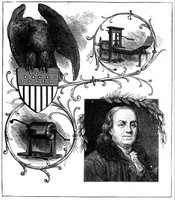
It wasn’t enough that Benjamin Franklin was a writer, inventor, businessman, statesman, patriot and all-purpose wit.

The Colonial-era legend somehow found time to drink beer, too.

In his writings, Franklin refers to the consumption of ale and denotes various types of the fermented beverage, concluding that it was a healthy drink if consumed in moderation – an observation with which modern medical science concurs.

Even a teetotaler might be curious as to what these ales of old were like and how they were brewed, but unfortunately, substantive information is scant.

When the Benjamin Franklin Tercentenary, a non-profit group formed to organize the celebration for Franklin’s 300th birthday on January 17, 2006, began looking for an answer to this question, they found it by teaming with the Brewers Association, which commissioned a competition among professional brewers to formulate a Poor Richard’s Ale.

Tony Simmons of Brick Oven Brewing produced the winning recipe, chosen by a panel of experts at the 2005 Great American Beer Festival. According to Simmons, his act of historical recreation was determined by the following factors:

Style ... Based on Franklin’s own writings, other period references and records of available raw materials, it is likely that he often drank tankards of a libation similar to Old Ale (England) or Strong Scotch Ale (Scotland).

Malt … “Low” (pale malt, similar to today’s Maris Otter or English floor malt) and “High” (darker malt, perhaps approximating a combination of what we now call Biscuit, Special Roast and Black) malts probably were used.

Adjuncts … During the Colonial era, imported malt was expensive and local barley crops were unpredictable, so the use of cracked maize and molasses in brewing was common.

Hops … Hop production in America did not begin in earnest until after Franklin’s passing, making it likely that traditional East Kent Goldings imported from England were the hops of choice.

Yeast … Not until the mid-19th century did modern scientific techniques unravel the mysteries of yeast, so it’s impossible to know very much about 18th-century yeast management. Simmons suggests that contemporary English or Scottish strains of yeast (low to moderate attenuation) will suffice to replicate Colonial fermentations.

The Brewers Association is asking member breweries nationwide to join in the celebration of Benjamin Franklin’s 300th birthday by brewing a special batch of Poor Richard’s Ale and having it ready for serving on January 17, 2006.

Locally, the New Albanian Brewing Company is happy to participate in the Poor Richard’s Ale promotion, and will be brewing our contribution to the coast-to-coast party in late December.

Furthermore, NABC believes it might be even more fun if our homebrewing friends and patrons from FOSSILS and LAGERS use the recipe parameters provided by Tony Simmons and brew their own batches of Poor Richard’s Ale, which we all could sample alongside our NABC commercial version on Benjamin Franklin’s 300th birthday.

What do you think, homebrewers?

Wednesday, November 09, 2005

Religious group stirs debate at Indiana University Southeast.

The following was written by guest reporter Tim Deatrick.

What started out as a serene, almost summer-like day on the Indiana University Southeast campus turned into a mid-afternoon conflict pitting the controversial Old Past Path Baptist Church of Campbellsburg, Indiana against approximately one hundred university students at the university clock tower, an area that according to university police is considered a free speech zone.

The demonstrators from the church, which included several women and children, engaged students in shouting matches and according to one eyewitness, Student Government Assocation Senator and graduate student Winston Wilson, a near fight that required university police to separate the student and demonstrator.

“You could see that it was escalating,” Wilson said. “The IUS police had to push the student back. I will give the police credit; they stepped in and stopped what could have become a bad situation.”

According to the recently hired IUS Police Chief, Jason Goodrich, the church group was allowed on campus due to a policy established by Indiana University that designates a free speech zone in recognition of first amendment rights.

“They don’t need a demonstration permit because of official IU policy that establishes the free speech zone,” Goodrich explained. “ If the students would just ignore them they would more than likely leave because they are trying to incite them and get them upset.”

The church group, with its conflict tactics and inflammatory signs, has a record of arrests but according to its pastor, John Lewis, the group has learned from its past mistakes and does not apologize for its tactics.

“We used to get arrested but we have learned how to not get arrested anymore,” he said. “We are here to preach the gospel and according to the Apostle Paul, the truth is confrontational.”

Some IUS students didn’t see it Lewis’s way. Sadie Scott, an IUS sophomore, said the group offended her. “These people are a horrible witness for Christ,” she said. Taylor Eversold agreed. “I'm ashamed that IUS kids who don’t believe in God have to see this.”

The campus Christian Student Fellowship neither approves of Lewis's group nor agrees with the group's tactics, according to president Rebecca Howie and campus minister Tim Elliott.

“We do not approve of what they did,” Howie said. “They are saying that God hates and that isn’t true.”

Elliott concurred. “We don’t like it when they come here,” he explained. “We have no affiliation with them whatsoever and we have to spend weeks cleaning up the mess they leave after they come here. The Christian Student fellowship students invest their time here and really care about this community, (and) this group -- if they really cared about spreading the word of God, would spend more than an hour here for a shouting match and preaching hate.”

Attempts to reach Vice Chancellor for Student Affairs Ruth Garvey Nix, who was present during the demonstration, were unsuccessful, but Vice Chancellor for Administrative Affairs, Stephen Taksar, stated that the university had no comment.

Verily, sunlight is the very best disinfectant of all.

Consequently, the link to the Speak Out Loud NA blog has been restored, and now it precedes the link to the satire entitled Speak Out, Lout (NA).

Parents, be forewarned: While SOLNA serves as a sadly necessary reference for those exploring the origins of malice, the sheer acrimony on regular display there alarmingly testifies to the ubiquity of the worst angels of our nature as human beings. It isn't pretty. Please monitor your child's web surfing accordingly.

We return to Sunday's NA police take-home car and gasoline discussion.

Owing to the typical ebb and flow of the blog format, worthy comments by readers often are too quickly buried in the archive as new postings and new conversations take place above them. Every so often it's good to revive the thread in the marquee slot so as to bring such comments to your attention.

Acknowledging this, we’d like to return to the Sunday discussion that began with a Saturday letter to the Tribune by police officer Todd Bailey, which you can read here in its entirety. Officer Bailey provided a policeman’s point of view as to the ongoing politicization of take-home cars and the department’s gasoline usage -- and he pointed a finger in the direction of those public officials responsible for demagoguery on these issues.

On Sunday, NA Confidential considered the predictable reaction to Officer Bailey’s letter, as voiced by the frequently anonymous graffiti artists on another local rant blog.

Running out of (t)issues? Increasingly crazed "little people" turn to cop bashing for thrills.

To refresh your memory, here’s a brief sampling of the odious opprobrium heaped on Officer Bailey’s well-meaning effort to explain the situation:

How can Police Officer Bailey be allowed to write such letters to the Tribune when he is not a resident of the City of New Albany and does not pay any of the City of New Albany property taxes that we pay? ... can someone then explain why they are using the City Police cars in their "off" hours for traffic control, or private Security jobs? Oh, that's right, they need to do a little moonlighting to make some extra money. Lord knows we don't pay them enough (highest paid in the State … The figures I am hearing about this issue staggers me. I'm hearing almost 1/2, 32 or 33 officers live outside this city. How does that help our safety?…I really shouldn't come down on the officers themselves, as they are only doing what any of us would do ... I'm sure all of us would take advantage of opportunities to bring more money home, and to move ourselves up the economic ladder.

To be sure, it’s the same irresponsible troglobyte karoake sung by the city’s masked thought vandals, but readers may have missed the following rejoinder, which was posted on Monday. It’s definitely worth today’s opening marquee slot.

At 10:05 AM, Concerned for Cops said...

New Albany Police Officers are NOT the highest paid in Indiana. Thanks to the great Mayor Overton, they were in the top 3, but are quickly now off the top 10 list and continue to slid fast. The top 3 rating wasn't salary either, it was a total package of benefits. And don't forget, they pay taxes too. So in part they pay part of their own salary, do you?

The take home cars were a bonus to the public to assist stranded motorists, assist on duty officers that had no back up, stop serious traffic violators, and be a deterrent to others. Plus SWAT members, detectives, and other officers that could be called in for an emergency have a car ready to go with all their equipment in it ready for a quick response. No take home cars, no quick response to anything.

Of course now, the citizens have lost all those bonuses except that an officer has a car to respond to a call in. Officers can not drive their cars off duty at all. Only to and from work. They are required to purchase fuel from their own pockets to put into the cars. They purchase lots of their own equipment that is not supplied by the city and put in their own cars.

You can take the cars away, and I seriously doubt if more than a handful of officers would really complain. But if you are one of those citizens out there that had an off duty officer stop to help you or stop to help you on the way to and from work, do you really want that to be gone? They can't stop in their personal cars. The choice is yours, think carefully though once it's gone it will probably never be brought back.

One other thought. If you have 10 line cars that run 24 hrs a day, and the officers using those cars run them hard. Don't care how rough they are on it, it's the next shifts problem, but with take home cars, officers wash and clean their own cars, take pride in their car by keeping it maintained and drive them much differently than a line car. Do you drive rental cars as carefully as you do your own? It is actually cheaper to have 70 maintained vehicles that last 5-10 years than to replace 10-15 cars every year in addition to heavy repair costs.

Now on the off duty jobs. Due to the concern with the cars over the past few years and gas, ALL cars used for off duty are required to have fuel and car usage fees paid for by whom they are working for.

Take Northside Christian Church for example. There are 7 off duty officers that work there every Sunday. The officers are paid by the church, NOT the city. The fuel and car usage is paid for by the church NOT the city.

Charlestown Road flowing as much as possible is the primary objective. There are around 7,000 plus cars going through a quarter mile stretch of road in one hour. The lights are all placed on flash to keep traffic flowing. Traffic is NOT stopped completely just to let all the church traffic out and then the officers jump in their cars and leave. They are there to make traffic flow faster, and safer. It would take traffic hours to drain out without them not to mention possible grid lock due to numerous accidents. Tell the church to not use them on just one Sunday and see if it's better and what happens. Oh, and by the way, the city gets directly paid by check each month by the church for the fuel and car usage of all the cars used, and it's at least $50 per car. Think they really use $50 in gas per car per hour?

I think no one has a complaint about that.

Tuesday, November 08, 2005

Jeff's city council nudges ever closer to the "smoking ban" precipice.

Just down the information superhighway at NA Health, the resident Healthblogger is right on top of last evening’s Jeffersonville City Council four-to-three vote in favor of a smoking “ban,” with a third and final reading yet to come.

Jeff votes to uphold smoking ban.
This guarantees cynics like me another two glorious weeks of escalating controversy, fear and loathing, and uproarious entertainment. As Healthblogger sensibly notes, imagining a similar scene in New Albany’s city council chamber is almost unimaginably juicy.

Pages from a tiny storybook, Chapter 67.


"It's just not fair," wailed Little Miss People. "Those good old boys keep beatin' up on me! Make 'em stop!"

"I wanna audit!"

"There there, honey," replied Auntie $$$$$$, "you may be feeling all sickly and Eastdistended, but you know what? Big girls don't cry, even when they slam violently headfirst into a glass wall of their own limitations ... but wait, look up there -- why, it's the Great G.O.P. Golf Cart in the Sky, and it's coming to rescue us from those nasty Young Democrats!"

"It's about time," sniffed Little Miss People. "I need help to censor those uppity Baylorites!"

"Well, tadpole, just don't forget people like me, who've devoted our lives to tireless research, and filling those matchboxes with conspiratorial gibberish so your generation can remain mired in backwardness," cooed Auntie $$$$$$.

"Look, here she comes ... nice pantsuit!"

Just like the 3rd District misses being represented.

Some things never change, so during a city council meeting that lasted only thirty (30) minutes from opening to closing gavels, the eternally mellifluous Councilman Cappuccino spoke too many words and said far too little, but of course nothing can compare to the malapropian twang of the 3rd District's Uncouncilman Price, who described the insurance plan of city employees as "pretty daggone good," and added that he "misses it," giggling spacily while the sparse crowd counted ceiling tiles and remembered lost episodes of Andy Griffith prior to Price's unfathomable abstention ("because it's the first reading.")

Other than a mercifully brief snippet of Luddite karaoke about audits and the comically ominous presence of former kingpin Doug "Cardinal Richelieu" England's own personal Sancho Panza, that's about it, proving that without a divisive issue for predetermined grandstanding, this council actually is able to conduct semi-professional meetings and accomplish limited aims.