Friday, August 17, 2012

From Yonkers to Falling Run.


Our watercourse is uncovered, for the most part, and entirely neglected.

Restored River a Boon to Yonkers, by Elsa Brenner (New York Times)

IN large part as a result of the ongoing city-and-state-funded effort to “daylight” the Saw Mill River, developers in Yonkers have been able to forge ahead on various real estate projects relatively unaffected by the economic malaise thwarting new construction elsewhere.

A two-block section of the Saw Mill, a tributary of the Hudson River buried under concrete for nearly a century, has now been uncovered and surrounded by benches in a parklike setting. When the next two phases of the $48 million daylighting project are completed in about three years, the river will meander through a six-block-long section of downtown Yonkers for all to behold.

Are we moving in? Are we moving out? Who are "we," anyway?

 In the New York Times, Fred Siegel reviews a book by Alan Ehrenhalt. Will inner cities in America revert to Vienna, even as the exurbs are transformed into Kolkata? Are these shifts significant or exaggerated? And, why isn't there a Wal-Mart inside the El?  

Trading Places: ‘The Great Inversion and the Future of the American City’

... The title of his book refers to both the growth of downtown living in once forbidding neighborhoods and, contrary to expectations, the movement of immigrants into the suburbs.

Insider Louisville's Kaufman tills similar ground, and deftly inserts a Kansas song lyric snippet along the way. See if you can find it.

Steve Kaufman: Brookings Institute finds people are fleeing the suburbs for the cities, but what about Louisville?

... The report’s opening graph: “Last year, for the first time in more than nine decades, the major cities of the nation’s largest metropolitan areas grew faster than their combined suburbs.”

Is Louisville part of this trend?

Is the inner core throbbing with new residents while the outer ring of suburbs loses its allure?

There are three answers: Yes. No. And Maybe.

Lanzmann, Shoah, and a persistence of memory.

I'm surprised to learn that Claude Lanzmann is still with us, but he is, at the ripe age of 87. The English translation of his 2009 autobiography has been published.

The Witness: ‘The Patagonian Hare,’ by Claude Lanzmann, reviewed by Paul Berman (New York Times)

The Israeli Ministry of Foreign Affairs approached Claude Lanzmann in 1973 and suggested that, with Israel’s backing, he make a documentary film about the murder of the European Jews.

When I'm asked to reveal my "favorite" film, it's always difficult for me to answer. Do documentaries count? If so, how can a work as grueling as Shoah be considered as "favored" in the intended context of pleasurable entertainment?

Ask me the most "influential" film of my life, and the answer is easier.

In retrospect, my initial viewing of Shoah in 1988 was the culmination of my free-lance, post-graduate education. I was the cliched sponge, voraciously soaking up books and documentaries about European history, culture and any related matters in an effort to achieve greater understanding during periods of continental travel. Lanzmann's relentless imagery has been with me ever since.

Living memories then are academic memories now, making remembrance in whatever form even more imperative. I wrote about it in 2006, and the entire essay is reprinted here.

------------------------------

Shoah, again.

This weekend, the Confidential household probably will begin watching the DVD release of director Claude Lanzmann’s 1985 documentary film Shoah, an oral history of the Holocaust that runs almost ten hours and demands an effort on the part of the viewer that goes somewhat beyond that required to indulge the pablum of the typical Hollywood blockbuster.

I’ve not seen Shoah in its entirety since the early spring of 1988, a year or more after videotaping it from public television. Then, for a solid ten days, I set the alarm an hour early each morning and made my way through the film in bits, pieces and chunks before heading off to work.

While not particularly enjoyable in the conventional sense of entertainment, the Shoah documentary experience proved visceral as well as essential for my understanding of the Holocaust in the context of European countries I’d already been, and other places that were slated for future visits.

I’ve discussed Shoah with Mrs. Confidential on several occasions, and with the videotape long gone (Joe?), she took the initiative to check the appropriate Netflix boxes and kick off the process. It may take a couple of weeks, but surely after all these years it will be worth the effort to view the film a second time.

Shoah is an unconventional, brutally effective documentary that depicts and describes historical events without the use of archival footage or reenactments.

During the 1970’s, Lanzmann began filming real people – Jewish survivors, serenely acquiescent Poles and even (surreptitiously) an unrepentant SS officer – all of whom had lived through cataclysmic and unspeakably horrible events that primarily took place in areas of dense pre-war Jewish population, which during the Nazi occupation became dotted with planned centers of systematic slaughter.

These memories and recollections were filmed in a dozen or more then-Communist locales in Poland and Eastern Europe, with occasional side excursions to Israel, Germany and elsewhere in the world in conformity with the post-war diaspora of victims (and perpetrators), then organized into stories woven together with consummate skill as the hours pass, leading to an emotional crescendo guaranteed to leave the viewer both drained and fearing for the future of humanity.

It’s true that we manage somehow to survive. It’s unclear how we manage to do it.

At the time Shoah was released, its director was fiercely criticized for including footage that unflinchingly exposed lingering anti-Semite tendencies on the part of ethnic Poles, this coming at a time when Poland – through the activities of the Solidarity trade union movement and a sitting Pope – was being lionized by anti-Communists throughout the world as the best extant hope to commence the toppling of the Bloc’s socialist dominoes.

I’d studied the Holocaust in college and devoured Abba Eban’s Heritage: Civilization and the Jews PBS series. As a philosophy major, debates pertaining to the ethical culpability of ordinary Germans in atrocities committed during the war were certainly familiar to me – but when I watched Shoah in early 1988, it had been only a few months since my first trip through Poland.

This fact made for uncomfortable mornings in front of the tube.

----

In 1987, I was in Krakow, Poland with my friend Barrie (who’s now a Scribner Middle School history teacher) and two fellow travelers from Florida. We’d taken an unscheduled detour from the Soviet/Baltic/Poland youth and student package tour by hopping a Friday night train from Warsaw, an experience that taught us the dubious (and embarrassing) value of handing the conductor $5 cash and watching him evict people from their seats to make room for us.

We rationalized: It was the system to blame.

On a Saturday morning, after overnighting in Krakow for $2 each in a pensioner’s shabby flat, we rustled a few grams of greasy salami and bread, then found the dingy bus station in the city’s crumbling and neglected downtown, and joined several dozen Polish weekend trippers on a bumpy, grinding, two-hour SRO journey to Oswiecim – in German, Auschwitz. There were no English speakers around to help, but we managed to guess the correct stop near the entrance to the museum and memorial.

Once there, we paid a fee and wordlessly passed through the numbing exhibits inside the old brick barracks buildings of Auschwitz 1, a strangely bureaucratic and tidy introduction to the supreme horror a few hundred meters away at Birkenau, the epicenter of the assembly line death camp. You’ve probably read or heard about the rooms filled with abandoned luggage, eye glasses, artificial limbs, shoes, children’s toys – all confiscated from prospective victims as they were paraded off cattle cars to perish within the gates that read, “Arbeit Macht Frei” … or, work will make you free.

Intense? Chilling? Insane? Yes, and so much worse than these and any other inadequate words that we have little choice except to pretend might encapsulate some measure of the emotion felt at a crime site with a scale of aspiration well beyond the imagination of a twenty-something Hoosier bumpkin.

After two hours, we’d had enough. To get back to Krakow – and return to Warsaw later that evening – necessitated a short walk into the center of Oswiecim, where we boarded a train that ran roughly half the distance back to the city before abruptly disgorging us to change at a rural crossing point.

The day had become hot and sultry, and activity at the station was minimal. There was a simple buffet offering plates of mystery meat in gray sauce, but we weren’t so much hungry as thirsty – not just thirsty, but fairly desperate for an adult beverage or three to ease the transition from wartime Auschwitz back to shabby 1980’s-vintage Poland.

Pivo? Wodka?

Alas, there was no succor for the bibulous at the train station. Resigned to temperance, and waiting at the platform, there were green fields and crops visible in the distance beyond the tracks. Clean but roughly dressed people were walking in little groups toward the settlement – surely even in a Polish farm town there’d be something happening on Saturday night – and just before the train finally limped in, a horse-drawn cart clattered across the weathered cobblestones nearby.

I’d been looking at the older folks among the crowd. With memories of Auschwitz still raw, It’s obvious what I was thinking … and I kept those thoughts to myself.

Later, watching Shoah, the parched rail platform reverie and the native Poles populating it came back to me with a vengeance, and they wouldn’t let go throughout the remainder of the film over that period of days as Lanzmann meticulously peeled away the dusty layers of memory and forced the viewer to think: What did it all mean?

This is by no means a denunciation of Poland and the Poles, or an attempt at facile erudition with respect to their places in the historical record, only an observation that there are times when very little makes sense, especially when one’s own senses are being burdened with the unsettling melancholy of time.

Or, of time passed.

It has been thirty years since Lanzmann’s film went into production, and certainly all survivors he chronicled are dead. The people I saw in Poland in 1987 are twenty years older, and many of them have passed on, too. While I am reasonably confident that the readers of this blog need not be reminded of what the Holocaust meant, to be honest, I’m not so sure when I look out the window of my office toward the rental properties lining the other side of the street – or toward the streets in parts of Europe where anti-Semitism persists in spite of what happened there more than a half-century before.

Nature or nurture – or both? We’re classified as human by biological default at birth, but mustn’t we learn how to be human? If no one is there to teach us what it means to be human, or shirks the responsibility, aren’t we condemned to repeating these instances of man's inhumanity to man?

I'm told that a new translation of Elie Wiesel’s Night is back on the paperback bestseller list. I sincerely hope that’s a good omen.

George W. "Gitmo" Bush might even read it.

Kentucky State Fair wants pedestrians to be injured the old-fashioned way, by cars and themselves.

A long year passes, and very little changes at the Kentucky State Fair. My August 20, 2011 posting dealt with the mayhem following a Friday night with two big fair concerts dispersing thousands into the fetid nighttime air.

It is difficult to imagine bicycles making Kentucky State Fair transport any less organized.

... Naturally, the mob veered left, entirely undirected by fair employees who weren't willing to leave the air-conditioning, and began the trail of tears the longest way around, past the animal sheds.

Amid the chaos, the KSF continues to insist that bicycles pose more of a hazard to pedestrians then its own doltishness.

Cyclists Still Second-Class Citizens at the Kentucky State Fair, by Branden Klayko (Broken Sidewalk)

The Kentucky State Fair (KSF) begins today, but good luck riding your bike there. Following the KSF’s fumble on bike parking that blew up last year, the fair board is on track to repeat many of the mistakes that have given the it a reputation as bike-unfriendly as far away as Dallas. Like last year, bikes will not be allowed inside the fairgrounds’ gates and the fair offers no incentives for cyclists to attend like other states do, causing jeers from local bike advocates.

Thursday, August 16, 2012

NABC and Patti Cakes Catering at Artisan Market today, 5 - 8 p.m.


This afternoon at Artisan Market, I'll be pouring NABC samples as well as full 10-oz pours in a "cash beer bar" setting from 5 to 8 p.m. The beers are Beak's Best, Black & Blue Grass and Bomber Blonde. Here's the official release. 

---

Hello Artisan Fans!

Our next Tasting Thursday will be on August 16th from 5 - 8pm. This is the second in our series of four after work mixers each month from July through October.

Our August event will feature the New Albanian with craft beer tasting and Patti Cakes Catering with some special treats. And don't forget, we will have 4 new featured store Artisans on hand to display their high quality hand craft.

Please join our casual, after work mixer and bring your friends. Last month was a great time and we're looking forward to our August tasting.

Attached is our flyer for this month that can serve as a reminder for you and your friends.

Looking forward to seeing you on the 16th.

Artisan Market
318 Vincennes Street

Find Us on Facebook: www.facebook.com/myArtisanMarket

City council to learn even more about Bicentennial-themed parks, squares and branded commemorative teacups.

There's a city council meeting tonight. The agenda is up, and the newspaper has offered its preview, which deals primarily with plans for Bicentennial Park. It might yet be given a horrendous Caesar-centric name, so we must remain vigilant ... but we've already covered that here: Legacy Square? Nah, pie are round, cornbread are square.

NEW ALBANY — A vote won’t happen tonight, but the administration will discuss funding construction of the Bicentennial Park this evening with the New Albany City Council ...

 ... The bicentennial commission is heading efforts to garner private donations for the park and other activities associated with celebrating New Albany’s 200th anniversary in 2013.

“It’s a significant amount of money, but I can’t stress this enough, that you’re only 200 years old once,” said Councilman Bob Caesar, who also serves on the bicentennial commission ...

 ... Caesar said he’s wary of spending tax money on any project, but added the bicentennial park will incorporate New Albany’s past while giving residents and visitors a serene setting to enjoy for years to come.

“The curb appeal of this park when it’s done will be something I think everybody in New Albany will be extremely proud of,” Caesar said. “This is going to be a good looking park.”

Happiness is NABC Tafel Bier at the 37th Annual Lanesville Heritage Weekend.


Yesterday I learned that the Lanesville Jaycees will be serving NABC Tafel Bier at their Beer Garden during the 37th Annual Lanesville Heritage Weekend (September 14-16). I'm much obliged to Chuck Smith and his fellow Jaycees organizers for helping to get this done, and while this festival is not a staffing event for NABC (Jaycees do the pouring and devote the proceeds to their yearly good deeds), our crew undoubtedly will be making appearances.

I know I will, because having an NABC beer on tap during Heritage Weekend is a long-standing dream come true.

Growing up, it was closer to Lanesville than Floyd Central. In summer, we'd ride bikes across the gravel roads (now mostly paved) to Lanesville to play baseball and basketball. After high school, I gravitated toward the K & H Cafe, made numerous friends, played some softball, drank lots of bad beer, and took part in enough memories to last a lifetime.

My first Heritage Weekend came in 1979, occasioned by a relationship with a striking Lanesville blonde. The festival was so small that we drank cans of Red, White & Blue from a cooler in a friend's pickup truck, parked right next to the tennis court. These days, there'll be 80,000 visitors throughout the weekend. Obviously, my choice of beer has changed.

From 1987 forward, my life took successive turns. I was traveling to Europe whenever possible, moved residence to Floyds Knobs (and later, New Albany), and got involved with the pizza and beer business, leading to the brewery, and coming to rest now, in 2012. I lost track of people from those Lanesville days, but occasionally was reconnected with them, which always proved joyous.

Perhaps having Tafel on tap during Heritage Weekend will facilitate further renewed contacts. I hope so.

ON THE AVENUES: It happened at Bicentennial Park.

ON THE AVENUES: It happened at Bicentennial Park.

A weekly web column by Roger A. Baylor.

Councilman CeeSaw adjusted his finest beige diamonds ‘n’ pearls necktie and stepped across the conservative portal of his venerable pastry business, right out onto the looming sidewalk, where the poor people without cars always want to walk. The muggy summer air reminded him that if not for the intrinsically enduring fashion flair of traditional business wear, we’d all be trapped by the oppressive tyranny of the leisure suit.

The perfumed shopkeeper regarded himself as a Democrat, in the same way that a vegetarian is a carnivore, which is to say, not much at all.

“I love the smell of one-way traffic in the morning,” CeeSaw gleamed to the first available human passing by, but Shirtless Marvin only grinned shyly and offered his hand.

“How about some Coke for papa,” Marvin asked.

CeeSaw drew away in horror, red-faced and bristling. “How dare you solicit me for drugs!”

“In a bottle, if you have some.”

“That’s absurd. It is I – Tiberius Severus Octavian Elagabalus Septimius Augustus Claudius Hadrian CeeSaw, the Protector of Pearl, Deliverer of all Downtown Datedness, Master of the Mercantile, and Guardian of the Gates. I have embarked on a valiant campaign against the invading uppity hordes of liberal Democrats, hipsters, Barack Hussein Obama and Complete Street Commies.”

Shirtless Marvin shrugged dully, gazing past CeeSaw’s trembling hands to the inviting metal tables outside La Rosita’s, and as the old man made for his usual perch, CeeSaw stared approvingly at his own stern visage, reflected by the pristine plate glass window of his shop.

“Someone has to keep a check on those people, or else they’ll start riding bicycles.”

---

“I think you’ll agree with me that a Bicentennial celebration offers New Albany a fine opportunity to tell the world about our city, and how in spite of all those newfangled theories coming from the book readers, we can remain forever rooted to the discredited ways of our long irrelevant past.”

There was polite applause from the half-dozen AARP members in attendance, and as CeeSaw passed the plate, one of them raised his hand.

“I’m sick and tired of my Medicare being used to finance Bicentennial parks. It happens every time we have one of those gol-durned things. Can’t we just have a parade?

Pondering, CeeSaw answered, “The problem with parades is they always want to run them past my business for three hours each year. Three hours! Six hours, and I’d have to take a pay cut. I assure you we can keep costs down on our once-in-a-lifetime Bicentennial Park, which I’ll be able to see from my front door, but that’s not why I’m for it, and so I’m prepared to donate each and every one of our unsold Crutchfields for use as paving stones.”

“What’s a Crutchfield? Is it recycled?”

---

CeeSaw caressed the cool metal of the deadbolt, finding it difficult to relinquish his grip. Locks, he thought; not only are they erotic, but they keep people out, and that’s what it’s all about. Didn’t Lawrence Welk play a polka about locks? He should have. Those were the days, when girls were girls and men were men.

Mister, we could use a man like Jack Kemp again.

Suddenly, CeeSaw heard faint rustling behind a nearby privacy fence. He wheeled and stared, but saw nothing except a battered dumpster. There was another sound. He walked cautiously toward it, and lifted the scarred lid.

(SCREAMS)

“But … but … what on earth are you two doing in the dumpster?”

“Shhh,” whispered KanyeZ. “Redevelopment might hear us.”

CeeSaw covered his nose with a diamonds ‘n’ pearls hankie.

“And, and … you … Councilwoman Armageddi! How dare you cohabit this dumpster with a Republican who has the gall to actually call himself a Republican. You and I – we’re supposed to be the original council power couple! I am soooo hurt.”

“Sshhh, CeeSaw,” replied Armageddi, “KanyeZ is right! We’re hiding from Redevelopment.”

“But you’re ON Redevelopment, aren’t you?”

“Of course we’re ON redevelopment; we’re just not WITHIN redevelopment, at least not today. This isn’t about politics, you know. It’s about accountability to the taxpayer.”

KanyeZ interrupted. “Really? I thought it was because we didn’t want to hear any more about that Sterling housing development for those old people who’re too lazy to have money.”

The Master of the Mercantile trembled.

“What? Sterling? You mean those foreigners have come back again, with all that new age claptrap about using our abandoned buildings to help people? Not on my watch, let me tell you.”

He pulled a dark, heavy book from his briefcase, and a cloud passed overheard, darkening the faces of the dumpster divers as CeeSaw intoned.

“The path of the righteous man is beset on all sides by the inequities of the selfish and the tyranny of evil men. Blessed is he who in the name of charity and goodwill shepherds the weak through the valley of darkness, for he is truly his brother's keeper and the finder of lost children. And I will strike down upon thee with great vengeance and furious anger those who attempt to poison and destroy my brothers. And you will know my name is the Lord when I lay my vengeance upon thee. ”

The book was “IRS Tax Code for Dummies,” and as CeeSaw waved it, Shirtless Marvin belched.

Wednesday, August 15, 2012

"I think it's pretty bad .. we don't really need these chains."

I've never been to Totnes. Now I want to go. When I do, there'll be no Costa Coffee for me. If the people who live in Totnes have their way, there'll be no Costa Coffee, period. It's all about managing to elude the "stomping boot," isn't it?

Totnes: the town that declared war on global capitalism; The locals of the Devon resort have gone to war – with Costa Coffee. But why are they desperate to stop a branch of the giant chain opening up in town? And can they win?, by John Harris (Guardian)

 ... Welcome, then, to another chapter in the ongoing battle between places that pride themselves on their local character, and the great stomping boot of multinational capitalism.

Live @ Five September schedule, and Labor Day movies, and Indiefest ...

The city of New Albany's Live @ Five concert series will return for three final dates in September: 14th, 21st and 28th. All three shows are from 5:00 p.m. until 8:00 p.m., and all three will take place at the Bank Street venue, opposite Bank Street Brewhouse.

The city also will be staging a Labor Day weekend program on Saturday, September 1, at the Riverfront Amphitheater. The program, which is slated to start at 5:00 p.m. and finish before midnight, probably will include two movies, and adult beverages and non-alcoholic drinks will be available.

Finally, as reported yesterday, there's the Indiefest and Southern Indiana Craft Beer Showcase on Saturday, September 22, at a temporary venue to be formed from the 400 block of Bank Street and the two parking lots adjacent to the Carnegie Center. Meanwhile, the Carnegie's annual fundraiser, A Taste for Art and History, is scheduled for Friday, September 7.

The Harvest Homecoming Parade follow all these events on Saturday, September 29, and then the festival itself ... but I'm not ready to go into it, at least yet.

CeeSaw's in the news again as Redevelopment defies the CM's weighty IRS tome.

Rumor has it that one proposal for Bicentennial Park calls for unsold Crutchfield coffee table dust catchers to be adaptively reused as mod paving stones.

Meanwhile, the affordable seniors project involving the long dormant Reisz building -- you remember, the one Bob Caesar defeated by doing a dramatic council rain dance with an Internal Revenue tax concordance held aloft to catch rays of Mitt Romney's abstinent light -- made preliminary sense to Redevelopment, although without the presence of dual council/commission members who dashed away lest they learn something, and now can be expected to solemnly swear that they were cruelly the information they missed by leaving before the second act.

Will there be bird feeder at the Emperor Caesar's Park? Can we stand the suspense? Will CMs Benedetti and Zurschmiede boycott their own council meetings? It isn't anything close to the mood of the King Larry years, but it still can be very, very funny.


New Albany again commits $100K to affordable housing development; Bicentennial Park bids arrive, council soon to be asked for funding, by Daniel Suddeath (N and T)

... Council President and redevelopment commission member Diane McCartin-Benedetti abstained from voting on the measure. Councilman and commission member Kevin Zurschmiede — who sponsored the resolution asking IHCDA to deny issuing the credits for the Legacy at Riverside and a separate low-income housing project known as Summit Springs — left the meeting in the middle of Swank’s presentation.

Another random Ed Clere mailer.


It reminds me of that Huey Lewis song ... or maybe it's a Mitt Romney slogan: "I'm taking what they're giving 'cause I'm working for the oligarchs."

Tuesday, August 14, 2012

Habana Blues and La Rosita: Back to the egg.

Posts at the Louisville Restaurants Forum confirm that the Louisville locations of both Habana Blues and La Rosita have been shuttered.

I'm not aware of the implications, if any, for their original New Albany restaurants. Speaking for myself, it would be quite nice to see Chef Israel around town again, and behind the counter at La Rosita on Pearl Street. I'll cross my fingers, and recommend that you do the same.

New Albany First's Indiefest, coming Saturday, September 22.

(The following was submitted by NA First. For more information on the concurrent Southern Indiana Craft Beer Showcase, go here)


Dear New Albany First members and supporters,

As you may already know, on September 22, 2012 New Albany First will hold its first annual Indiefest in the 400 block of East Bank Street. Indiefest will feature local artists exhibiting original work, food from local restaurants, local craft beer and local bands.

All proceeds from the event will be used by New Albany First to continue our mission of supporting and promoting independent local businesses, and educating the public on the importance of ‘keeping it local’ by buying from independent businesses in New Albany and Floyd County.

Since this is an entertainment venue, some business members may not decide to exhibit, but New Albany First will still provide a table to distribute material from your organization. Respond to this email if you have literature to display and a New Albany First member will pick it up for you and display it at the Indiefest.

We’re looking forward to seeing you at the New Albany Indiefest, 2-10 pm, on Saturday, September 22.

Note that two applications are available for participants: An application for artists interested in exhibiting, and an application for any local, independent business that wishes to promote itself at the event. Please consider participating, and forward applications to anyone you think may be interested. To get Word docs of these applications, ask here: newalbanyfirst@gmail.com

Sincerely,

Kate Caufield, President

www.na1st.org

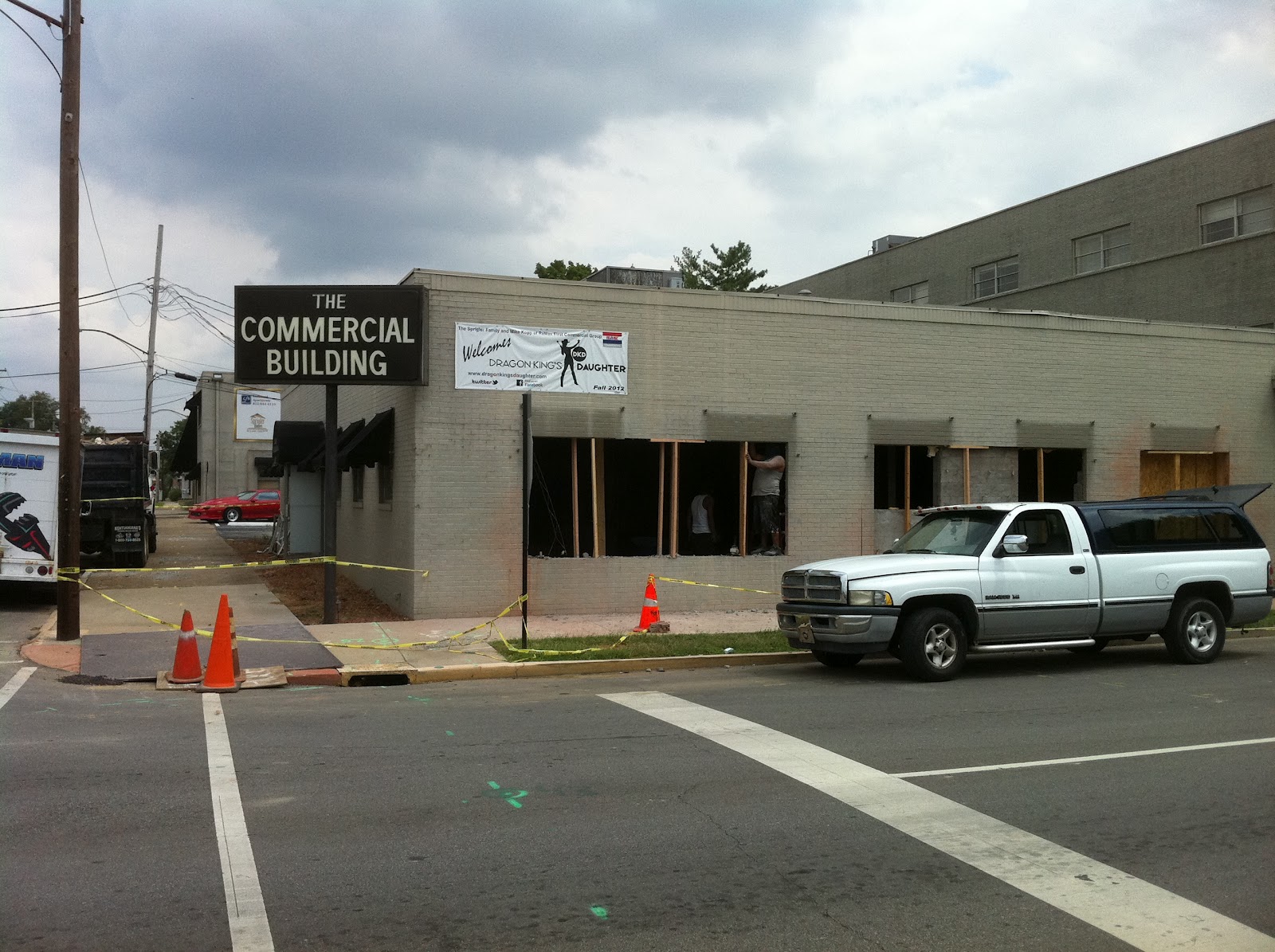
Construction continues at Dragon King's Daughter.


Dragon King's Daughter is coming soon, and speaking for Bank Street Brewhouse, we can't wait.

It sure made me happy.


How I got liberated.


If you're feeling down and all tied up by the Lilliputians, whether at work or play, or both, it's way past time to be liberated.

I'm hoping to return to this topic from time to time in the coming weeks. For now, permit me to observe that I'm grateful for peace, love and contentment on the home front. It's all the other fronts that are troublesome. My working theory is that they're not going to make any sense at all until I get down and dirty with some liberation -- not flight, but fine-tuning.

We'll see.

Jab her with a safety pin.


This song was playing inside my head all the way back from Wisconsin.

I wonder what that means?

Monday, August 13, 2012

"It’s no wonder that Mr. Romney does not want to take full responsibility for his running mate’s ideas."

A white conservative (Romney) picks another white conservative (Ryan), and the nation yawns. Conservatism ... it's just SO damned white, or as Frank Rich wrote, "Strange as it seems this ticket really is the current GOP's idea of diversity."

The Romney-Ryan Plan for America, a New York Times editorial

Less than 24 hours after Mitt Romney chose Paul Ryan as his running mate on Saturday, his campaign was already trying to distance itself from Mr. Ryan’s politically toxic budget plan.

And the contract brewer you rode in on.