ON THE AVENUES: From Baltic to Mediterranean, the diary of an unrepentant New Albanian Europhile.
A weekly column by Roger A. Baylor.
In less than two months, the Confidentials will travel to Gdansk, Poland for a long overdue appointment with my bucket list. It’s sweet of the missus to indulge me.
In 1980, the Solidarity trade union was established at Gdansk’s Lenin Shipyards, an act made provocative by the fact that Communist doctrine of the time in Poland precluded such an independent challenge to orthodoxy.
In theory, the Polish Communist government already was protecting the interests of workers, and for Solidarity to suggest this stewardship was deficient plainly represented a threat to the established order.
Unfortunately for the party bosses, it wasn’t their only problem. The Soviet Union had imposed communism on the devastated territory of a revamped Polish state following World War II, but the indigenous Polish variety of red star rule was capable neither of collectivizing agriculture nor curbing the authority of the Roman Catholic Church. Smallholders and clerics remained as obstacles to "enlightenment."
In combination with these obvious resistance sources, Solidarity proved to be a mortal contagion. Nine tumultuous years after the trade union emerged, Communism collapsed both in Poland and across the “East Bloc,” a demise attributable to socio-economic pressures from within as well as Soviet leader Mikhail Gorbachev’s calculated gamble of jettisoning the USSR’s vassal buffer states to buy time for an ultimately doomed effort to reform his homeland.
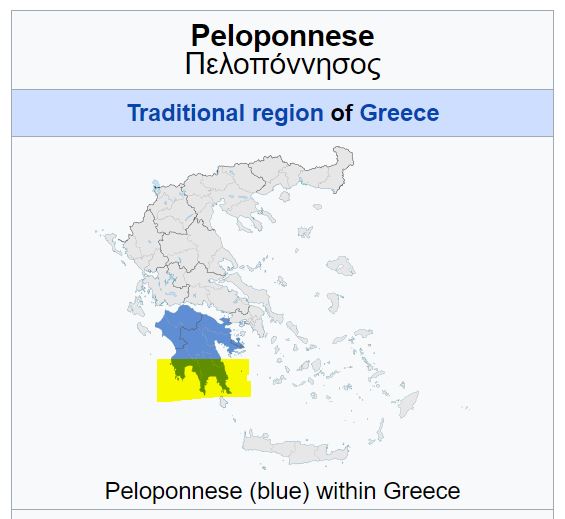
By all rights I should be preparing for the trip to Gdansk by learning a few words of basic Polish, like numbers, greetings and restaurant menu items, but instead I’m suddenly immersed in the Southern Peloponnese -- specifically, the Mani Peninsula, where a tangle of jagged mountains on the Greek mainland yields to the cooling breezes of the Mediterranean Sea.
As my preoccupation with Europe has been throughout the past four decades, so it continues for me in 2018. I am an unreconstructed Europhile, an enthusiastic scattershot generalist fascinated by all things European irrespective of where they’re located on the continent, and as yet stubbornly unwilling to concentrate on any one facet of Europe long enough to become an expert, whatever this word means.
Except as it pertains to beer.
The process of boning up for Pints&union led me first to the United Kingdom and readings about traditional pub culture, cask-conditioned ale and the history of Guinness in Ireland, pausing for a digression into Bavarian wheat ale, and recently followed by an overdue re-reading of Michael “Beer Hunter” Jackson’s seminal
Great Beers of Belgium, last updated shortly before the legend’s death in 2007.
Stuck somewhere in the middle of Fuller’s, Weihenstephaner and Duvel samples came
The House of Government, a lengthy tome by Yuri Slezkin, which gently lured me back to previously dormant Kremlinology via the history of a 1,700-unit Stalinist apartment block built on the Moscow River embankment.
Cast against a 2018 summer’s backdrop of raging Putin paranoia in America and the World Cup successfully held in Russia, this book had me contemplating the eternal Matryoshka “Slavic enigma” dilemma all over again.
Rest assured, it has not been resolved.
---
Christianity of the Russian Eastern Orthodox persuasion connects Mother Russia to Greece by way of Byzantium -- or Constantinople, now known as Istanbul.
Hence my current serendipitous choice of reading:
Mani: Travels in the Southern Peloponnese, written by Patrick Leigh Fermor. My friend Ken loaned me two of Leigh Fermor’s travel accounts some months back, and last week my internal alarm clock serendipitously reminded me it was time to begin, Gdansk or no Gdansk.
Regular readers will recall that Greece was a prime motivation for my first trip to Europe in 1985. Toying with the idea of studying in Greece, I actually was accepted into a “year in Athens” university program, but decided against it, and instead spent three weeks in the country as a tourist (including an idyll in Istanbul) before returning to Italy by boat.
I haven’t returned since, and I've no idea why.
Thanks to my cousin and mentor Don Barry’s recommendation, my lone visit 33 years ago was encouraged and prefaced by a travel book by the American novelist Henry Miller, called
The Colossus of Maroussi.
Following is background from a previously published piece.
---
For someone as renowned for his bawdiness as Miller to pen an entire book with nary an explicit mention of the horizontal arts will come as a surprise to some, but The Colossus of Maroussi is just that volume.
Written and published as World War II made ready to welcome the United States as participating/liberating belligerent, it recounts Miller’s months-long holiday in Greece in 1939, a respite coming at the conclusion of his Depression-era tenure as a Parisian urban expatriate, and immediately prior to his relocation and reinvention as tree-hugging primitive in California’s Big Sur.
Ostensibly, Colossus is a travelogue about Greece as a country caught in transition during the middle of the 20th century, with one foot in the grubby present and the other very much rooted in an epic (and generally exaggerated) past. Much of Miller’s narrative focuses on a larger-than-life Greek poet and raconteur named George Katsimbalis, and therein hides a significant clue, because as readers have understood virtually since release, the book actually is all about Miller …
… For all its flaws, The Colossus of Maroussi was essential and compelling reading, and I cannot underestimate its profound influence on me during the early 1980s. Upon request in 1984, the Greek tourist office in New York had mailed a huge package of brochures and maps, and as I read Miller’s account that winter, I plotted his progress with their assistance. At the time, Ernest Hemingway meant more to me as a writer, but he hadn’t written about Greece. Spain would come much later.
There I was, finally in Greece, well aware that the intervening decades would render dated Miller’s descriptions unlikely, and this much was true.
Many things had changed, but happily there were moments of timelessness when the pre-war mood still jibed, and when, not unlike the writer, I stood at Mycenae, Epidaurus and Delphi, brushed off the dust from the journey by bus, and felt the weight of millennia … when I’d hear a tinkling bell and see a shepherd’s profile on a hillside, and later devour tomatoes, cucumber and feta doused with oil, kick back a cool beer or tumbler of Retsina … watch the grizzled old men nursing their cloudy drams of ouzo at breakfast … and then be reminded that back at the hotel, one was officiously instructed to keep toilet paper out of the commode lest the too-narrow sewage pipes became clogged.
---
Patrick “Paddy” Leigh Fermor (1915-2011) was the son of a well-to-do English family, not a product of Miller’s hardscrabble, working-class Brooklyn. However, their shared obsessions with Greece are mutually evocative.
I’m chagrined to concede that until seeing Leigh Fermor’s obituary in
The Economist seven years ago, he was completely unknown to me. Had I been aware of his incredible life story, perhaps a trek to the Mani Peninsula would have been in order back in the day. He’d have been 70 years young then, and still a working writer. He might have helped me with my Retsina education.
In 1933 at the age of 18, Leigh Fermor -- later described by a journalist as "a cross between Indiana Jones, James Bond and Graham Greene" -- departed London on a journey to Istanbul by foot, first to Germany and then along the Danube into the heart of the Balkans.
In all this walk lasted almost six years, until Leigh Fermor returned home to enlist in the fight against Hitler. Later in life, he authored a trilogy of books documenting these pre-war travels; the final unfinished volume was published after his death. They’re acclaimed to this day as incredible snapshots of Europe, pre-destructive spasm.
During the war Leigh Fermor, a master linguist, was a special forces operative in Nazi-occupied Crete, where he famously orchestrated the kidnapping of a German general. Remarkably, the two soldiers became friendly owing to their shared love of antiquity, and met again two decades later on a Greek television show based on “This Is Your Life.”
Eventually Leigh Fermor settled among the Greeks in his beloved Mani with true love Joan Rayner, a photographer, in a house they built on a hillside at Kardamyli. The book I’m reading now begins with the couple trekking from Sparta with guide and mule through wild forbidding mountains into the Deep Mani, and a first glimpse of their village of destiny.
---
Such is the agony and ecstasy of the aging Hoosier hick as persistent Europhile, frustratingly wrestling for the 34th consecutive year with nagging expatriate thoughts that have been tamed in twilight, though never altogether dispensed.
Might it all have unfolded differently?
It's a stupid question, and I avoid it 98% of the time. My oft-aborted escape plan from the 1980s would have been furthered had I hailed from a wealthy family, possessed some semblance of a skill (linguistic, literary or artistic), or displayed more raw ambition.
At the same time, as crazily fortunate as I’ve been in this charmed life, it would be ridiculous to lament spilled milk. After all, I hate milk.
If there exists any such thing as a celibate expatriate, I suppose that’s me. Nothing wrong with that; a voyeur from afar, looking not touching, and scratching the itch with short trips like the one to Gdansk, and later, Munich.
Someday if we liquidate everything we own and get just a little bit lucky, a period of retirement in Europa might be an option. A collegiate classmate has done this in Ecuador, which comes recommended for affordability. She loves it there. The problem for me is an utter lack of interest in places like Ecuador. Nothing personal; I'm just a Porto kind of guy.
I’ll hold onto this pleasant retirement dream for a moment or two, until reality rudely intrudes, and then as always regroup, channeling the mad European impulse into a beer travel story from the salad days. This tale will be told at Pints&union, hopefully to someone who hasn’t heard it before.
I may still be stuck inside of NA with the Mechelen blues again, but whenever passing along the chronology, I'll at least have done my job as cantankerous wannabe expatriate.
---
Recent columns:
August 23:
ON THE AVENUES: The "downfall" occurs when we all fall down.
August 20:
Non-learning curve: This ON THE AVENUES column repeat reveals that since 2011, we've been discussing the safety hazards on Spring Street between 10th and 9th. Too bad City Hall is deaf.
August 9:
ON THE AVENUES: There's only one way to cure City Hall's institutional bias against non-automotive street grid users, and that's to #FlushTheClique.
August 2:
ON THE AVENUES: Daze of future passed.